|
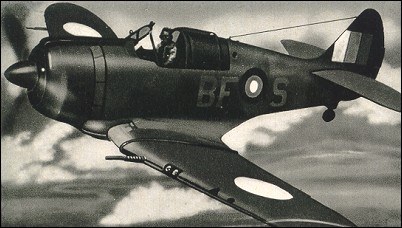
| The Boomerang was a single-seat fighter monoplane incorporating the principal features of the Wirraway, including the rectangular centre-section and tapering outer-section wings, retractable landing gear and tail unit. Designed and produced after the Japanese entered World War II as an emergency measure to strengthen the RAAF, 250 were built between 1942 and 1944 in four versions. Although not as good as the latest Japanese fighters, Boomerangs were successfully operated in New Guinea and elsewhere and also performed ground attack, target marking and reconnaissance duties.
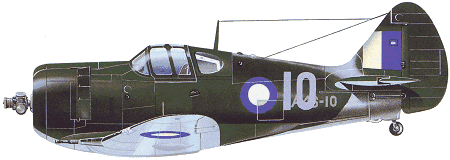
| MODEL | CA-13 Mk II |
| CREW | 1 |
| ENGINE | 1 x Pratt-Whitney R-1830-S3C4 Twin Wasp, 895kW |
| WEIGHTS |
| Take-off weight | 3742 kg | 8250 lb |
| Loaded weight | 2437 kg | 5373 lb |
| DIMENSIONS |
| Wingspan | 10.97 m | 36 ft 0 in |
| Length | 7.77 m | 26 ft 6 in |
| Height | 2.92 m | 10 ft 7 in |
| Wing area | 20.90 m2 | 224.97 sq ft |
| PERFORMANCE |
| Max. speed | 491 km/h | 305 mph |
| Ceiling | 10350 m | 33950 ft |
| Range w/max.fuel | 2575 km | 1600 miles |
| ARMAMENT | 2 x 20mm cannons, 4 x 7.7mm machine-guns |
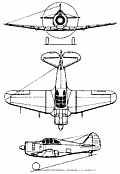 | A three-view drawing (610 x 886) |
| TORBJÖRN KAMPE, e-mail, 18.10.2015 22:31 I LOVE THIS AIRCRAFT. FUN TO FLY. reply | | Tony Tubbenhauer, e-mail, 28.10.2011 08:58 1945 I was flying a Liberator out of the Test Pilots Unit at Laverton dropping live bombs by radar on a rock in Bass Strait.Talking to a Boomerang test pilot in the mess,he'd taken off,climbed hard to 4000 feet,there was a big bang,he found himself still strapped in the seat with the rest of the Boomer falling away.Said he unclipped his harness,kicked the seat away,opened his chute.hat was one Boomerang that didn't come back.I flew Wirras there too.They offered a Spitfire and Mustang.Newly married,much in love,back from 3 years ops in the Middle East I said thanks but no thanks,reckoning that my good luck so far may be getting a bit shopsoiled. reply | | laozhu, 21.06.2011 04:46 Further confusion identifies the aircraft as Wirraway, one even cited the Boomerang SN. Others claim the pilot died. Any comment reply | | Barry, 16.11.2010 13:17 Strong, manoeverable and not necessarily totally outclassed by the Japanese, this plane was designed by a team led by Wing Commander Laurence J. Wackett, whome I presume gave his name to the trainer mentioned elsewhere on this site. The 1200 h.p. Twin Wasp was the only engine that was available to the Australians at that time and must have curtailed the performance somewhat. 105 CA12s were produced follwed by 95 CA13s and 49 CA19s. The CA14 featured a turbo charged engine and a square cut tail. reply | |
| | airboss, e-mail, 07.10.2010 19:20 Sanders aircraft of Chino, CA built a CA-13 A46-139 in the 1990s. reply | | carl wollaston, e-mail, 08.05.2010 17:04 did the boomerang manage to hold off the japs long enough to save Australia reply | | Doug Tilley, e-mail, 06.01.2010 00:36 The Pilot, F /O Stewart bellied landed the Boomerang on an airstrip, he suffered minor facial injuries , reply |
| Jeff Kenneday, e-mail, 27.07.2008 02:27 From ADF Serials
www.adf-serials.com /
A46-136 CA-13 959 09 /43 served with 4 Sqn; on 15 /11 /43 it was flying back to base when a USAAF P-38 Lightning piloted by Lt Gerald R Johnson of 9 FS (who became the 5th Air Force's 4th highest scoring ace with 22 victories) fired a burst into the port side hitting mainplane and port tailplane with the aircraft lurching to starboard and lost height finally recovering at 500ft but with the port mainplane on fire and cannon ammunition exploding it was travelling too fast to land so F /O Robert McColl Stewart (408505) lifted the a /c over the river at the strip end belly landed into scrub whereupon it burst into flames and was totally destroyed and all this happened even though it was accompanied by A46-132 and two P-40s; it was converted to components and Lt Johnson had an Australian flag painted on the nose of his P-38 along with his Japanese victories. reply | | Q, e-mail, 14.06.2008 14:15 this is concerning the recreation of the swis cheese makers who beleive in playdo helicopterswith with potato chip rotors and reenforced natual confectionary jellys reply | | Philip O. Richart, e-mail, 07.02.2007 21:58 Lt Col Gerald R. Johnson's P-38L of the 49th Fighter Group sported 25 flags at the end of the war, 24 Japanese and 1 Australian. The incident occurred on 15 November 1943 and evidently involved Boomerang A46-136 of No. 4 Squadron, lost that date. My understanding is that pilot survived. The story becomes garbled at this point. One source claimed he parachuted and another that he crash-landed. Further confusion identifies the aircraft as Wirraway, one even cited the Boomerang SN. Others claim the pilot died. Any comment? Phil. reply |
|
Do you have any comments?
|
| 
COMPANY
PROFILE
All the World's Rotorcraft
|


 lxbfYeaa

20
reply