|
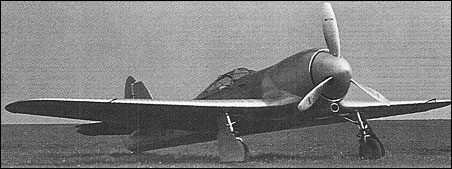
| With an airframe fundamentally similar to that of the
R-36, the R-37 differed primarily in having a closecowled
1100hp Gnome-Rhone 14N-21 14-cylinder
radial engine. Cooling air reached the engine via a narrow
annulus, was mixed with exhaust gases and
ejected through two groups of nozzles to provide some
thrust augmentation. The proposed armament consisted
of four 7.7mm or two 13.2mm machine guns
mounted in the wings. Although the R-37 was displayed
statically at the Salon de Bruxelles in July 1939,
no attempt had been made to fly this prototype before
the German occupation of Belgium in May 1940. The
R-37 was discovered at Evere by the occupation forces
and a Luftwaffe pilot - possibly unaware that the aircraft
had not previously been flown - flew the aircraft to
Beauvechain. There is no record of any subsequent
flight testing, although it is known that the R-37 was
taken to Germany. Prior to the German occupation,
Alfred Renard had prepared a project for a two-seat version,
the R-37B, for use as a ground attack aircraft.
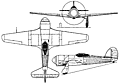 | A three-view drawing (1280 x 894) |
| WEIGHTS |
| Take-off weight | 2460 kg | 5423 lb |
| Empty weight | 1810 kg | 3990 lb |
| DIMENSIONS |
| Wingspan | 11.64 m | 38 ft 2 in |
| Length | 8.40 m | 28 ft 7 in |
| Height | 2.90 m | 10 ft 6 in |
| Wing area | 20.00 m2 | 215.28 sq ft |
| PERFORMANCE |
| Max. speed | 510 km/h | 317 mph |
| lxbfYeaa, e-mail, 15.11.2025 15:02 20 reply |
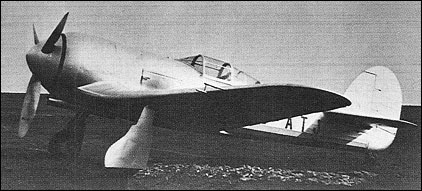
| lxbfYeaa, e-mail, 07.11.2025 03:03 20 reply | | lxbfYeaa, e-mail, 14.03.2024 05:20 20 reply | | Klaatu83, e-mail, 05.08.2015 17:39 Three prototypes of this fighter were built, one with an Hispano-Suiza engine, one with a Gnome-Rhone air-cooled radial engine (shown here), and one with a British Rolls-Royce Merlin engine. None of them went into production, since the Belgians decided to order Hawker Hurricanes instead. The engine on this version is so closely cowled that it is difficult to believe that the engine would have received adequate cooling. reply |
|
| | Ruben, e-mail, 15.07.2013 16:24 it looks like a LA-5 ( a bit!) reply | | MRS.SHEREMET EVA NADEZDA, e-mail, 28.08.2012 14:08 Hello
I am sending you this message to explain my problems to you to know if you can render a helping hand.
My name is MRS.SHEREMET EVA NADEZDA from RUSSIA. I am the wife of MR.BANOKOV NADEZDA. I lost my husband and the only daughter in the last Tsunami disaster that hit Japan March 11 2011. Before the death of my husband, he deals on coffee business.
Presently, I am having a big problem with my late husband's brothers because of the wealth and the landed properties he left behind. They forced me to release all his bank deposit informations and all the documents about his landed properties.
They did not stop there; they are monitoring my movements till today to the extent that I can not go out freely nor answer or make telephone calls.They can only give me food and shelter and nothing else. I can only have access to the internet at times when I am left with the little ones and our house security guard. It is because of this problem that I decided to contact you to help me from this ugly situation.
Because of my relationship with my husband, he told me before his death, about money he has in LONDON where he goes to do his investment research. The money was in a box deposited with an agent in LONDON and the amount is US$10.5 million. He made me to understand that the money was deposited as a family valuable for security reasons, in this case the officials of the LONDON security outfit does not know that the real content of the box is money.
The brothers of my late husband are not aware of this deposit and they will never know about it. I am therefore seeking for your assistance to help me secure the consignment from LONDON to your country for safety and investment.You can even go to LONDON so that you can see things for yourself.
Once I got your response to help me, I will get back to you with the details on how we should proceed.
I shall be waiting for your swift response.
Sincerely yours,
MRS.SHEREMET EVA NADEZDA reply | | Doug Booth, e-mail, 16.06.2012 19:46 Actually, relative to its' contemporaries the Spitfire and the Hurricane, the Renard had fairly adequate armament, .5 Brownings as opposed to various numbers of rather inadequate .303s. reply | | baiwang, 20.06.2011 14:31 The pilots forward vision would leave a lot to be desired and it was too lightly armed. reply | | Leo Rudnicki, e-mail, 08.10.2009 13:39 A Lockheed Ventura II serial # AJ-388 was delivered to the RCAF in new Brunswick Nov 29,1943. The designer # is 137-27-01. It was scrapped in oct 1944. It was received in used condition. reply | | Steven Gohman, e-mail, 08.10.2009 11:52 I have found a reference to an R-37 (serial AJ-388) having a take-off accident leading to a collision w / a parked B-17F 42-29589 at Middletown Air Depot, Olmsted Field, Penn. on 12 Nov 43. Is There some other a /c model that is "R-37" beside the Renard? If the Germans captured THE R-37 in '40, and we hadn'd bugun capturing-back stuff in Europe in '43, what R-37 had this accident?
Thanks, Steve reply |
| leo rudniski, e-mail, 09.04.2009 01:57 Not at all like the early FW190 spinner but reminiscent of the Morane-Saulnier Bullet spinner. The Bullet did not overheat. The spinner is annular as opposed to ducted on FW. reply | | ika 244, e-mail, 23.02.2009 01:19 The R-37 has a ceiling-11 500m and range- 1000km reply | | Stuart Waters, e-mail, 09.07.2007 22:48 Looking at this aircraft I can see where Kurt Tank got his idea for the FW 190's original spinner /cowling arrangement from, I would imagine though, just as Tank found out, that this system would tend towards overheating!
The pilots forward vision would leave a lot to be desired and it was too lightly armed. reply |
|
Do you have any comments?
|
| 
COMPANY
PROFILE
All the World's Rotorcraft
|


 Klaatu83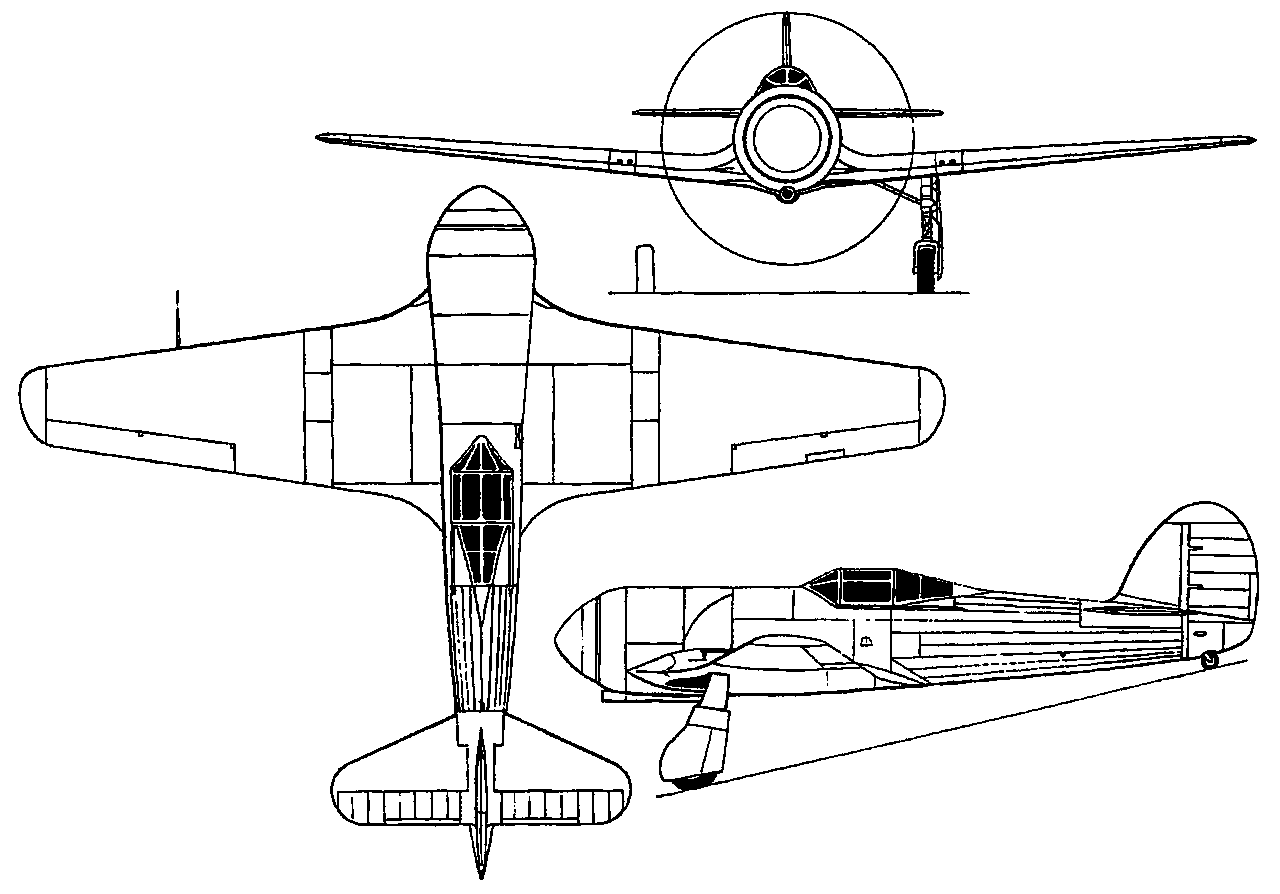


20
reply