|
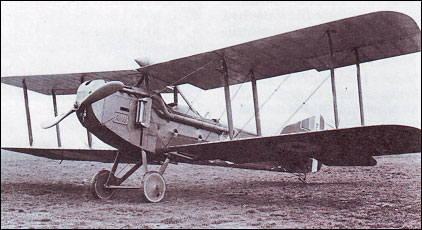
| Designed by the talented Dutchman Frederick Koolhoven, the FK.8 was basically a scaled-up version of the earlier FK.3. Used in
the army cooperation role by the RFC, it entered service with No 35 Squadron, which deployed to France in January 1917. It subsequently served with Nos 2, 8, 10 and 82 Squadrons on the Western Front, and was also issued to Nos 17 and 47 Squadrons in Macedonia and No 142 Squadron in Palestine. The FK.8 was highly regarded by its crews. On 27 March 1918, an FK.8 of No 2 Squadron, flown by 2nd Lt A.A. McLeod with Lt A.W. Hammond as his observer, was attacked by eight Fokker DR.Is and shot four down. McLeod brought down his burning aircraft, despite being badly wounded, and was awarded the Victoria Cross.
Robert Jackson "The Encyclopedia of Aircraft", 2004
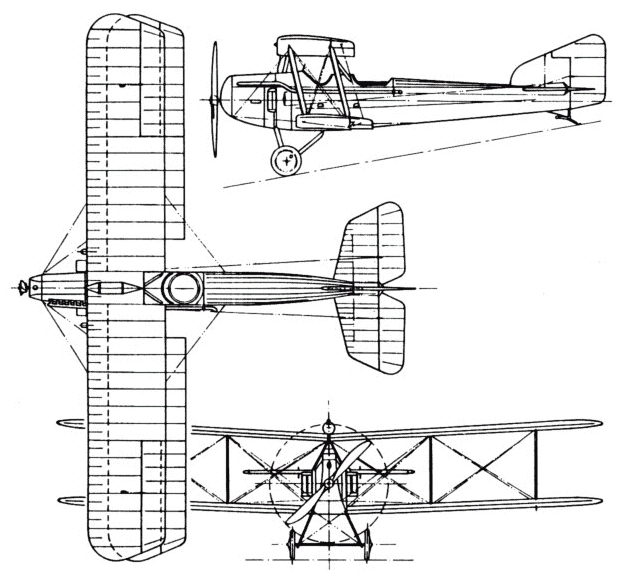
 | A three-view drawing (620 x 578) |
| CREW | 2 |
| ENGINE | 1 x 160hp Beardmore water-cooled in-line engine |
| WEIGHTS |
| Take-off weight | 1275 kg | 2811 lb |
| DIMENSIONS |
| Wingspan | 13.26 m | 44 ft 6 in |
| Length | 9.58 m | 31 ft 5 in |
| Height | 3.33 m | 11 ft 11 in |
| PERFORMANCE |
| Max. speed | 153 km/h | 95 mph |
| Ceiling | 3690 m | 12100 ft |
| ARMAMENT | 2 x 7.62mm machine guns |
| Norman Clark, e-mail, 04.04.2014 10:17 Good reading and downloads available from the Gutenberg Project under Great War inc; Full History of RAF, German Airforce and others. all Public Domain and downloadable. reply | | Barry, 17.08.2012 16:39 Armstrong Whitworth delivered 650 and Angus Sanderson 750 of an order of 900. This very rugged aeroplane was used for a multitude of tasks including bombing (160lb bomb load) strafing and reconnaisance all across the Western Front, Palestine and Macedonia. reply |
| Sven, 04.01.2012 00:56 Any registration marks known for the Australia visitor? Price of an FK 8 for all you guys so keen to buy an aeroplane?
£1,365 17s. Airframe only the Beardmore engine sets you back another. £1,045.
The extra 17 bob on the airframe was for the wind in the wires. reply | | Sven, 04.01.2012 00:45 In 1918 44 aircraft were in RAF service in Macedonia. Source J.M.Bruce. British Aircraft 1914-1918. A very expensive book these days but essential reading for 14-18 aircraft facts. reply | |
| | rob marshall, e-mail, 03.01.2012 21:50 Is it true there was a squadren opperating in macedonia in the first world war. reply |
| gooda, 21.06.2011 06:38 It still bore the marks of aerial combat-patches on wings, fuselage etc., where bullet holes had been repaired. It was flown by an ex officer of RAF.Two passengers & pilot. reply | | rob marshall, e-mail, 05.04.2011 21:39 jennie, does this aerplane still axist in one piece?there is only one i know of in england assembled..is it in an aircraft historical spot.do you have a photo of this aeroplane,i would love to see it if possible.rob reply | | rob marshall, e-mail, 05.04.2011 21:38 jennie, does this aerplane still axist in one piece?there is only one i know of in england assembled..is it in an aircraft historical spot.do you have a photo of this aeroplane,i would love to see it if possible.rob reply |
| jennie weaver, e-mail, 17.02.2008 20:21 The first aircraft to land in Boort 3537 Victoria Australia was in 1919. The machine had been shipped out from England when WW1 ended. It was an Armstrong Whitworth (known to the RAAF as 'ack willie' and fitted with a 160HP Beardmore Engine. It still bore the marks of aerial combat-patches on wings, fuselage etc., where bullet holes had been repaired. It was flown by an ex officer of RAF.Two passengers & pilot. ????? reply |
|
Do you have any comments?
|
| 
COMPANY
PROFILE
All the World's Rotorcraft
|


 rob marshall

20
reply