|
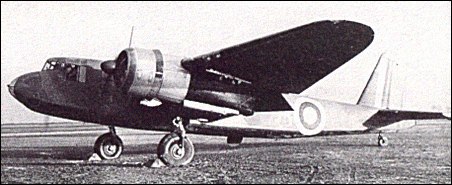
| The Botha was designed for Coastal Command RAF as a three-seat twin-engined reconnaissance-bomber, able to carry a torpedo internally or up to 907kg of bombs. Defensive armament comprised a single 7.69mm Vickers machine-gun forward and a dorsal turret with two Lewis guns. The first prototype made its maiden flight on 28 December 1938 and the first production Bothas entered service with No 608 Squadron on 28 June 1940, but remained in first-line service only until November of that year. A handful of operational Bothas also went to No 502 Squadron, but were also withdrawn rapidly. Although the Botha was a failure as a torpedo-bomber - mainly due to being underpowered - large numbers served as pilot, navigation, bombing, gunnery and radio trainers until 1944. FACTS AND FIGURES © The position or the engine
nacelles and the high wing
prevented the pilot from seeing
much to either side or the rear. © The short, tapered wings did not
provide enough lift for the Botha
to carry anything heavy very far. © The cockpit was very poorly designed.
It was possible for a pilot flying solo to
knock the fuel tank switches off but still
start the engines, leading to engine
failure a short time into the flight. © The Botha had a high-drag Frazer-Nash dorsal turret
as seen on many Sunderlands and some Stirlings. As
well as the two guns in this turret there was a single
forward-firing gun operated by the pilot.
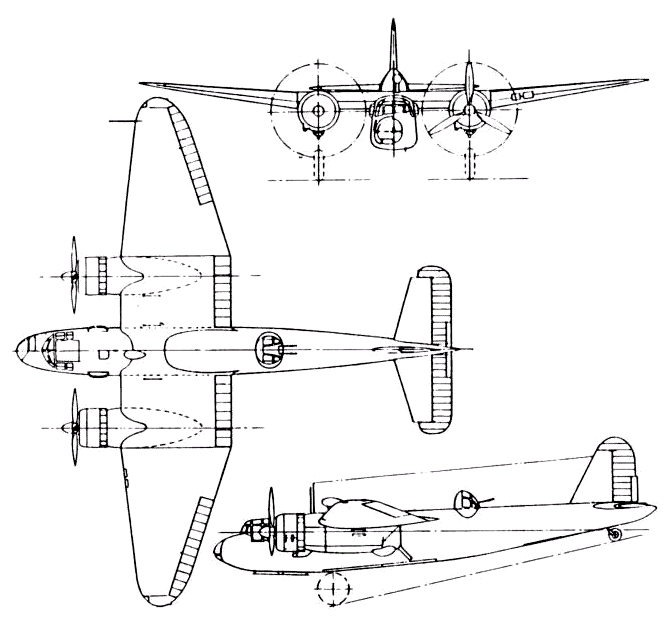
 | A three-view drawing (670 x 624) |
| MODEL | B-26 "Botha" |
| CREW | 4 |
| ENGINE | 2 x Bristol Perseus XA, 694kW |
| WEIGHTS |
| Take-off weight | 8369 kg | 18451 lb |
| Empty weight | 5366 kg | 11830 lb |
| DIMENSIONS |
| Wingspan | 17.98 m | 59 ft 0 in |
| Length | 15.58 m | 51 ft 1 in |
| Height | 4.46 m | 15 ft 8 in |
| Wing area | 48.12 m2 | 517.96 sq ft |
| PERFORMANCE |
| Max. speed | 400 km/h | 249 mph |
| Cruise speed | 340 km/h | 211 mph |
| Ceiling | 5335 m | 17500 ft |
| Range | 2040 km | 1268 miles |
| ARMAMENT | 3 x 7.7mm machine-guns, 900kg bombs |
| Klaatu83, e-mail, 05.08.2015 06:19 The Botha was designed to meet the same specification as the Bristol Beaufort. However, the Beaufort was built with Bristol Taurus engines, producing approximately 1,000 hp, while the Blackburn Botha was forced to make do with smaller and less powerful 800-hp Bristol Perseus engines. As a result the Botha proved to be under-powered and unsatisfactory. After only a few months of front-line service during 1940 all the Bothas were withdrawn and replaced by the Avro Anson, the same aircraft they had been meant to replace, and all the Bothas were relegated to training squadrons. reply | | VinceReeves, 05.03.2013 22:33 The Botha was taken off operations because it offered the crew poor visibility in the general reconnaissance role. This was due to the close proximity of the engine nacelles to the fuselage, and the high wing from which they were suspended.
This was the fault of the manufacturer, not the specification. The aircraft was also underpowered, but this would no doubt have been resolved if the design had offered any utility in the role for which it was intended. It didn't.
It's a shame that a more useful role than training wasn't found for the Botha, as it was otherwise well-engineered. Despite its poor reputation, when the training schools bothered to maintain its engines properly, it proved to be perfectly reliable. reply | | peter, e-mail, 03.02.2012 20:22 Is this the aircraft where an inspector reported " gaining access to the cockpit is difficult. It should be made impossible " ? Must swat up my Bill Gunston reply | | leo rudnicki, e-mail, 15.04.2009 08:19 Flying an ugly awkward unsteady underpowered aircraft in training makes you appreciate flying operational types all the more. This a /c was specified by the Air Ministry like most useless aircraft of this era. Fortunately, Bristols persisted with Beaufort /Taurus. reply |
|
Do you have any comments?
|
| 
COMPANY
PROFILE
All the World's Rotorcraft
|