 |
Boulton-Paul P.1111950 |  |
| RESEARCH AIRCRAFT | Virtual Aircraft Museum / United Kingdom / Boulton-Paul |
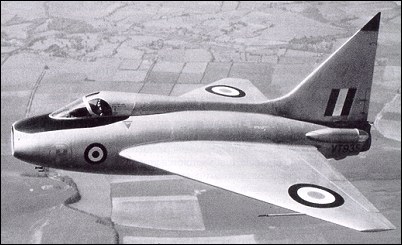 |
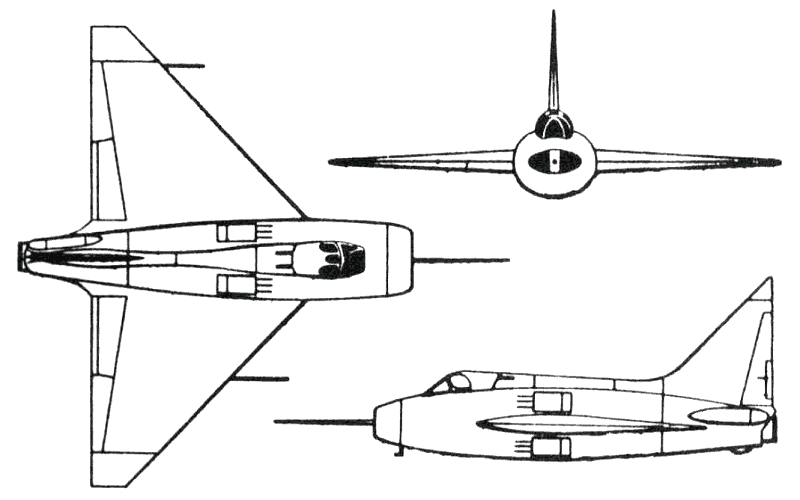
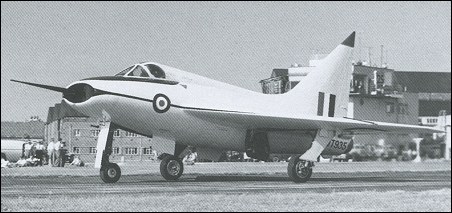
The Boulton Paul P.111 and P.120 delta wing research aircraft, built to Air Ministry Specification E.27/46 and E.27/49 respectively, were used to investigate high speed characteristics of the delta wing. The P.111 flew in October 1950, powered by a Rolls-Royce Nene turbojet. Its delta wing had a leading-edge sweep of 45°, and detachable wingtips made it easy to carry out comparative tests with blunt and pointed tips. The fin tip was similarly detachable, and there was no tailplane. After tests in its original form, the aircraft was fitted with a nose probe and four rectangular airbrakes around the front fuselage. Some internal modifications were also made and in this new form it received the designation P.111 A, recommencing flight tests in July 1953. It could attain level speeds in the region of Mach 0.95-0.98, and become supersonic in a shallow dive. The P.111A survives in the Midland Air Museum at Coventry's Baginton Airport.
|  COMPANY PROFILE | ||||||||||||||||||||||||||||||||||||||||||||||||||||
|


|