 |
General Aircraft G.A.L.38 Fleet Shadower1940 |  |
| SHIPBOARD PATROL AIRCRAFT | Virtual Aircraft Museum / United Kingdom / General Aircraft |
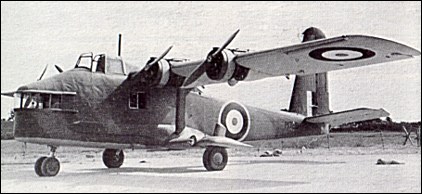 |
Working to meet the same Admiralty requirement that resulted in the Airspeed A.S.39 Fleet Shadower, for a carrier-based aircraft that could remain in contact with an enemy naval force by night, General Aircraft was no more successful than Airspeed, and only a single prototype General Aircraft G.A.L.38 Fleet Shadower was built. General Aircraft adopted a sesquiplane configuration, the lower wing having about one-third the span of the upper. Of all-wooden construction, the G.A.L.38 had a conventional tail unit with a tall fin and rudder, fixed tricycle landing gear and four Pobjoy Niagara V engines mounted in nacelles on the leading edge of the foldable upper wing. The fuselage accommodated the pilot in an enclosed cockpit on top of the fuselage, forward of the wing; an observer in the nose of the aircraft; and a radio operator below and behind the pilot. Both contending companies used similar blown-flap techniques (by propeller slipstream) to attain the desired minimum control speed and, in addition, the G.A.L.38 had full-span split trailing-edge flaps on the lower wing. However, flight testing proved disappointing and only the single prototype was built. FACTS AND FIGURES © The observer sat in a glazed compartment in the nose and the radio operator was housed below and behind the pilot's cockpit. © The engine airflow supplied by the two-bladed propellers was blown over the full-span flaps, permitting a minimum speed of 63km/h, allowing surface ships to be followed. © The unusual tricycle undercarriage was non-retractable for simplicity and the wings were folding.
|  All the World's Rotorcraft | ||||||||||||||||||||||||||||||||||||||||||||
|


|