|
| The Hereford bomber was a Napier Dagger-engined version of the
Hampden 'Flying Suitcase', ordered as a back-up at the same time as
the first Hampden production contracts. The noisy new inline engines
overheated on the ground and cooled too quickly and seized in the air. Even
routine maintenance was more complicated than that required for the
Hampden's Pegasus radials. There were no performance advantages from the
new engines. On daylight raids in 1940-41 the Hampdens and Herefords
were shot to bits by faster and better-armed German fighters, so were quickly
relegated to night missions. Only a very small number of Herefords saw
action (in Hampden squadrons). The rest were relegated to training units,
soon followed by their (marginally) better brethren. FACTS AND FIGURES © The Hereford was
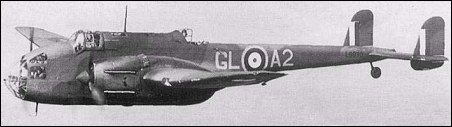
distinguishable from the
Hampden by its longer
engine cowlings and greater
dihedral on the outer wings. © The exhaust note of the
Dagger engines was of a
high frequency that proved
irritating to the crews. © The narrow, cramped and
badly heated fuselage made
long missions extremely
uncomfortable and the
crew could not change
positions during flight. © The Hereford and Hampden
had a single-pilot cockpit with
a sliding canopy, which was
sometimes left open in flight
for the 'wind-in-the-hair' feel.
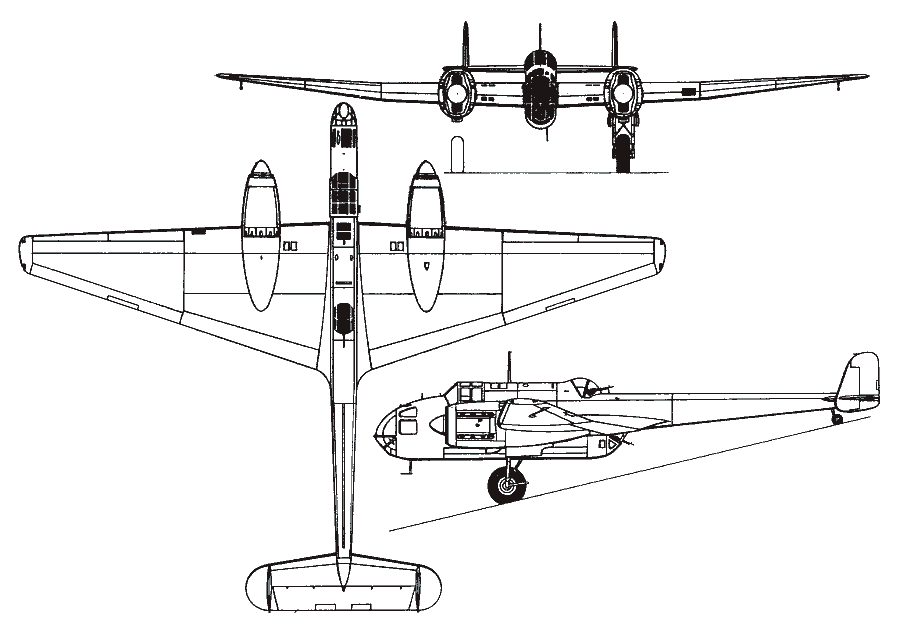
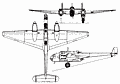 | A three-view drawing (900 x 627) |
| ENGINE | 2 x Napier Dagger VIII, 746kW |
| WEIGHTS |
| Take-off weight | 8070 kg | 17791 lb |
| Empty weight | 5300 kg | 11685 lb |
| DIMENSIONS |
| Wingspan | 21.08 m | 69 ft 2 in |
| Length | 16.33 m | 54 ft 7 in |
| Height | 4.55 m | 15 ft 11 in |
| Wing area | 62.06 m2 | 668.01 sq ft |
| PERFORMANCE |
| Max. speed | 426 km/h | 265 mph |
| Cruise speed | 277 km/h | 172 mph |
| Ceiling | 5790 m | 19000 ft |
| Range w/max payload | 1930 km | 1199 miles |
| ARMAMENT | 4 x 7.7mm machine-guns, 1800kg of bombs |
| John, e-mail, 01.01.2017 16:30 The Napier dagger was not an unproven engine. The RAF used several types that were dagger- engined! Early versions of the Bristol Pegasus were troublesome because of high oil consumption. In retrospect the ministry was right to develop 2 versions.
when the Hawker Tornado first flew everybody expected it to be successful but it wasn't. The typhoon used the same airframe with the Napier Sabre. That was the same policy working quite well. I think that both Napier engines were simply disliked by ground crews because of their complexity. A spark plug change required 48 spark plugs to be removed for instance. reply | | Klaatu83, e-mail, 01.04.2016 12:04 This was simply a good airplane ruined by bureaucratic meddling. Apparently the Powers-That-Be at the Air Ministry decided that there would be a shortage of Bristol Pegasus engines, which were in demand for use in other types of aircraft, and insisted upon a second version of the Hampden bomber fitted with Napier Dagger engines. However, the choice of the Dagger engine was a disastrous one, and the entire Hereford program was a complete waste of valuable aircraft production capacity at a time when Britain could least afford it. In fact, some of the Herefords were subsequently refitted with Pegasus engines and converted into Hampdens. reply | | bombardier, e-mail, 02.09.2012 21:16 Actually only one Hereford of 185 Squadron flew a combat mission.The Hereford's biggest contribution was as source of spare parts for the Hampdens. reply | | mick knott, e-mail, 17.10.2011 02:35 I flew hampdens torpedo bombers,my late friend Geof. Longford from S-O-Avon was POW shot down in a Hereford,over the Rhur.Goodnight young sirs.I liked the hampden the pilot sat up well and Ilooped one. reply | |
| | Barry, 21.02.2011 16:55 This was a bad aeroplane and one wonders why anyone thought that useing such an unproven power unit would add anything to the original design. Only 100 were built, by Shorts, and whilst a handful went to active Hampden units it is doubtful if they ever saw any action. reply |
|
Do you have any comments?
|
| 
COMPANY
PROFILE
All the World's Rotorcraft
|




Adolf Galland reports the destruction of a Hereford attacking Prinz Eugen and Gneisenau at about 4pm in the Channel ("The First and the Last")
reply