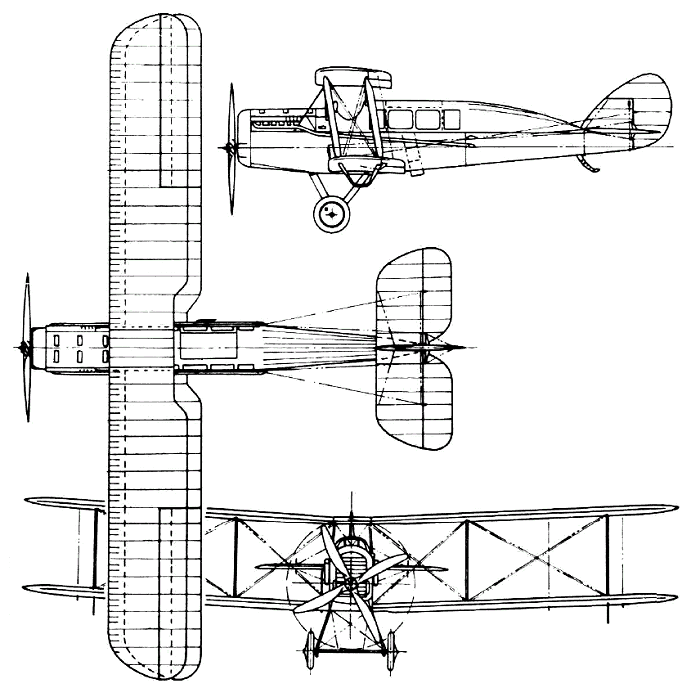
|
| The end of World War I and the subsequent
vast surplus of military aircraft
was not a time for new civil designs to
emerge. Instead, many conversions of
military models were attempted, but the
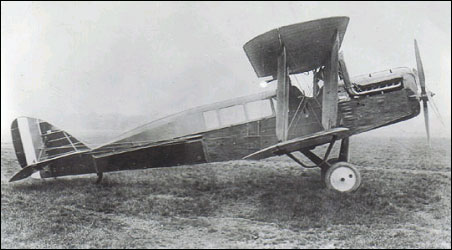
de Havilland D.H.16 was a redesign
of the D.H.9A with a wider fuselage for
four passengers. Following its first flight
at Hendon in March 1919, the D.H.16
was sold to Aircraft Transport and Travel
Ltd (AT&T), who used it for pleasure flying
before it inaugurated a London-Paris
service on 25 August of that year.
Total D.H.16 production was nine aircraft,
all but one being used by AT&T.
The sole exception was sold to a
customer in Buenos Aires, where it
operated a service to Montevideo. The
first six D.H.16s were powered by the
239kW Rolls-Royce Eagle
engine, while the last three had Napier
Lions.
AT&T closed in December 1920 and
its seven remaining D.H.16s (one had
been lost in a crash) were stored. All
were broken up in 1922 except for two
sold for newspaper delivery flights; one
of these was lost in a fatal crash in 1923,
and the remaining aircraft was subsequently
withdrawn and scrapped.
 | A three-view drawing (700 x 697) |
| ENGINE | 1 x Napier Lion inline piston engine, 336kW |
| WEIGHTS |
| Take-off weight | 2155 kg | 4751 lb |
| Empty weight | 1431 kg | 3155 lb |
| DIMENSIONS |
| Wingspan | 14.17 m | 47 ft 6 in |
| Length | 9.68 m | 32 ft 9 in |
| Height | 3.45 m | 11 ft 4 in |
| Wing area | 45.5 m2 | 489.76 sq ft |
| PERFORMANCE |
| Max. speed | 219 km/h | 136 mph |
| Cruise speed | 161 km/h | 100 mph |
| Ceiling | 6400 m | 21000 ft |
| Range | 684 km | 425 miles |
| Angus K Crutchfield, e-mail, 19.02.2009 09:50 Hi Kent,
I wonder if we may be related? I was born in 1951, my father being Kenneth Crutchfield, b 1901. My paternal grandmother was Florence Grace Jones, b.1875. Florence had two sisters and one brother. Her older sister, Henrietta, (known as Hettie) was born 1874 and she married a Walter Simpkin(s) Goddard. My undertstanding is that they had three sons, Raymond, Norman and Glen - but from there on, I know nothing other than they lived in / around Edmonton. If you have any details or can make a connection with my line I would be very pleased to know - and to receive a copy of the photograph you mention.
I live with my partner, Rebecca, in Somerset.
With Best Wishes,
Angus reply | | Kent Goddard, e-mail, 18.08.2008 01:27 From Kent Goddard Now at 74 years old
My grandfather was involved with AT&T in 1920
And i have a photograph of him with the aircraft
which may be of interest for your records
If you could give me your email address I will send it as an attachment
Regards
Kent C Goddard reply |
|
Do you have any comments?
|
| 
COMPANY
PROFILE
All the World's Rotorcraft
|