 |
De Havilland D.H.341922 |  |
| COMMERCIAL BIPLANE | Virtual Aircraft Museum / United Kingdom / De Havilland |
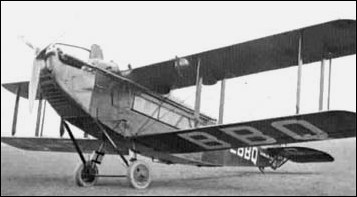 |
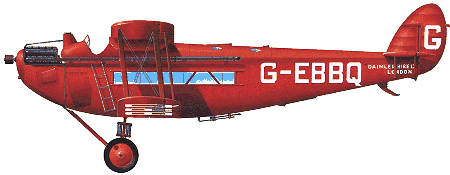
Building on commercial experience obtained with the D.H.18 and structural experience with the D.H.29, de Haviliand began work on a new type, the de Haviliand D.H.32, in 1921. Considerable progress had been made, and plans for construction of the first aircraft (with the 268kW Rolls-Royce Eagle engine as its powerplant) had been announced. The new design showed great promise, but since the main customers would be Instone and Daimler Hire, who were already using Napier Lion-powered D.H.18s, de Haviliand bowed to their wishes and redesigned the aircraft to use that engine. The result was the de Haviliand D.H.34, the company's most successful aircraft of the early post-war period. The first of 11 aircraft flew in March 1922, and made an inaugural Croydon- Paris flight on 2 April. Daimler Hire eventually used six D.H.34s and Instone four, while one was sold to Dobrolet, the Russian airline. When Imperial Airways was formed in 1924 it took over seven D.H.34s and used them over the next two years before deciding to re-equip with larger aircraft. There can be no doubt that the D.H.34s made an impressive mark on the air transport scene during the four years or so in which they served. Some 8,000 hours were recorded by December 1922, less than nine months after the prototype's appearance, and over 160,000km flown without overhaul by the second Daimler aircraft. However, no fewer than six D.H.34s were lost in accidents, several of them fatal. An early stalling crash led to extensions being added to the top wing to increase its area, giving rise to the designation D.H.34B. The last four D.H.34s in UK service were scrapped in 1926.
|  COMPANY PROFILE | |||||||||||||||||||||||||||||||||||||||||||||||||||||||

|


|