|
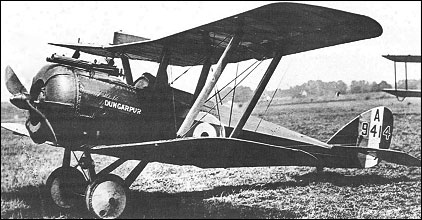
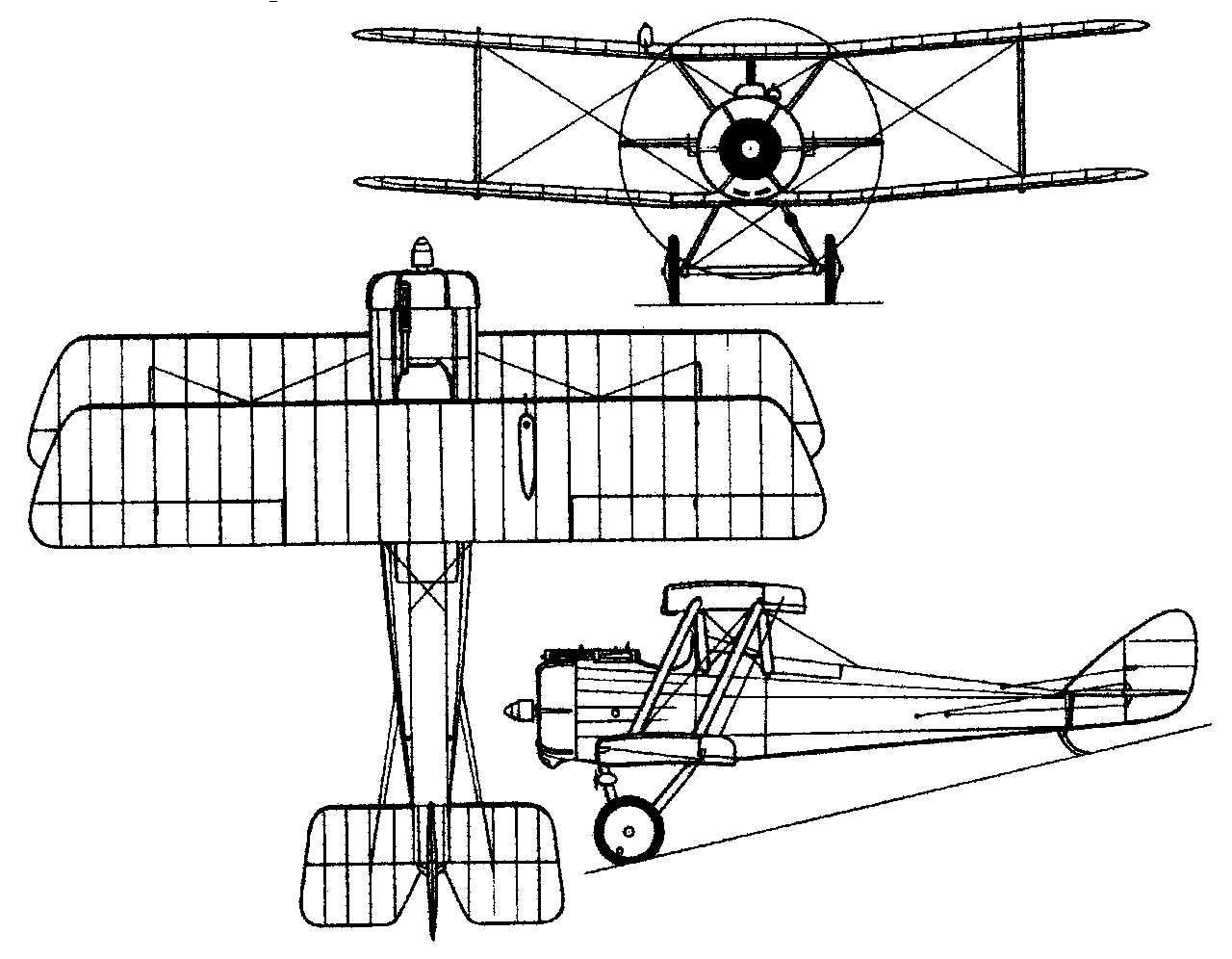
| Characterised by the pronounced negative stagger of
its mainplanes, which resulted from an attempt on the
part of Geoffrey de Havilland to combine the performance
of the tractor biplane with the cockpit visibility of
pusher aircraft, the D.H.5 was flown late in 1916, and
entered service in May 1917. Immensely strong and
possessing docile handling qualities, but easily outflown
by contemporary fighters at altitudes above
3050m, the D.H.5 was of wooden construction
with plywood and fabric skinning. Power was provided
by a 100hp Le Rhone 9J nine-cylinder rotary and
armament consisted of a single 7.7mm Vickers
gun. Some 550 were built by the parent company;
Darracq Motor Engineering; March, Jones and Cribb,
and British Caudron, but the D.H. 5 was deemed to be of limited success and had been withdrawn from operations
by the end of January 1918.
 | A three-view drawing (1280 x 996) |
| WEIGHTS |
| Take-off weight | 677 kg | 1493 lb |
| Empty weight | 458 kg | 1010 lb |
| DIMENSIONS |
| Wingspan | 7.82 m | 26 ft 8 in |
| Length | 6.71 m | 22 ft 0 in |
| Height | 2.78 m | 9 ft 1 in |
| Wing area | 19.70 m2 | 212.05 sq ft |
| PERFORMANCE |
| Max. speed | 164 km/h | 102 mph |
| ठिद8द5द8द8ठ2दधतडà¤, e-mail, 01.01.2021 05:54 ठ2द8ठदद8दठ2द8द8ठ2दददनठ2नठ28धददतद8ठठडधठद्र5दठदतदद8ठ3द8दठठद7द8दद8द8दद8दत4द8दद reply | | Klaatu83, e-mail, 05.06.2013 04:43 It is something of a mystery why this aircraft should have been ordered into production at all, because it was markedly out-preformed by the Sopwith Pup, Sopwith Triplane, Sopwith Camel and SE-5, all of which were already at least in existence in prototype form, and some of which were actually in mass-production, by the time the prototype DH-5 was test-flown. Although it was said to be very strong and very good at diving, the DH-5 was incapable of flying high enough to take tactical advantage of that fact. Placing the upper wing behind the pilot gave him good forward visibility, but concealed enemy aircraft attacking from behind and above which, given the DH-5's poor altitude performance, was the direction from which they could usually be expected to come. About the only mission the DH-5 proved to be suited to was ground strafing but, being unarmored, casualties tended to be high. As a result, the DH-5 was withdrawn from combat by the end of 1917, barely a year after the first flight of the prototype. reply | | Duncan, e-mail, 12.11.2012 14:43 Hello De Haviland fan,
Does anyone know where they build the Airco DH-5 reply |
|
Do you have any comments?
|
| 
COMPANY
PROFILE
All the World's Rotorcraft
|