|
| In order to carry out research on high-speed
flight and to test replacement
engines for the Cirrus, de Havilland built
in 1927 two small single-seat monoplanes
designated de Haviliand
D.H.71 Tiger Moth. Such was the
degree of streamlining required that it
was designed around test pilot Hubert
Broad. The two aircraft were entered for
the King's Cup Air Race, for it then
seemed accepted that any new light aircraft
of that time were required to thus
prove themselves. However, one was
scratched before the race; the other,
powered by an A.D.C. Cirrus II engine,
was withdrawn during the race due to
bumpy conditions.
In August 1927 the first D.H.71, then
with alternative wings of only 5.69m span and a new 101kW Gipsy engine, was flown by Broad to a
new 100km closed circuit
record for aircraft of its class of
300.09km/h. Five days
later Broad attempted the world's altitude
record for the category, but having
no oxygen the limitation was on man and
not machine. He reached 5849m before having to give up,
although the aircraft was still climbing at
over 305m per minute.
In 1930 the first D.H.71 was taken to
Australia, but crashed during practice for
an air race after suffering engine failure
on take-off, killing the pilot. The second
airframe, minus engine, was destroyed
at Hatfield in an air raid during October
1940.
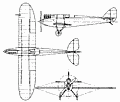 | A three-view drawing (700 x 593) |
| MODEL | D.H.71 |
| ENGINE | 1 x A.D.C. Cirrus II inline piston engine, 63kW |
| WEIGHTS |
| Take-off weight | 411 kg | 906 lb |
| Empty weight | 280 kg | 617 lb |
| DIMENSIONS |
| Wingspan | 6.86 m | 23 ft 6 in |
| Length | 5.66 m | 19 ft 7 in |
| Height | 2.13 m | 7 ft 0 in |
| Wing area | 7.11 m2 | 76.53 sq ft |
| PERFORMANCE |
| Max. speed | 267 km/h | 166 mph |
| John Allard, e-mail, 17.09.2025 20:22 Hi, I am currently building an rc version of the DH71, with a 2 mtr span, one question which keeps coming up is,
“What is the assembly on top front of fuselage, like a tunnel� your help would be appreciated
Tia. reply |
| sumit gupta, e-mail, 03.05.2013 13:32 I know an aircraft's speed is limited to 250 KIAS below 10,000 MSL. Is there a speed restriction 10,000 and above? I've been told it was the speed of sound, but I can't find any regulation that says that.
amar work in investment company SS Investment solution reply |
| Ali Duncan, e-mail, 15.09.2010 10:15 Aircraft like this are a pure delight for anyone who enjoys confounding the opinions of bar room experts, of which I am one(Haha. Imagine my ecstacy on discovering the test version of the Swordfish was known as tsr2. Oh joy, lol. reply | | Ian, e-mail, 29.04.2010 19:40 My mistake....I meant SPAM not SPAN. D'oh!!! reply | |
| | Ian, e-mail, 29.04.2010 19:39 Is there a way that the span can be removed from the comments section? reply | | sharetipsinfo, e-mail, 02.10.2009 10:14 Hi,
Indian stock market is one of the most volatile market. Its two main stock exchanges are NSE< /a>and BSE. Both exchanges generally follow same trend.
NSE and BSE offers platform for investment in Indian stock market. In India there are many traders who prefer NSE over BSE< /a> as they consider BSE
as more volatile exchange but truth is that all exchanges be it NSE, BSE or LSE are volatile and should not be considered as a place for speculation.
One should strictly follow technical analyses if they want to earn regularly from any stock market.
Please remember analyses of stock market be it technical or fundamental do help!!
Regards
SHARETIPSINFO TEAM< /a>
+91- 9891655316
+91- 9899056796
+91- 9891890425reply | | saretips, e-mail, 01.09.2009 12:45 We all get bombarded every day with mails, morning briefs as to which stock we should pick and how will be the market trend today. Every time the brokerage houses will send the stock market tips< /a>> as if we all are playing a gamble and need the tricks as to how we can win it. And anticipating as to how to do stop loss and at least will make smaller profits. What most of the investor do is they consider short term trading as the long term investment and believe as to how it can be doubled in a day. Buying a stock just because the price is low and some stock market tip you received that this will boom in the market today. What most of us do is that we all trade with money which we can¡¦t afford to lose but the market always says that invest only that money which is in excess to you. All of these are the big mistakes which we commit every day in spite of being reminded every time that we should complete our home work for the next day.
Things to Remember when invest in stock market: < /a>>
ƒæ We believe that the fundamental says invest in those company about which you know completely , but that doesn¡¦t mean you fall in love with a company and a particular stock just because you are familiar with it or it create news in the stock market every time. Most of us just try proving our fundamentals are right and for that we apply too many technical indicators on that stock. It¡¦s not true that the stock will go according to its fundamentals and technical, many stocks behave opposite to their indicators, thus they do not guarantee as to whether it will go up or down.
ƒæ Investors jump to penny stocks as they immediately boom in the market due to rumors what need to understand is that the Penny stocks are very risky , and on this basis make your strategy as to which one to pick from that lot and how much to invest . The portfolio of the investor should be constructed in such a manner that it allots weight age to different sector and the sizes of the stocks so that the diversification is there and the risk can be mitigated. Therefore the weight age of penny stocks in one¡¥s portfolio should not be more that the 15%. This is to minimize the losses and to accumulate the profits also.
ľ Keep a watch on the industry of the particular stock. Most of the stock behaves according to their industry trend. Thus if in the budget the government committed to play large role in the infrastructure sector , all the stocks will go react as per the budget and the whole sector recorded the jump of 12% on the next day. But it might be the case that the industry is booming and the stock is going down, therefore along with Industry, Company information is also vital.
ƒæ Past performance of any company doesn¡¦t not hold true or affect its future performance. Many of the Indian stocks which were heavy weight in the past few years and were considered the blue chip companies in this market are either bankrupt or have become extinct in the market. Thus continuous performance analysis and evaluation is important.
STOCK MARKET TIPS < /a>> TIPS FOR STOCK MARKET < /a>> STOCK MARKET IDEAS < /a>>reply | | sharetipsinfo, e-mail, 26.03.2009 07:25 In the time of recession one job or one work is hardly fulfilling needs of people. So everyone is looking for supplementary source of income.
Now the question is what can be that source of income in such a bad phase of economy??
Well it's very difficult to start new business at this point of time as it requires lot of cash and efforts. So again question is how to make more money in such conditions when needs are same and income is low?
We strongly suggest that if you like to take bit of risk and don't want to spend too much money and time on new venture then stock market is the right place for you.
To be very frank this is not the right time for investment that is for long term to medium term investment but every day is a favourable day for day trading. No matter if NSE or BSE< /a>
is bullish or bearish as In stock market one can earn in both of these trends.
So just think about it and see if stock market can be the right place to make some extra money.
Please feel free to contact us for any query.
Regards
SHARETIPSINFO TEAM < /a>reply | | Robert Alexander, e-mail, 07.05.2008 07:04 I was at the Queensland Air Museum, Caloundra last week and there on display is a replica airframe of a D.H.71 Tiger Moth which was donated by a Mr.Rob Slight. I have the photo...
Regarding the A /C that was shipped to Australia for a Mr F.K.Bardsly or Bardesley.. its c.n. was 323 whilst G-EBRV was 324. Photograph of G-EBQU at the RAAF base at Pt.Cook, Victoria with Maj.Hereward de Havilland at the controls before going to Mascot,NSW. Full article of the above can be found in the book by R.T.Jackson "De Havilland Aircraft since 1909" reply | | Graeme Parsons, e-mail, 22.03.2008 03:14 The first DH71, G-EBQU was taken to Australia by Geoffrey de Havilland & registered as VH-UNH to a local man.
According to the press of the day, at about 5.00 pm on 17 /9 /30 a young experienced pilot Dave Smith took the plane up in practice for an aerial derby to be held the following weekend. He failed to strap himself in and experiencing some difficulty with the controls, was thrown out of the plan about 2 miles from Sydney airport,and was killed. The plane was a total wreck.
A report said the aircraft was sensitive to elevator control at high speed & the pilot had used the controls coarsly. There was no engine failure.
Hubert Broad had apparently told both Charles Kingsford-Smith & Charles Ulm, previously in the UK that it was "a nasty machine to fly". (Press photo of aircraft in Aus. available) reply | | Niklas Oberfeld, e-mail, 14.09.2007 03:57 It is my understanding that the DH71 was develpoed primarily as a test-bed for the new De Havilland Gipsy engine. The original Cirrus engine would have been used to get the aircraft airborne and have the test pilots gain expertise in the flight characteristics of the new craft while the prototype Gipsy engine was being built. The Gipsy itself was a special racing version delivering 130 hp while the series Gipsy I engine would be downrated to 100 hp.
James gilbert: the Great Planes @1970 Ridge Press) reply | | Mike Dennis, e-mail, 29.04.2007 16:05 Where can I obtain 3 views or scale drawings of the DH71 please? reply |
|
Do you have any comments?
|
| 
COMPANY
PROFILE
All the World's Rotorcraft
|


 sumit gupta


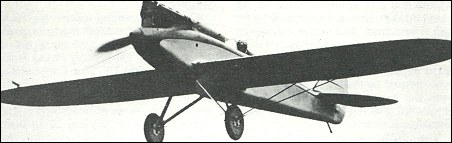
The upright cylinders of the Gipsy engine with their associated cowlings. Look at the DH60 Moth with a Gipsy engine - same layout - four upright in-line cylinders.
reply