|
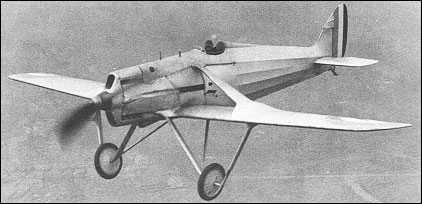
| Conceived to meet the requirements of Specification
F.20/27 which called for a short-range, fast-climbing,
lightly-loaded single-seat interceptor fighter, the
D.H.77 was designed by W G Carter in close collaboration
with Maj F B Halford. The latter evolved specifically
for the fighter a novel supercharged air-cooled
engine of low frontal area which was built by D Napier,
as the Napier H type and later known as the Rapier I,
offering 301hp. Of mixed construction, the wing having
two steel spars and wooden ribs with fabric skinning,
and the fuselage, also fabric-covered, being a box girder
of steel tube with wooden formers, the D.H.77
carried an armament of two 7.7mm Vickers
guns and flew early in December 1929. The sole prototype
was purchased by the Air Ministry and after the
completion of official trials was used primarily for Rapier engine development. It was fitted, in December
1932, with a 295hp Rapier II, the Hawker Hornet
biplane (renamed Fury) having meanwhile been
selected for production as the RAF's first standard
interceptor.
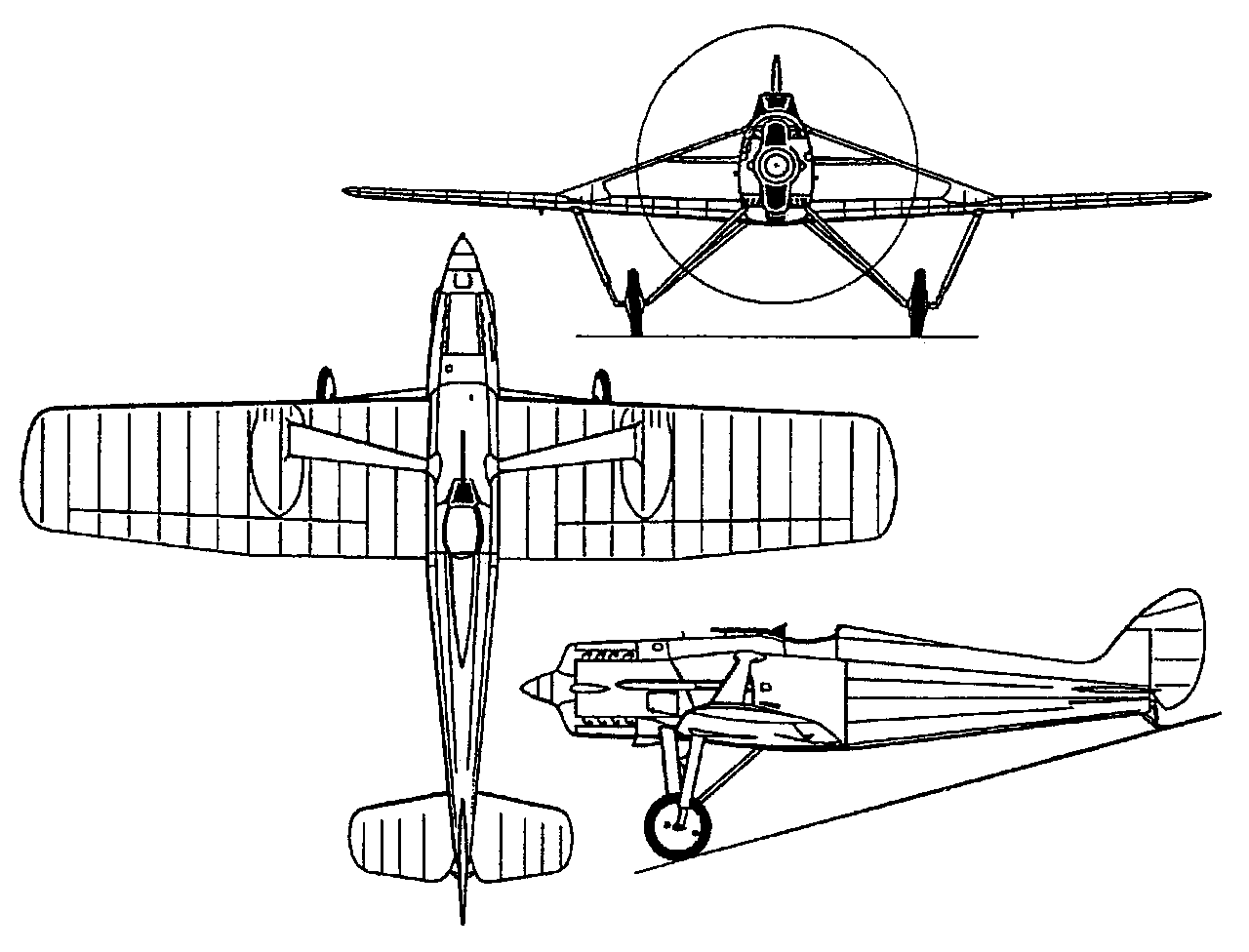
 | A three-view drawing (1280 x 976) |
| WEIGHTS |
| Take-off weight | 1034 kg | 2280 lb |
| Empty weight | 751 kg | 1656 lb |
| DIMENSIONS |
| Wingspan | 9.80 m | 32 ft 2 in |
| Length | 7.44 m | 24 ft 5 in |
| Height | 2.44 m | 8 ft 0 in |
| Wing area | 15.14 m2 | 162.97 sq ft |
| PERFORMANCE |
| Max. speed | 327 km/h | 203 mph |
| J Runfeldt, 17.09.2014 22:08 No Rick, many of the early pioneer aircraft pre-WW1 used all-flying control surfaces. Examples include but are not restricted to, Bleriot XI of first Channel crossing fame, Morane-Saulnier type G, and of course the Wright Flyer. reply | | Rick Harland, e-mail, 25.10.2010 14:50 Was this the first aircraft to use an all-flying tailpane? reply |
|
Do you have any comments?
|
| 
COMPANY
PROFILE
All the World's Rotorcraft
|