 |
Miles M.35 Libellula1942 |  |
| EXPERIMENTAL | Virtual Aircraft Museum / United Kingdom / Miles |
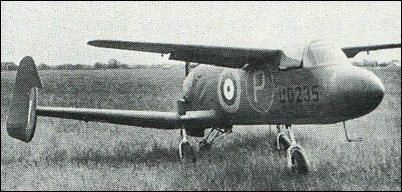 |
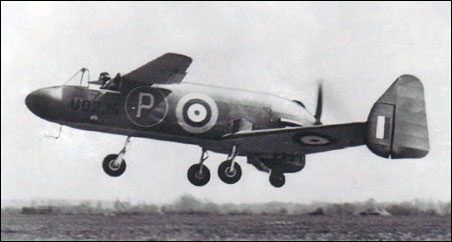
Among the collection of projects which emerged from Miles during World War II, two of the strangest were the Miles M.35 and M.39 tandem-wing aircraft, and while most of the projects did not materialise these two were built and flown. The M.35 was conceived as a layout practicable for a carrier-based fighter, the pilot being in the extreme nose with the pusher engine mounted behind the rear wing. With lift provided by two wings, span could be short and there would be no need for wing-folding. The M.35 was completed and flown in six weeks but proved to be unstable. Wind tunnel tests showed the problems to be curable and George Miles conceived a heavy bomber, the M.39, to be powered by three turbojet engines, or in its initial form with two high-altitude Rolls-Royce Merlin 60s or Bristol Hercules VIIIs.
|  COMPANY PROFILE | |||||||

|


|