 |
Vickers Vulture1923 |  |
| AMPHIBIAN | Virtual Aircraft Museum / United Kingdom / Vickers |
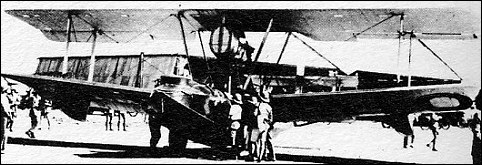 |
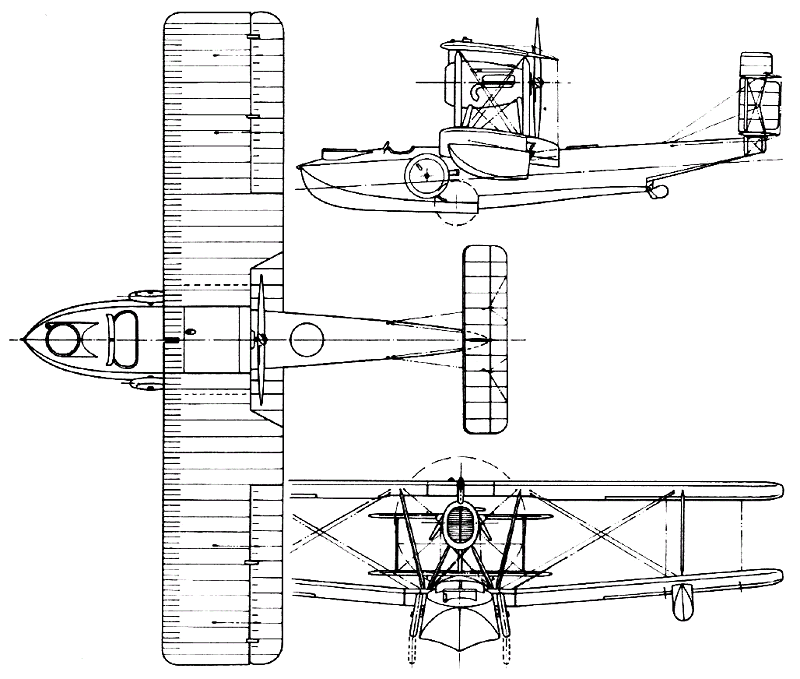
During 1918 Vickers designed a light amphibian with biplane wings and tail unit, its Consuta plywood hull being built by the company's S. E. Saunders subsidiary and incorporating an enclosed cabin seating four passengers. Its powerplant, a 205kW Rolls-Royce Falcon, was strut-mounted below the upper wing to drive a pusher propeller. Designated Vickers Viking, it was flown for the first time in late 1919. It was in a forced landing with this aircraft, on 18 December 1919, that the company's famous chief pilot, Sir John Alcock, was killed. From this Viking I was developed a series of aircraft with progressive improvements, especially to the hull (some of which had open cockpits), and differing powerplant. They comprised the one-off Viking II (268kW Rolls-Royce Eagle VIII) and Viking III (336kW Napier Lion), followed by the production Type 54 Viking IV. Of the 26 that were sold, examples in several type numbers went to the armed services of Argentina, Canada, France, Japan and the Netherlands, and for civil use in Argentina, Canada, the Soviet Union and the USA. Ironically, Sir Ross Smith, knighted like Sir John Alcock for a Vickers Vimy pioneering flight, was killed in an accident with a Viking IV on 13 April 1922. The final version was the Viking V with Napier Lion engine, two built for service with the RAF in Iraq. The aircraft that was to have been the Viking VI, with redesigned wing structure and Napier Lion engine, was designated Type 78 Vulture I; a second example with a 268kW Rolls-Royce Eagle IX had the designation Type 95 Vulture II but was later re-engined with a Napier Lion. These two aircraft were used during 1924 in an unsuccessful round-the-world flight attempt. Last of the Viking series, at first designated Viking VII but later named Type 83 Vanellus, was a single aircraft for evaluation by the RAF as a three-seat (pilot, observer/gunner and gunner) open-cockpit fleet-spotter; it differed primarily from its predecessors by having a monoplane tail unit. The 15.24m span Viking IV with Napier Lion powerplant had a maximum speed of 182km/h at sea level.
Vanessa Ascough, e-mail, 05.09.2020  Phillip Hardiman Phillip HardimanI dont know if you get my email address on this website, but if not, it is vanessa.ascough@gmail.com Vanessa Ascough, e-mail, 05.09.2020 Phillip HardimanThank you for your note - I would love to see your photographs please Simon Burgess, e-mail, 28.02.2022 Vanessa AscoughI too have inherited some photos of G-EBHO that my Great Grandfather took whilst stationed in Cairo, i'd be happy to share if you are interested? Anonymous, 07.01.2023 Alistair MochrieI am interested in the records - diaries, letters and photos, of RAF personnel - especially aircrew, stationed at RAF Abu Sueir in the 1920s and 1930s if anyone can help. I note amongst he messages above, Heather Walker, Anne Ward and Alistair Mochrie.
Vanessa Ascough, e-mail, 05.09.2020 tony jensenI know this was a long time ago that you left this note, but I would be very pleased if you would get in touch re your album please. Heather Walker, e-mail, 05.05.2021 anne wardHi, I’ve just been given an album of my great grandfathers photos including one of this plane when it stopped in Cairo in 1924. He was Anthony Edward Chapman. Happy to email the pic of you email me. Vanessa Ascough, e-mail, 20.11.2021 Heather Walkervanessa.ascough@gmail.com
|  COMPANY PROFILE | |||||||||||

|


|
Would you still have the photographs from Egypt? I would love to see them if you can send them to me please.
Vanessa Ascough
reply