|
| The Wellington, which served Bomber Command so well in the early years of World War II, is remembered by the RAF and the people of Britain as the 'Wimpey' - a nickname derived from an American cartoon character possessing the proud name J. Wellington Wimpey. It was designed to meet an Air Ministry requirement for a long-range medium bomber under Specification B.9/32 and evolved as a mid-wing monoplane with a fuselage of oval cross-section. Both of these major structures were of the geodetic construction which Barnes Wallis had introduced in the Wellesley. But experience with the latter and development of the geodetic concept made it possible for the individual components (which were built up into the 'basket-weave' structure) to be smaller and
lighter in weight without any loss of structuial integrity by comparison with the Wellesley. Wings, fuselage and tail unit were fabric-covered; power plant comprised two wing-mounted engines; and the tailwheel-type landing-gear units were hydraulically retractable.
'Heavy' defensive armament - comprising five machine-guns in nose and tail turrets and a ventral dustbin - would, it was believed, enable a flight of these aircraft to put up such a curtain of fire that fighter escort would be superfluous. Those who held such beliefs (as for the Boeing B-17 Fortress developed in America) were to discover their error very quickly.
The prototype Wellington made its first flight on 15 June 1936, but it was not until October 1938 that production aircraft began to enter RAF service. Less than one year later (on 4 September 1939) Wellingtons were in action against targets in Germany. Early deployment on daylight raids showed that these and other British bomber aircraft were extremely vulnerable to fighter attack. Following the loss of ten Wellingtons from a force of 24 despatched on an armed reconnaissance of Wilhelmshaven on 18 December 1939, the type was withdrawn from daylight operations. As a night bomber, however, the Wellington proved an invaluable weapon during the early years of Bomber Command's offensive against Germany.
Wellington production was to total 11,461 aircraft and embraced many versions. These included Mk I bombers (782kW Bristol Pegasus XVIIIs) and the DWI with degaussing ring to trigger magnetic mines. Differing engines distinguished the 853kW Rolls-Royce Merlin X-powered Mk II; 1,021kW Bristol Hercules XI Mk III; and Pratt & Whitney Twin Wasp Mk IV. The Wellington Mk V was a high-altitude aircraft with pressurised cabin, no nose turret and increased wing span, followed by the high-altitude Mk VI with 1,192kW Rolls-Royce Merlin 60 or 62 R6SM engines. Mk VII was designated an experimental model and Mk VIII was the first of many reconnaissance versions. Mk IX aircraft were Mk Is modified as troop carriers. The Mk X with Hercules VI or XVI engines was the last bomber. Wellingtons Mk XI, XII and XIII were ASV radar-equipped aircraft for Coastal Command. The Mk XIV with Hercules XVII engines was the final reconnaissance version. In addition to these specific versions there were many variants, and Wellingtons were also used for training and transport.
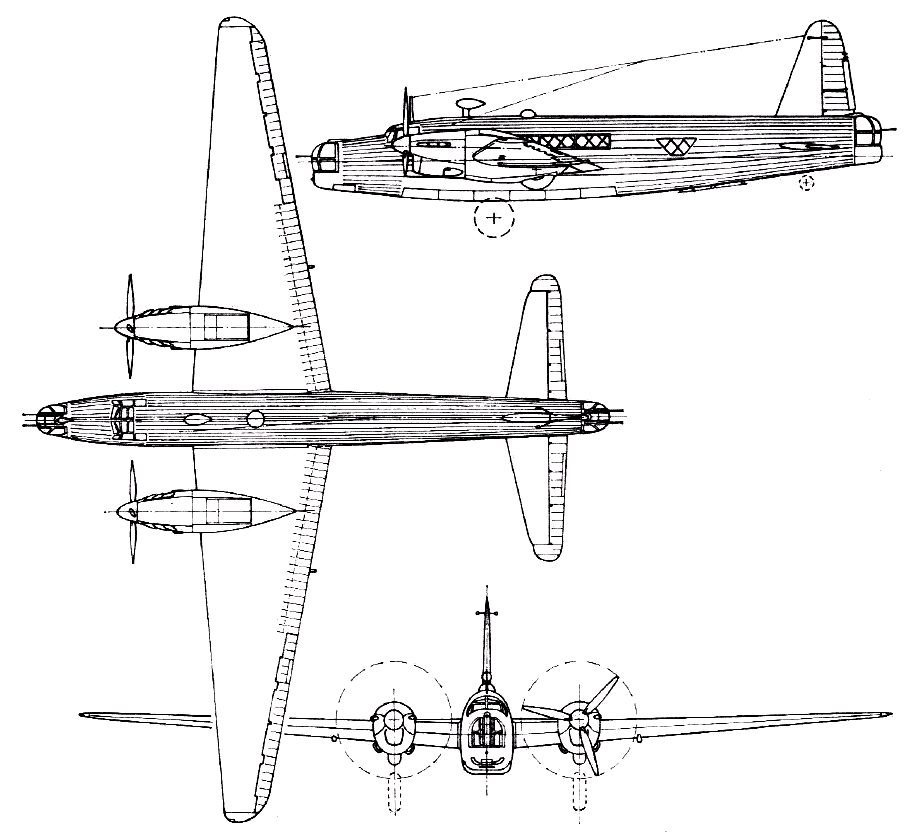
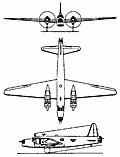 | A three-view drawing of Type 406 Wellington Mk. II (916 x 836) |
| MODEL | Wellington Mk X |
| CREW | 4 |
| ENGINE | 2 x Bristol Hercules XI, 1119kW |
| WEIGHTS |
| Take-off weight | 13381 kg | 29500 lb |
| Empty weight | 8417 kg | 18556 lb |
| DIMENSIONS |
| Wingspan | 26.26 m | 86 ft 2 in |
| Length | 18.54 m | 61 ft 10 in |
| Height | 5.31 m | 17 ft 5 in |
| Wing area | 70.0 m2 | 753.47 sq ft |
| PERFORMANCE |
| Max. speed | 410 km/h | 255 mph |
| Ceiling | 5790 m | 19000 ft |
| Range w/max payload | 2478 km | 1540 miles |
| ARMAMENT | 8 x 7.7mm machine-guns, 2041kg of bombs |
| Jerry Hart, e-mail, 15.01.2016 17:46 Thanks Uncle Rob!!! Sorry for the delay. reply | | marc longo, e-mail, 29.11.2015 14:34 hey how are ya? reply | | steve, e-mail, 25.02.2015 13:33 I have a copy of this photo and believe it was taken by rr photographer George Webb near rr Hucknall. I note on my photo that is a dart wellington, I assume that was the engines ? IS THIS OF ANY USE?. reply | | Uncle Rob, e-mail, 11.02.2015 00:45 Jerry, a bit of something on DWI Wellingtons wp.scn.ru /en /ww2 /b /559 /9 /5#38 It isn't much, but something to start you. reply | |
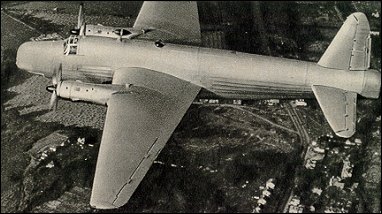
| | Jerry Hart, e-mail, 04.01.2015 14:24 I am seeking information about Wellington DWI deployments in Egypt during WWII. My father was an RAF electrician responsible for operating the degaussing loop and he served in the Cairo /Alex /Ismailia region. At this stage, I don't have his Sqn details but he may have been part of a GRU. Any further information about this corner of RAF operations or about DWIs in general (e.g. serial numbers) would be much appreciated. Thanks in anticipation. reply | | Barry, 21.02.2014 11:31 In response to the postings from Sven and Peter in February 2012, I can confirm that the picture at the top of the page is in fact Wellington Mk X, or as it would have been known at that time Mk 10, LN715. This aircraft was used in 1947 by Rolls Royce to test the Dart turboprop which would go on to be used in the Vickers Viscount. Whilst the Mark 10 was the most produced of all marks of Wellington, with over 3000 manufactured, it does seem a little odd that this photo is chosen to illustrate the Wellington. There again this site's picture editorial policy does strike me as being a little obtuse on occassions. reply | | David Meller, e-mail, 07.07.2013 11:13 During WW2 my mother was engaged in production of Wellington Bombers in Accrington, Lancs.
If anyone is interested I have several pictures that I believe are of her and her co-workers taken at the time. reply | | Martin Francis, e-mail, 02.01.2013 22:08 I was born a few months after the war ended. I lived in Flint in N.Wales, a few miles from the Broughton factory. When I was about 6 or 7, I was travelling to Chester on the bus, and was passing the north end of the airfield. Where the new North Airbus factory is now, there were dozens and dozens of Wellington bombers parked. It so impressed me at that age that I never forgot them. It was only later that I realised they were probably waiting to be scrapped.
Do you have any information on these 'Wimpys' and do we assume that none were kept for future generations to learn about them. Regards.Martin reply | | Peter Oliver, e-mail, 08.11.2012 01:37 I had the joy of being trained on the Wellington at Swinderby before progressing to the Lancaster when I was eighteen during 1948 /9. The aircraft had a considerable training role then although it is rarely mentioned in the the blurbs about that magnificent aircraft. Now at age 82 I bless it for keeping me alive despite difficult moments. reply | | Peter Oliver, e-mail, 08.11.2012 01:37 I had the joy of being trained on the Wellington at Swinderby before progressing to the Lancaster when I was eighteen during 1948 /9. The aircraft had a considerable training role then although it is rarely mentioned in the the blurbs about that magnificent aircraft. Now at age 82 I bless it for keeping me alive despite difficult moments. reply | | Klaatu83, e-mail, 03.07.2012 03:07 "'Heavy' defensive armament - comprising five machine-guns in nose and tail turrets and a ventral dustbin - would, it was believed, enable a flight of these aircraft to put up such a curtain of fire that fighter escort would be superfluous. Those who held such beliefs (as for the Boeing B-17 Fortress developed in America) were to discover their error very quickly."
Early Wellingtons had one machine gun in the nose, two each in tail and a "dustbin" turret that retracted into the belly. However, it was quickly found that lowing the "dustbin" turret added drag and reduced the speed considerably, so that feature was soon discontinued. Later Wellingtons were equipped with improved power-driver turrets, armed with two guns in the nose and four in the tail, and augmented by with flexible machine guns firing through waist windows. However, all the defensive machine guns installed on British bombers were of .303 caliber, and packed considerably less defensive punch than the much larger .50 caliber guns on U.S. Army Air Force bombers. reply | | Sven, 12.02.2012 19:38 Peter. I think your right. I'm fairly sure this is the Dart testbed for the Viscount. reply | | peter, e-mail, 12.02.2012 16:26 Is it my imagination or is that wellington powered by Rolls Royce Dart turboprops ? reply | | jonathan lilley, e-mail, 13.06.2011 18:30 hi bill still having problems with my email anyway told my dad what you said and he really got excited can't wait to hera from you cheers
jonathan reply | |
| | bill, e-mail, 11.06.2011 04:51 PS. Insert the @ instead of the = and note there is no comma(or any punctuation) following the ca reply | | bill, e-mail, 11.06.2011 04:47 Johnathan- Hi. For some reason this website changes the usual 'at' @ to an equals sign. Try my email dropping the = and the rest is correct. I have tried all combinations of yours without result. If you fail to reach me I will call on your phone in a few days. Cheers reply | | Jonathan Lilley, e-mail, 07.06.2011 22:26 Hi bill tried sending you an email to and it failed to anyway here is my mobile number 07591602998 hope to hear from you soon cheers
jonathan reply | | Bill Rainford, e-mail, 23.05.2011 07:54 Jonathan Lilley. Your Grandad was my father's pilot !... He ws the only survivor of the crash. (Rear Gunner Bill Rainford) I have a copy of that days' log along with a photo of the crew, including your Grandfather. I have attempted to e-mail you but there seems to be an error. please contact me and I will forward a great deal of info to you. Cheers reply | | Jonathan lilley, e-mail, 03.05.2011 00:03 My grandad was a pilot of a wellington bomber in the middle east .He was in 38 squadron his plane went down 50 miles east from benghazi but he didnt survive .Some of his crew made it out am trying to get more information and love the plane so much reply | | Jim McCorkle, e-mail, 01.04.2011 12:07 I completed a whole tour on Wimpeys if the Middle East theatre 1943 /44. Survived a ditching, and thought the Wimpey was a great kite to fly. Took a lot of punishment, and still btought us home.621 Sqdn. and 38 Sqdn.Desert and all over the Mediterranean. reply |
|
Do you have any comments?
|
| 
COMPANY
PROFILE
All the World's Rotorcraft
|




hi
reply