|
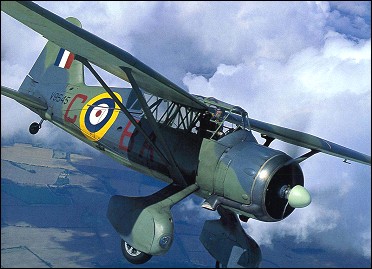
| With a name that is perhaps the best-known among Westland products, the Westland Lysander originated as the company's design to meet the requirements of Air Ministry Specification A.39/34 for an army co-operation aircraft. With a distinctive high-set wing and small stub-wings attached to the main wheel struts to carry weapons/stores, it was easily recognisable. The crew of two had enclosed accommodation and power was provided by a Bristol Mercury radial engine. The first of two prototypes was flown initially on 15 June 1936, successful testing resulting in a contract for 144 aircraft. The type began to enter service with No. 16 Squadron RAF in June 1938, and when production ended a total of 1,652 had been built. They were the first British aircraft to be based in France at the beginning of World War II and the last to see action in France during the evacuation from Dunkirk. They also saw service in Burma, Egypt, Greece, India and Palestine, and following withdrawal from first-line use played an important role in clandestine operations and fulfilled valuable. ASR and target-towing roles.
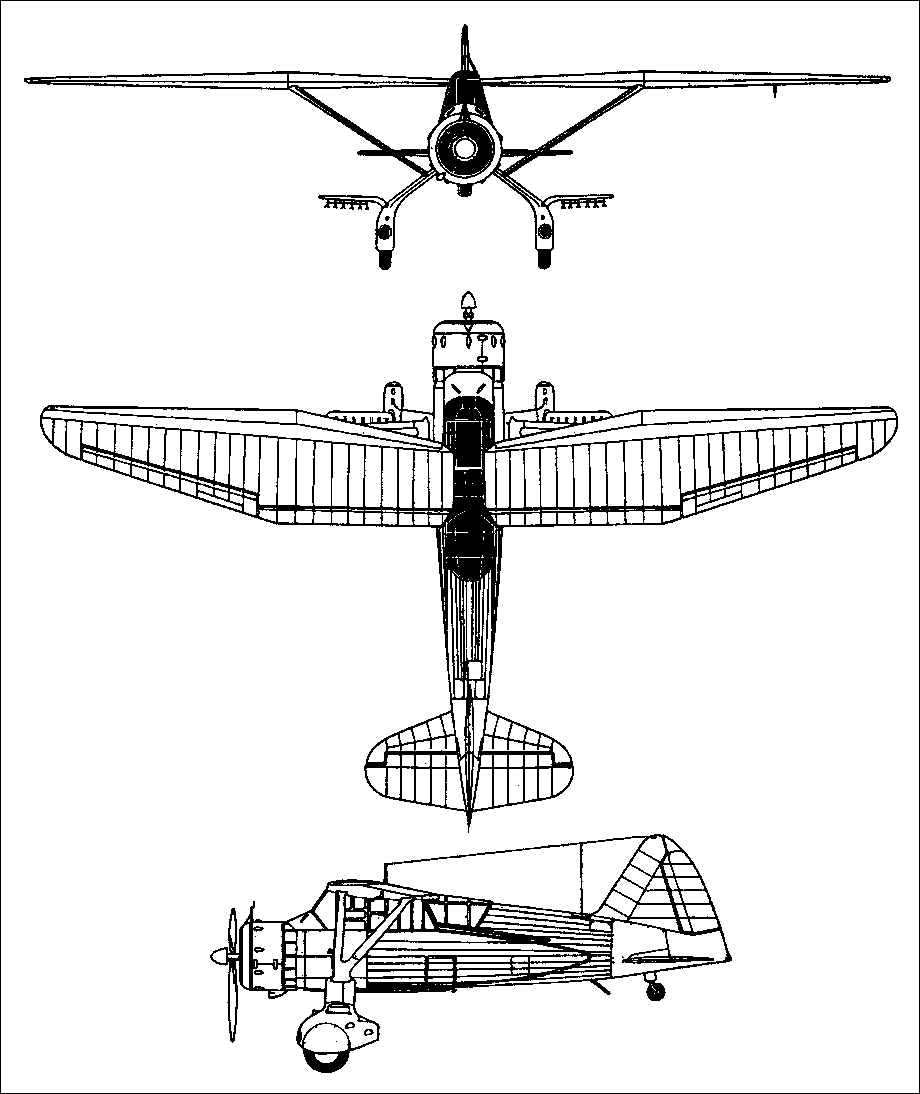
 | A three-view drawing (920 x 1094) |
| MODEL | "Lysander" Mk.III |
| CREW | 2 |
| ENGINE | 1 x Bristol "Mercury XX", 649kW |
| WEIGHTS |
| Take-off weight | 2866 kg | 6318 lb |
| Empty weight | 1980 kg | 4365 lb |
| DIMENSIONS |
| Wingspan | 15.24 m | 50 ft 0 in |
| Length | 9.3 m | 31 ft 6 in |
| Height | 4.42 m | 15 ft 6 in |
| Wing area | 14.15 m2 | 152.31 sq ft |
| PERFORMANCE |
| Max. speed | 341 km/h | 212 mph |
| Ceiling | 6555 m | 21500 ft |
| Range | 966 km | 600 miles |
| ARMAMENT | 4 x 7.7mm machine-guns, 227kg of bombs |
| Barry, 18.04.2016 15:15 Of the 175 Lysanders deployed to France with the B.E.F. some 118 were destroyed - no surprise there. It was thought that this basically sound design could do with some improvement in the way of defence. So as usual some bright spark in the Air Ministry came up with the idea of putting a four gun Nash & Thompson turret on the back end of the Lysander. This meant also the creation of an extra wing at the rear to replace the tail plane. To add to it's fighting prowess the two .303" machine guns were replaced with 2 x 20 mm cannon. Harald Penrose the test pilot reported that it flew well, but would you want to face an ME 109 or an FW 190 in such a thing? Anyway common sense prevailed and by 1944 alternatives had been found and the Wendover had had it's day. reply | | SVEN., 09.01.2012 09:39 Saw the Lysander at Old Warden last summer. On the ground an ungainly looking machine but in the air a nimble graceful aircraft. And Quiet too. Does anyone else remember articles in the early editions of "Pilot" magazine by J nesbit Dufort. Accounts of the SOE Lysanders reply | | laozhu, 20.06.2011 07:24 Their adherents do claim they're safer than airplanes or helicopters since, if the engine does fail during flight, the autogyro will simply float down to the ground, its rotor pinwheeling with sufficient RPM to allow a "soft" landing. At least that's what they say! reply | | bombardier, e-mail, 17.05.2011 11:37 If it had been fitted with armour,two 20mm cannons in the wings and retractable landing gear it would have been a simple and effective ground attack aicraft reply | |
| | Chris, e-mail, 10.05.2011 05:41 There was this one auto-gyro that really stuck in my mind, the Fairly Rotodyne i think, anyway, it's one of the worlds loudest aircraft, but it looks pretty neat. It used "compression jets" on the blade tips to "jump" up to altitude before the twin engines opened up. reply | | Ben Beekman, e-mail, 05.02.2011 22:24 In answer to Derick Lloyd's question, it sounds like you're describing an autogyro. These were stubby-winged aircraft having a propeller and tail surfaces just like an airplane but also having an overhead, pylon-mounted, rotor, similar to a helicopter's in appearence. This rotor was unpowered and freewheeling, however, and served to provide additional lift as the aircraft was moving ahead. Some autogyros were designed to mechanically link the front-mounted engine /propeller to the rotor and get it spinning just before takeoff in order to be able to "jump" into the air after a very short takeoff run. After the craft was airborne the short wings and the spinning rotor provided lift for continued flight. The drawback to these aircraft was that they were unable to hover and had to keep flying with the rotor turning in order to remain aloft. Airspeeds could be very low since the rotor served to provide an upward thrust vector while rotating. As you can imagine, landing one of these machines was relatively easy due to the lower speeds involved. In flight the rotor created a sound not unlike that of an "eggbeater" as anyone who has ever seen one flying over can testify! Autogyros were somewhat interesting during the 1930's and 40's but yielded to the more commercially viable helicopter in later years. Maybe they'll make a comeback someday in a slightly different form. Their adherents do claim they're safer than airplanes or helicopters since, if the engine does fail during flight, the autogyro will simply float down to the ground, its rotor pinwheeling with sufficient RPM to allow a "soft" landing. At least that's what they say! reply | | Derick LLOYD, e-mail, 23.01.2011 21:52 I was just 6 yrs old when WW 11 started. I have a vague recollection of a Western Airplane that had a rotating propeller above the craft (like today's helicopters) but also had the conventional wings. Am I wrong? Or does anyone know of any such aircraft? reply | | Derick LLOYD, e-mail, 23.01.2011 21:45 rotating propeller above the craft (like today's helicopters) but also had the conventional wings. Am I wrong? or does anyone know of any such aircraft? reply | | Chris, e-mail, 17.09.2010 00:45 They should make a separate page for the P.12 WENDOVER! reply | | Chris (again!), e-mail, 16.09.2010 04:37 Found that picture Mark was talking about-
warrelics.eu /forum /military_photos /aircraft /14256d1221159158-westland-p-12-p12-plane.jpg
But such are strange thing where only so few where built and stuff from a time when people only had 12 exposures on the camera... its the only one I could find. reply | | Chris, e-mail, 16.09.2010 04:31 Thanks David Graham for sparking a discussion, when I first saw this page there where only 2 posts, look what we have done thanks everyone.(wow... i'm talking like i own the site!) reply | | Walter McGowan, e-mail, 07.08.2010 05:18 I worked on the design of this plane. Based on the French De-Lane patents it had to be renamed P-12 to avoid patent infringements.
The large horizontal stabilizer was in effect a back staggered
Biplane. It had a very slow stalling speed of about 40 MPH.
It often flew backwards in a high wind. reply | | Stuart Willard, e-mail, 26.08.2010 16:42 Walter you say you worked on this design? If this is so I would be very keen to talk to you about if you would like. Perhaps you can contact me at stuartwillarduk@gmail.com and I can expand on this with you. reply | | Mark, 18.04.2010 20:55 you can find a B /W photo of the wendover by putting
P.12 WENDOVER
into google image search,
hope this helps,
Mark reply | |
| | Chris, e-mail, 28.03.2010 20:42 I thought maybe I should include the link so people will actually believe me...
www.aviationarthangar.com /avarthaheitw.html reply | | Chris, e-mail, 04.02.2010 03:54 I found this at the Aviation Art Hanger website:
Situation: In the desperate days following Dunkirk, all thought was on the possibility of invasion by the victorious German forces. The attempt to make a "beachcomber" out of the Westland Lysander by mating it with a Lancaster-style rear turret resulted in the oddball P.12 Wendover. It never went into production.
AVIATION ART HANGAR - Hey, It Works! by Ronald Wong (P.12 Wendover) reply | | Chris, e-mail, 04.02.2010 03:48 I know what David is talking about, I also saw a painting showing a similar scene. But I don't know how the experiment worked out. reply | | leo rudnicki, e-mail, 07.04.2009 03:15 the turret lobby that spawned the Defiant and Roc and nagged Dehavilland for a turret Mossie were probably the spur behind this odd deformed version. Another version had a normal high-aspect ratio wing. Unsuccessful. reply | | David Graham, e-mail, 25.08.2008 22:07 Was there an obscure prototype tested with a four-gun rear turret and a twin-fin tailplane? Or was this a testbed for a new turret? reply |
|
Do you have any comments?
|
| 
COMPANY
PROFILE
All the World's Rotorcraft
|