|
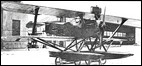
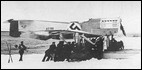
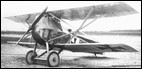
Hansa-Brandenburg KD (D.I) 1916 |
Designed by Ernst Heinkel specifically for the Austro-
Hungarian K.u.k. Luftfahrttruppen in 1916, the KD
(Kampf Doppeldecker) single-seat fighter featured a
novel system ... read more ... |
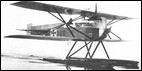
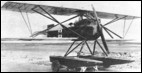
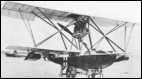
The KDW twin-float single-seat fighter seaplane was
essentially a conversion of the land-based KD (D.I) to
provide an interim aircraft for floatplane ... read more ... |
Hansa-Brandenburg KDW 1916 |
 |
|
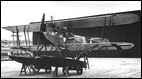
Hansa-Brandenburg CC 1916 |
Intended primarily for use by the Austro-Hungarian
Navy, the CC single-seat fighter flying boat (the designation was derived from the initials ... read more ... |
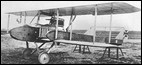
The first fighter to be designed by Ernst Heinkel as chief designer for the Hansa- und Brandenburgische Flugzeug-Werke, the KF ... read more ... |
Hansa-Brandenburg KF 1916 |
 |
|
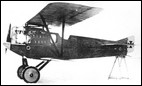
Hansa-Brandenburg L.14 1917 |
A derivative of the KD (D.I) with larger overall dimensions,
simplified interplane bracing and a 200hp Hiero
six-cylinder water-cooled engine, the L.14 ... read more ... |
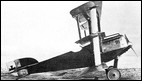
A single-seat equi-span fighter triplane, developed for
the Austro-Hungarian K.u.k. Luftfahrttruppen, with
aerofoil-section I-type interplane bracing struts, the L.16 was powered by ... read more ... |
Hansa-Brandenburg L.16 1917 |
 |
|
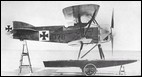
Hansa-Brandenburg W.16 1917 |
Intended primarily as a successor to the KDW in the
station defence fighter role, but also to investigate the
potentialities of the ... read more ... |
|
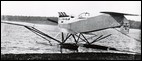
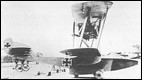
Hansa-Brandenburg W.18 1917 |
The W.18 single-seat fighter flying boat was, like the CC
that it supplanted, intended primarily for the Austro-
Hungarian Navy. The prototype ... read more ... |
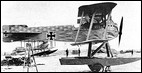
The last of the Heinkel-designed single-seat fighter
float seaplanes built by the Hansa- und Brandenburgische
Flugzeug-Werke, the W.25, produced as a single
prototype ... read more ... |
Hansa-Brandenburg W.25 1917 |
 |
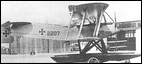
An enlarged W.12 developed to meet a demand for a
two-seat fighter seaplane with greater endurance, the
W.19 was first committed to ... read more ... |
Hansa-Brandenburg W.19 1918 |
 |
Evolved from the W.12 two-seat patrol fighter biplane in
parallel with the W.27, the W.29 was essentially a
monoplane derivative of the ... read more ... |
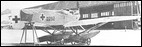
Hansa-Brandenburg W.29 1918 |
 |
|
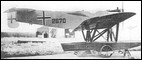
Hansa-Brandenburg W.33 1918 |
Ordered in April 1918, the W.33 was basically a larger
and more powerful development of the W.29 and, augmenting
the smaller fighter ... read more ... |
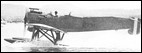
Continuing the line of two-seat patrol fighter monoplanes
initiated with the W.29, the W.34 was the final
WWI development of the series ... read more ... |
Hansa-Brandenburg W.34 1918 |
 |
|