|
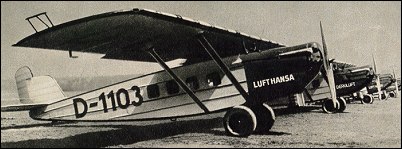
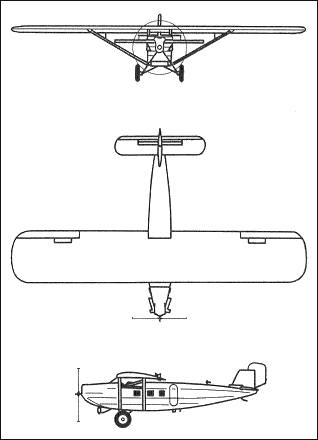
| The final development of the Komet type was the Merkur, which first flew in February 1925 and was produced from 1926 as a eight-ten passenger airliner powered by a BMW VI engine. It could cruise at 175km/h. Following long-distance overland trial flights, dual controls and adjustable pilot seats were fitted. Deutsche Luft-Hansa received the greatest number with nearly 30 aircraft and these operated from Berlin to Konigsberg and elsewhere. A twin-float seaplane version was also produced and Chile received a number as Do G trainers/torpedo-bombers. The Do D was similar to the Do C built for the Yugoslav Naval Air Service, while the Do T was an ambulance derivative of the Merkur.
| CREW | 2 |
| PASSENGERS | 6-7 |
| ENGINE | 1 x BMW VI, 500kW |
| WEIGHTS |
| Take-off weight | 3700 kg | 8157 lb |
| Empty weight | 2280 kg | 5027 lb |
| DIMENSIONS |
| Wingspan | 19.6 m | 64 ft 4 in |
| Length | 12.8 m | 42 ft 0 in |
| Height | 3.8 m | 12 ft 6 in |
| Wing area | 62.0 m2 | 667.36 sq ft |
| PERFORMANCE |
| Ceiling | 5200 m | 17050 ft |
| Range w/max.fuel | 1000 km | 621 miles |
| lxbfYeaa, e-mail, 14.03.2024 06:39 20 reply | | Dave Smith 55th, e-mail, 10.02.2014 01:47 I have a photo' that my father took of D711 that had forced landed on the Lines between Gillingham & Chatham ( you can see what was then the Royal Naval hospital in the background) in the 1930's. reply | | fahuang, 18.06.2011 11:08 Do C built for the Yugoslav Naval Air Service, while the Do T was an ambulance derivative of the Merkur. reply | | Barry, 11.01.2010 16:25 Upto 51 of both the MerkurI and Merkur II were built and some were still flying with the RLM in the late 1930's. reply |
|
Do you have any comments?
|
| 
COMPANY
PROFILE
All the World's Rotorcraft
|