 |
CRDA Cant Z.1007 Alcione1937 |  |
| BOMBER | Virtual Aircraft Museum / Italy / CRDA |
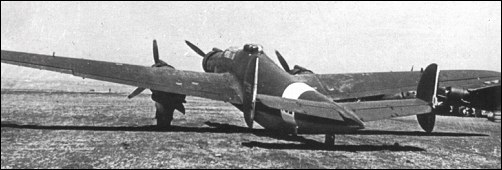 |
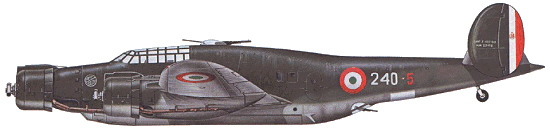
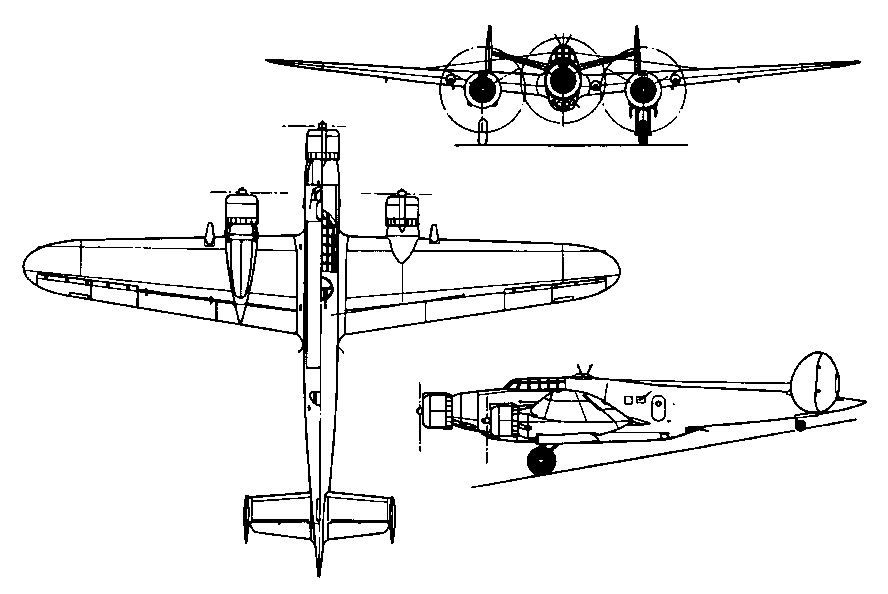
Along with the Savoia-Marchetti S.M.79, the CANT Z.1007 Alcione series of bombers served as the backbone of the Regia Aeronautica's conventional and torpedo strike forces in World War II. Under the aegis of the firm of CANT, Ingeniere Filippo Zappata began design studies of the CANT Z.1007 and Z.1011 in 1935: both were powered by 625kW Isotta-Fraschmi Asso XI RC.15 engines, for which the former had three and the latter two. The relatively low power ratings of this engine forced the Regia Aeronautica to order the trimotor CANT Z.1007 for production, the first prototype flying in March 1937. The aircraft was constructed entirely of wood, save for the usual metal ancillaries and nacelle cladding. The first examples had two-bladed wooden propellers, but all later versions adopted the three-bladed metal Alfa Romeo types. In 1938, as a means to better load and performance, the CANT Z.1007bis entered production, having three 745kW Piaggio B.XIbis RC.40 radial engines as standard. The CANT Z.1007bis was the major production model, and featured revised armament, engine cowlings and dimensions. A single fin and rudder was used on the Z. 1007 Serie I-III, with a twin fin-rudder format being adopted on the Z.1007 Serie IV-IX subtypes. When Italy entered the war on 10 June 1940 the Regia Aeronautica had 87 CANT Z.1007 and Z.1007bis bombers in commission, of which 38 were serviceable. These served with the 16° and 47° Stormi da Bombardamento Terrestre stationed at Vicenza and Ghedi in northern Italy. These units saw first action against Greek forces in October 1940, before turning their energies to anti-shipping strikes off Crete and North Africa, and on medium-level day and night bombing raids on Malta. Subsequently the type was employed by the 8°, 9°, 27°, 30° Stormi, and by the 41°, 51°, 59°, 87°, 90°, 95° and 107° Gruppi BT plus two squadriglie. During the climax of the Malta battles in May 1942, CANT Z.1007s took heavy casualties from the RAF's newly-arrived Supermarine Spitfire Mk.VC fighters; similar losses were experienced during the epic 'Harpoon' and 'Pedesta' convoy battles of the summer. Dwindling numbers were on hand to attempt to counter the Allied landings in Sicily in July 1943, and by the time of the armistice in September only a few were still available, these continuing to fight both with the RSI (Fascist regime) and the Italian co-belligerent air forces. Thirty-five CANT Z.1007ters were produced; production of the CANT Z.107bis and Z.1007ter (Piaggio P.XIX engines) amounted to 526.
|  All the World's Rotorcraft | ||||||||||
|


|