 |
Savoia-Marchetti S.M.81 Pipistrello1935 |  |
| TRANSPORT AIRCRAFT | Virtual Aircraft Museum / Italy / Savoia-Marchetti |
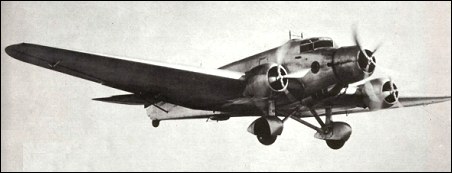 |
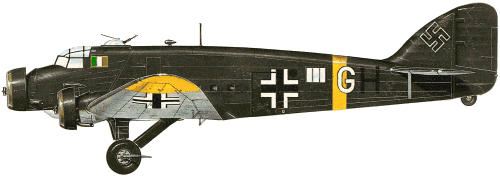
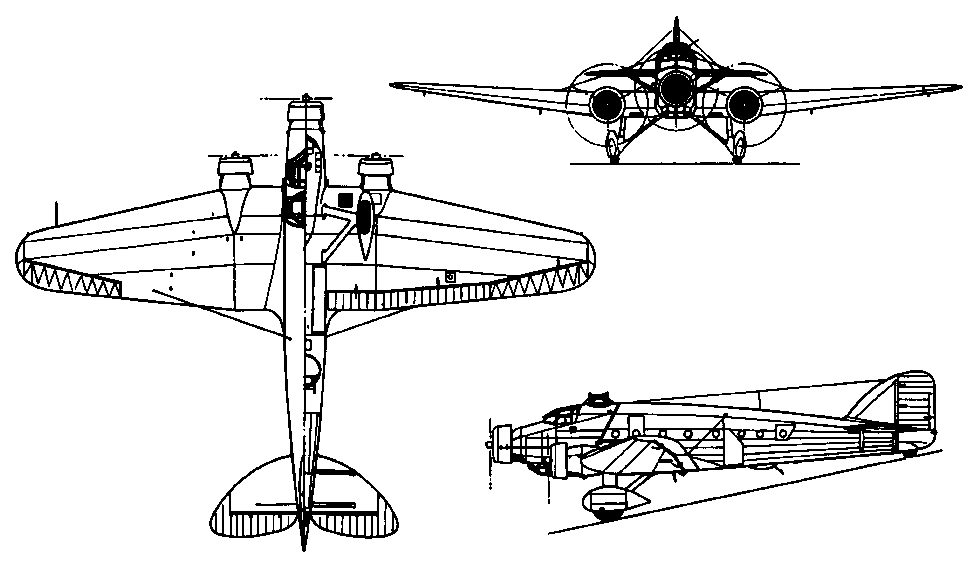
Like the larger Junkers Ju 52/3m which it resembled, the Savoia-Marchetti S.M.81 Pipistrello (bat) had originally been designed as a bomber, the work of Alessandro Marchetti, and as such had seen service in both the Spanish and Abyssinian wars; also like the German, design it had its root in civil aviation, being based on the S.M.73, which also had a fixed landing gear arrangement. Dating as it did from 1935, the S.M.81 was already suffering a degree of obsolescence when Italy entered World War II, so that despite the robust mixed construction which proved capable of absorbing much battle damage, it was rapidly replaced as a bomber by the S.M.79, production having ceased in March 1938 after 534 had been delivered; the 304 which remained on the strength of the Regia Aeronautica were converted to troop carriers (18 men) after withdrawal from front-line squadriglie. In this capacity, the S.M.81 was relegated to service on the African and Eastern fronts, where it proved sufficiently useful for production to be resumed in 1943 of the version which by then had been designated S.M.81/T. However, the coming of the armistice with the Allies in September 1943 meant that only about 80 of these additional aircraft were built, and only four remained in the south by this time although no less than two complete transport units were still equipped with the type in the 'Salo' Republic of Italy (Fascist-controlled northern Italy). An interesting historical fact is that one transport model of the S.M.81 was later used as the personal transport of Mussolini, a specimen that received the inappropriate name Taratuga (tortoise), A variety of different radial motors was fitted, including the 485kW or 507kW Alfa Romeo 125 RC.35 or 126 RC.34 respectively, the 485kW Gnome- Rhone 14K or the 500kW Piaggio P.X RC.35.
|  COMPANY PROFILE | ||||||||||||||||||||||||||||||||||||||||||||||||||||||
|


|
Sono molo interessato vederle. Fammi sapere come. Grazie
reply