|
| The requirement for a large torpedo/ dive-bomber for operation from a new, larger class of aircraft carrier caused the Imperial Japanese navy to draw up in 1941 the specification of an aircraft to replace the Nakajima B6N and Yokosuka D4Y. As this specification called for an internal bombload of up to 500kg, or the carriage of a 800kg torpedo externally, coupled with high maximum speed and long range, a powerful engine was essential. The navy selected what was virtually an experimental powerplant for this task: the Nakajima Homare 11 twin-row radial developing around 1342kW.
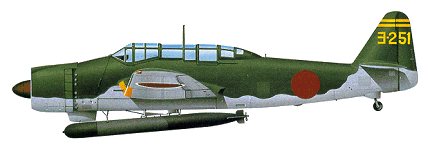
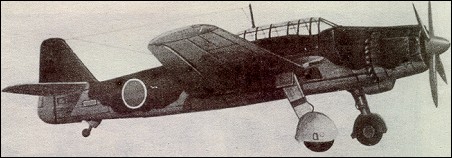
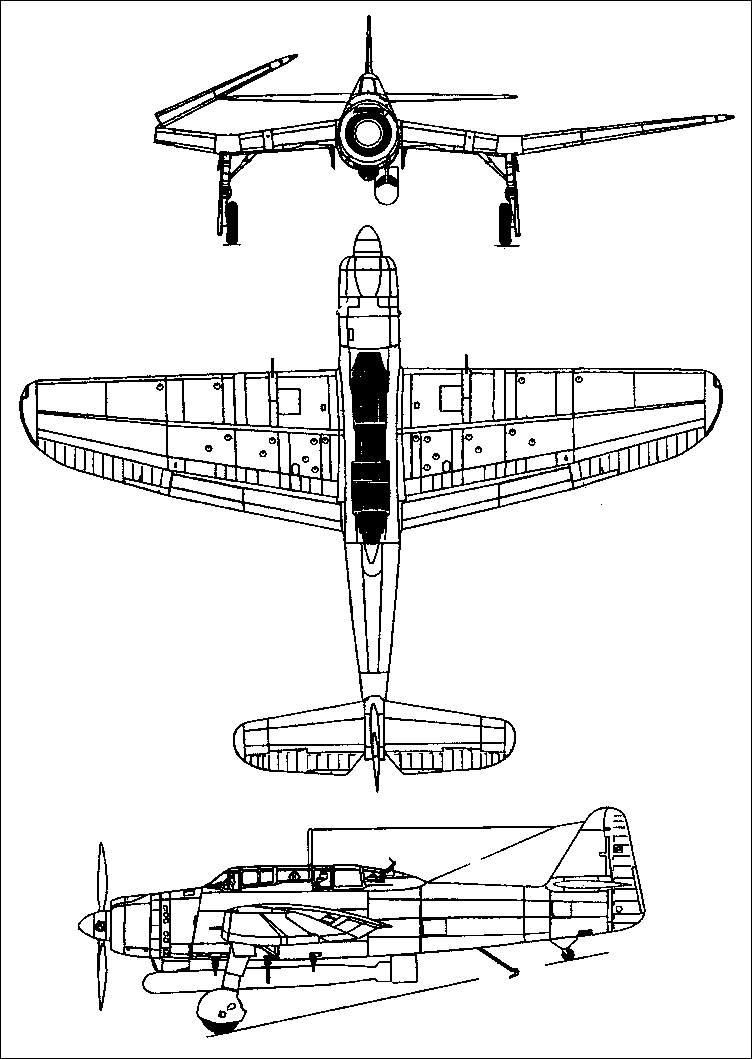
Aichi began work on this requirement, and its AM-23 prototype flew in mid-1942. This large aircraft, then designated Navy Experimental 16-Shi Carrier Attack Bomber (Aichi B7A1), was a mid-wing monoplane of inverted gull-wing configuration, a layout selected so that the main units of the retractable tail-wheel landing gear, mounted at the 'elbows' of each wing, would be as short as possible. A section of each outer wing panel folded for carrier stowage. The fuselage and tail unit were conventional, the former providing enclosed accommodation for a crew of two.
As might have been anticipated, the combination of problems from the air-frame, coupled with the teething troubles of the new engine, meant that it was almost two years before the type was ordered into production as the Navy Carrier Attack Bomber Ryusei (Shooting Star), or Aichi B7A2. Apart from nine prototype B7A1s, only 80 examples were completed by Aichi before its factory was destroyed in the
serious earthquake of May 1945; an
additional 25 were built by the Navai Air
Arsenal at Omura.
By the time these aircraft entered service,
when they were allocated the
Allied codename 'Grace', the Japanese
navy no longer had any carriers from
which they could operate, with the result
that they saw only limited use from land
bases.
| MODEL | B7A2 |
| CREW | 2 |
| ENGINE | 1 x Nakajima NK9C Homare-12, 1370kW |
| WEIGHTS |
| Take-off weight | 5625-6500 kg | 12401 - 14330 lb |
| Empty weight | 3810 kg | 8400 lb |
| DIMENSIONS |
| Wingspan | 14.4 m | 47 ft 3 in |
| Length | 11.5 m | 38 ft 9 in |
| Height | 4.08 m | 13 ft 5 in |
| Wing area | 35.4 m2 | 381.04 sq ft |
| PERFORMANCE |
| Max. speed | 565 km/h | 351 mph |
| Ceiling | 11250 m | 36900 ft |
| Range w/max.fuel | 3300 km | 2051 miles |
| Range w/max payload | 1800 km | 1118 miles |
| ARMAMENT | 2 x 20mm cannons, 13mm machine-gun, 800-kg torpedo or 800kg of bombs |
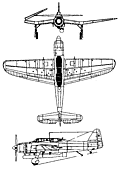 | A three-view drawing (752 x 1059) |
| lxbfYeaa, e-mail, 15.11.2025 14:30 20 reply | | lxbfYeaa, e-mail, 14.03.2024 01:32 20 reply | | lxbfYeaa, e-mail, 14.03.2024 01:31 20 reply | | Klaatu83, e-mail, 18.01.2017 03:19 The Ryusei is considered to have been among the best carrier-based attack aircraft to have been developed during WW-II. However, the engine selected for it was unreliable and in short supply due to the fact that it was also required for the Army's Ki84 Hayate Fighter. As a result there were not enough Ryuseis to make a difference. In addition, by the time the aircraft was developed, the Japanese Navy was short both of qualified aircraft carrier pilots to fly them, and of aircraft carriers from which to deploy them. As a result, many of the few that were available were expended in Kamikaze attacks, flown by insuffiently-trained pilots. reply | |
| | Mauro Cupertino, e-mail, 30.01.2016 14:10 In my opinion, it was more beautiful than the horrible TBF /TBM Avenger and Fairey Barracuda. reply | | Ron, e-mail, 18.01.2016 02:22 At twice the weight of a Zero, it could outdive it and it had twice the range also. 2x20mm wing cannons with 1,000 m range can leave a mark. It's like a Zero with a tailgunner. Only climb was inferior. reply |
| Ron, e-mail, 17.10.2014 02:21 As ugly as this attack plane was you have to give the Grace credit for matching the performance of the Zero fighter in speed and turn!
Also, it solved the landing gear problem that dogged other high-powered planes like the Shiden fighter.
Can you imagen an Allied fighter pilot thinking he had a slow sitting duck torpedo bomber in his sights only to be out-manuevered if not stung first by the 13.2mm rear gun! It had combat flaps and dive-bomber brakes as well, usefull in turns. reply | | Steven, 08.02.2012 06:57 If this aircraft had gone into service earlier, it may have caused major problems for the US Navy. Not a war winner, but it would certainly have gotten as much fame as the Zero. reply |
| bombardier, e-mail, 25.05.2011 11:27 The best Japanese naval aircraft of the war.Fast,manouverable and heavily armed reply | | Jorge, e-mail, 31.07.2010 07:50 Hi, anyone knows the root and tip airfoils for this plane? it happens I am planning to build a scale RC model of this plane and I would like to have that information. Thanks for any help. reply | | Hiroyuki Takeuchi, e-mail, 30.01.2009 07:19 An example is in Smisthonian Paul E Garber facility storage. Combining dive bomber and torpedo bomber ability with fighter like speed, maneuvrability and forward firing armament was similar in concept to late-war Allied designs like the Skyraider, although the B7A retained the second crew. reply | | Daniel Reynoso, e-mail, 11.01.2009 05:44 Hi boss:
I love Japan Aircraft from WWII, can you tell me about any site with interior's images?
Thank you reply | | kim seng, 19.11.2008 13:53 i think it was a Jap version of TBF Avenger plus hell diver? reply |
| Mr Jeff, e-mail, 03.11.2008 11:55 I want to know if this model is still in existence. I could recollect it was used by the Japanese in Bombing the US marines base sometime in history. reply | |
| | Xiaohan, 19.10.2008 08:10 Great plane, probably matching the Regainne RE 2002 in performance although not maneuverablity, I wish it had some armour though and no forward firing machinegun meant it's cannon is the only armament reply |
| Mick Dunne, e-mail, 29.12.2007 04:52 Brilliant design! Compare it to the English 'Spearfish'! Apparently it could give the Zero a run for its money in a dogfight(sans torpedo of course!) reply |
| Mick Dunne, e-mail, 29.12.2007 04:52 Brilliant design! Compare it to the English 'Spearfish'! Apparently it could give the Zero a run for its money in a dogfight(sans torpedo of course!) reply | | Ross Anderson, e-mail, 02.11.2007 16:19 No comments, only a request if a book on this aircraft model
becomes available in the UK. I use MidlandCounties Books. reply |
|
Do you have any comments?
|
| 
COMPANY
PROFILE
All the World's Rotorcraft
|


 Steven

20
reply