|
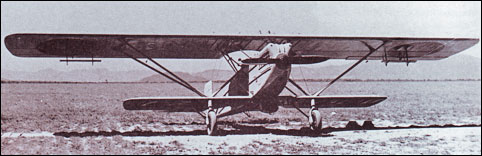
| Developed from the KDA-6 private venture reconnaissance prototype, the Kawasaki Ki-3 was designed by German engineer Richard Vogt, who later became chief designer for Blohm und Voss. The first Ki-3 flew in March 1933 and featured an unusual annular cowling with a nose radiator, but
production aircraft had a more normal chin radiator. It entered Japanese Army service as the Type 93, 203 being built by Kawasaki
and a further 40 by Tachikawa. It was a rugged aircraft, but the Ki-3's liquid-cooled engine was a constant source of trouble. The Ki-3 first
saw service with the 6th Composite Air Regiment in Korea. The type, which was Japan's last biplane bomber, saw action in China.
| ENGINE | 1 x 492kW BMW VIII liquid-cooled in-line engine |
| WEIGHTS |
| Take-off weight | 3097 kg | 6828 lb |
| DIMENSIONS |
| Wingspan | 13.00 m | 43 ft 8 in |
| Length | 10.00 m | 33 ft 10 in |
| Height | 3.00 m | 10 ft 10 in |
| PERFORMANCE |
| Max. speed | 259 km/h | 161 mph |
| Ceiling | 7000 m | 22950 ft |
| ARMAMENT | 2 x 7.7mm machine-guns, 500kg of bombs |
| laozhu, 18.06.2011 12:33 The type, which was Japan's last biplane bomber, saw action in China. reply | | SAMI, e-mail, 16.12.2010 23:12 EXELENTE PAGINA reply | | Бурундук, e-mail, 25.12.2009 16:20 Yes, it's KDA-3, but not KDA-7 (Ki-3) reply | | E. Ward, e-mail, 20.07.2008 11:46 According to Japanese Aircraft 1910-1941 (Putnam) the photo is of the 1925 Kawasaki /Voght Type 3 Army Experimental Three Seat Light Bomber. reply |
|
Do you have any comments?
|
| 
COMPANY
PROFILE
All the World's Rotorcraft
|