|
| In early 1937 Kawasaki was instructed
by the Imperial Japanese army to initiate
the design and development of a
twin-engine fighter that would be suitable
for long-range operations over
the Pacific. The concept derived from
army interest in developments taking
place in other countries, and particularly
in the Messerschmitt Bf 110. The
first Kawasaki Ki-45 Toryu (dragon killer)
prototype flew in 1939, a cantilever
mid-wing monoplane with retractable
tailwheel landing gear. A slender
fuselage provided enclosed accommodation
for two in tandem. Problems
followed with the engine installation,
and it was not until September 1941
that the Ki-45 KAIa entered production.
Armament of this initial series version
comprised one forward-firing 20mm cannon, two 12.7mm machine-guns in the nose, and a 7.92mm machine-gun on a flexible
mount in the rear cockpit; there was
also provision to carry two drop tanks
or two 250kg bombs on
underwing racks. The type entered
service in August 1942 but was first
used in combat during October 1942,
soon being allocated the Allied codename
'Nick'. The Ki-45 KAIa was
joined by a new version developed
especially for the ground-attack/antishipping
role, the Ki-45 KAIb. Standard armament comprised one 20mm
cannon in the nose, a forward-firing
37mm cannon in the fuselage, and one
rear-firing 7.92mm machine gun,
plus the underwing provision for
drop tanks or bombs; a number of
alternative weapon installations were
tried experimentally, including the use
of a 75mm cannon for attacks
on shipping.
The Ki-45 KAIa was, for its day,
heavily armed and proved effective
against the USAF's Consoldiated B-24
Liberators and, when these bombers
were used more extensively for night
operations, the Ki-45 was adapted to
attack them. Thus the night-fighting
capability of the type was discovered,
leading to development of the Ki-45
KAIc night-fighter, which proved to be
one of the most successful Japanese
aircraft in this category. Ki-45 Toryus
remained in service until the end of the
Pacific war, production totalling 1,701
including prototypes, being used for
the defence of Tokyo, and in the Manchuria,
Burma and Sumatra areas of
operations.
Ki-45 KAIc night fighter
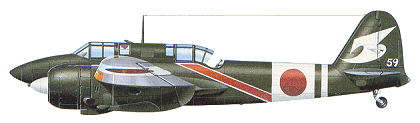
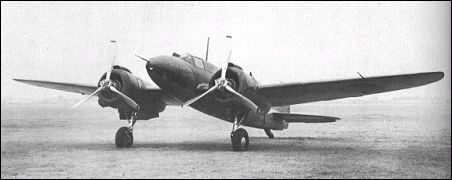
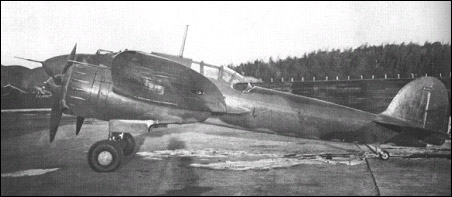
Constant development frustrations delayed
introduction into service of the
Imperial Japanese Army's Kawasaki
Ki-45 Toryu (dragon killer) until August
1942, its design having been initiated
five years earlier, and it was not until
1944 that the night-fighter version, the
Ki-45 KAIc, became operational as the
only army night-fighter of the war. Retaining
the two 805kW Mitsubishi
Ha-102 radials of the previous
Ki-45 KAIb heavy day fighter (an aircraft
whose role was akin to that of the
German Zerstorer), the Ki-45 KAIc was
armed with a single forward-firing
semi-automatic 37mm Type 98 cannon
in a fairing under the fuselage, two
oblique/upward-firing 20mm Ho-5
cannon in the centre fuselage, and a
single hand-held machine-gun in the
rear cockpit. It had been intended to fit
airborne radar in the nose, and therefore
no nose guns were included;
however, production difficulties
seriously delayed this equipment and
it did not enter service, although a
single aircraft flew with centimetric
radar shortly before the end of the war.
Production of the Ki-45 KAIc got
underway at Kawasaki's Akashi plant
in March 1944, the first aircraft being
completed the following month. On 15
June American Boeing B-29s of XX
Bomber Command launched their first
raid on the Japanese homeland, and
were intercepted by eight Toryus
whose pilots shot down eight of the big
bombers. At that time about 40 Ki-45
KAIc fighters had been completed,
and the aircraft went on to serve with
the 4th Sentai at Usuki in the Oita prefecture,
the 5th Sentai at Usuki and
Komachi in the Aichi prefecture, the
53rd Sentai at Matsudo in the Chiba
prefecture, and the 70th Sentai at
Kashiwa. Toryus shared the night defence
of Japan with the navy's J1N1-S
and Yokosuka P1Y1-S, and were probably
the most successful in action
against the massive American raids in
the last six months of the war; the 4th
Sentai alone was credited with 150
kills, of which 26 were gained by one
pilot, Captain Isamu Kashiide, all despite
the lack of any AI radar. Away
from the homeland Ki-45 KAIc nightfighters
also served with the 45th Sentai
in the Philippines and New Guinea
late in 1944, and with the 71st Dokuritsu
Hiko Chutai at Singapore in August
1945. Production of the Ki-45 KAIc
reached 477 aircraft before being terminated
in December 1944. The type
was codenamed 'Nick' by the Allies.
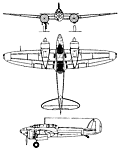 | A three-view drawing (752 x 941) |
| MODEL | Ki-45 KAIc |
| CREW | 2 |
| ENGINE | 2 x Mitsubishi Ha-102, 810kW |
| WEIGHTS |
| Take-off weight | 5500 kg | 12125 lb |
| Empty weight | 4000 kg | 8819 lb |
| DIMENSIONS |
| Wingspan | 15.02 m | 49 ft 3 in |
| Length | 11 m | 36 ft 1 in |
| Height | 3.7 m | 12 ft 2 in |
| Wing area | 32 m2 | 344.44 sq ft |
| PERFORMANCE |
| Max. speed | 540 km/h | 336 mph |
| Ceiling | 10000 m | 32800 ft |
| Range | 2000 km | 1243 miles |
| ARMAMENT | 1 x 37mm cannon, 2 x 20mm cannons, 1 x 7.92mm machine-guns, 2 x 250kg bombs |
| ubaTaeCJ, e-mail, 21.02.2025 16:19 20 reply |
| Anonymous, 17.07.2023 18:54 The myth of low Japanese aircraft quality, even well into 1945, is just that: A myth. Same with the engine reliability, fuel and maintenance: Fighter units, or at least the Ki-84s units for sure, were ensured 90 octane fuels all the way into 1945, maybe even to the end, and recon units had 100... Problems like the gear legs of the N1K1 breaking were due either to the engineering conception or the maintenance, not the inherent build quality, or they resulted from the unfamiliar engineering problems of seals on the inline engine Ki-61. True, overstressed maintenance crews could let non-essential things slip, like the tightness of the rigging on the control surfaces, but many tired P-47s were flown just as sloppy. There were probably all still better than the heavy two-handed controls of a P-51...
Even the reliability of the Ki-84 was not that major of an issue, unless the pilot had exceeded the recommended power limit in combat (which could mean an overhaul). That limit, based on captured pilot statements, meant a modest top speed of around 640 km /h with Japanese fuels combined with MW-50 (which was integral to its use). It is true the Ki-84 was delicately built in its service panels, and had engine accessories of lower durability compared to the US standard, so under rough field conditions the Ki-84 was not as easy to maintain as the FW-190A... But to say that it was junk because of this is to reveal a bias. The Ki-84 did have too small a prop, which reduced its speed and climb rate to much lower values than expected, but that was baked into the design by the gear length, and not the mythical issue of build quality.
The same thing is often done with late War German tanks, detractors often seizing upon a small irrelevant fact, like the lack of a particular steel alloy, or a biased Russian test, to say late War German armor was of poor quality. What they fail to get is that heat treatment matters far more than alloy content, and that all German armor featured a unique rear-hardening process, which maximized first shot resistance at the expense of subsequent shot resistance. The Russians, knowing this, used the Tiger II's own gun at point blank range for the first test shot, then claimed poor performance on the subsequent shots with Russian guns... See how this works?
Why are those claims of poor quality so persistent and widespread (When in truth they might apply to the last few weeks of the conflict, at best)? Because some people are politically uncomfortable with authoritarian regimes producing anything that appears like it "might" be technically superior, hence the particular focus on the Ki-84 or the German big cats. They then try to find "technical" sounding reasons to support their bias, ignoring that these authoritarian regimes were fighting with 1% or 2% of the fuel output of the US alone... It really boils down to not much more than that. reply |
| Ron, e-mail, 06.10.2014 12:10 The Nick interceptor had the same Cannons as the faster Dinah had on theirs but in reverse, which was unsuccessful. Too bad the Ki 46 didn't just followed what worked on the Ki 45 so well. reply |
| Hiroyuki Takeuchi, e-mail, 23.03.2012 10:40 Although the Schräge Musik, and the Japanese oblique cannons share the concept, it seems to have been born out of necessity to fight against the tough US bombers and unrelated to each other in origin. reply | |
| | PeoriaGuy, e-mail, 16.12.2011 07:33 I wish that someone still made this model. I have built Nichimo models before and their quality was very good, especially considering it was 25 years ago the last one was made! Will be looking for this model. Gotta have it-it was a good plane, just lesser known one. reply | | Angela, 20.06.2011 10:52 All the pilots in the squadron wanted to fly it but the powers that be refused permission. I did take a couple of pictures of it. There were also a couple of Bettys on the strip but they were damaged beyond repair. reply | | Ken K., e-mail, 14.04.2011 23:38 Neat plane.
I find it particularly interesting that the night fighter variant employed the German jazz music concept, the upward angled guns for use against bombers. reply | | Ian, e-mail, 08.10.2010 23:51 Paul, I agree with you on that. The majority of Japanese planes do look very similar at first glance. They seem to be one of the least documented too. This site is a treasure trove of info for aircraft anoraks like me. reply | | paul scott, e-mail, 10.09.2009 23:41 If it's not considered a joke, a lot of Japanese aircraft do look the same, however, on closer inspection, they are all unique. This one was a neat little 'plane too! reply | | Mick Dunne, e-mail, 23.11.2008 08:21 Incidentally, much is made of the performance of US aircraft vis a vis Japanese types during WWII...
To put things into perspective, air combat is not the same thing as Pylon Racing! Anyone that ACTUALLY flew Corsairs and Hellcats against Japanese facilities in Japan and its occupied territories soon realised that even at attack speeds of 400mph, a bunch of Nicks and Tojos joining combat from all angles at 350mph caused a whole bunch of trouble for the attackers! Engagements could be measured in seconds! reply | | Mick Dunne, e-mail, 23.11.2008 08:10 Interesting observations Carl! Pity you guys didn't get to fly one...I know some ex RAAF pilots that got to fly Tachikawa Ki54 Hickory comunications aircraft as Squadron Hacks. They LOVED the plane! Very reluctant to give them up... reply | | Sgt.KAR98, 04.04.2008 03:48 This plane looks great as Bf-110,althought the Zerstorer looks to have more firepower and the Ki-45,more agility reply | | Mick Dunne, e-mail, 29.12.2007 04:27 Interesting comment about the build quality of the Nick! Historians seem to love rubbishing this plane...in fact, it was a very good design, it was well built and used most capably by its pilots. In the end it was NUMBERS rather than fighting qualities that proved to be its nemesis! reply | | wilfredo alvarado, e-mail, 23.12.2007 18:09 I am a Giant scale R /C freak, and I wopuld like to build one KI 45.
But I need three views with cutaway sections, whera can I find them?
regards
Wilfredo reply | |
| | Carl Michels, e-mail, 08.06.2007 18:09 I was a Navy pilot in WWII and first saw a Nick fighter in a hangar at NAS Alameda before I left for the Pacific area. My impression of the aircraft was that it was lovingly constructed and must have taken lots of personal handiwork in its construction. I compared it to an F6F which was hangared next to the Nick, which looked like it had been put together in a great hurry, which was true since we turned out thousands of them in a relatively short time. Later, I was able to see another Nick up close which was left on the strip in perfect condition on the island of Palawan in the Philippines. All the pilots in the squadron wanted to fly it but the powers that be refused permission. I did take a couple of pictures of it. There were also a couple of Bettys on the strip but they were damaged beyond repair. reply |
|
Do you have any comments?
|
| 
COMPANY
PROFILE
All the World's Rotorcraft
|



 Anonymous

20
reply