 |
Kokusai Ki-1051945 |  |
| TRANSPORT | Virtual Aircraft Museum / Japan / Kokusai |
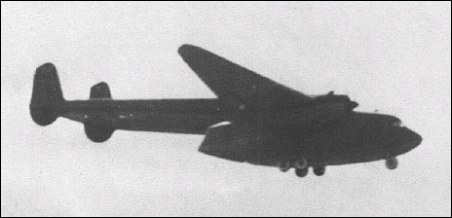 |
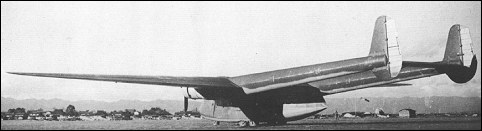
The Ki-105 Ohtori, ('Phoenix') was a desperate project fomented in the last months of the Pacific War. With Allied attacks on ports and shipping, Japan's sources of oil to fuel its defensive fighters were drying up. To meet the demand for aviation fuel, the experimental Kokusai Ku-7 transport glider was developed into a powered version for use in transporting fuel from the oilfields still held in Sumatra to Japan. This required a very long range of 2500km, and to achieve this the Ki-105's engines drew on the transported fuel, and used 80% of it to reach Japan (plus what it used to reach Sumatra unloaded). Japan developed a process to make gasoline from pine tree oil, which saw whole forests destroyed to fill the tanks of a few fighter aircraft. In light of such desperation, the development of the Ki-105 as a gas-guzzling flying fuel truck seems almost sensible. FACTS AND FIGURES © Details are scarce on some aspects of the Ki-105, and it is unclear how the fuel was to be carried and transferred to the aircraft's own tanks in flight. © The large and slow Ohtori, filled with gasoline, would have been an easy target fot Allied fighters en route from Sumatra to Japan. © The Ki-105's undercarriage consisted of four non-retractable mainwheels and a single nosewheel. This gave a level floor, which aided in the loading of heavy freight or fuel. © Some sources say the Ki-105 had the Allied codename 'Buzzard', although it is unlikely any pilot ever saw one before the war ended.
|  All the World's Rotorcraft | ||||||||||||||||||||||||||||||||||||||||
 allan j birmantas
 |


|
20
reply