|
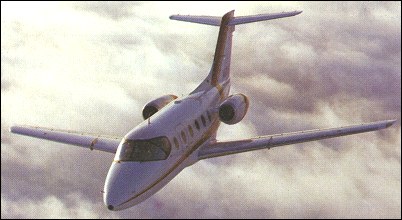
| In 1977 Mitsubishi designed and built two prototypes of a twin-turbofan business aircraft designated the MU-300, the first flying on 29 August 1978. A cantilever low-wing monoplane with a pressurised fuselage and retractable tricycle landing gear, the MU-300 was powered by two JT15D-4 turbofan engines, pod-mounted one on each side of the rear fuselage. Standard accommodation was provided for a crew of two and seven passengers. At the end of the development programme the prototypes were dismantled and shipped to the USA, where they were reassembled by the company's US subsidiary Mitsubishi Aircraft International Inc. Redesignated the Diamond I, the two aircraft were used in the US certification programme, which was granted on 6 November 1981. Initial customer deliveries began in July
1982 and 62 were built.
An improved version, the Diamond IA, fitted with uprated JT15D-4D engines giving overall performance increases, an EFIS cockpit and with maximum take-off weight increased to 7361kg, was announced in
1983 and the first of 27 built, distin
guished by the extra port side window,
was delivered in 1984. With an MTOW
reduced to 7157kg, but with
extra fuel, and more powerful JT15D-5
engines, a further eight aircraft were pro
duced as the Diamond II. However, in
December 1985, Mitsubishi sold the
Diamond II design rights to Beech, together with components for 64 aircraft.
These were assembled at Wichita and
marketed as the Beechjet 400. Beech
then initiated full manufacture of the
type and by the beginning of 1991 had received orders for 113 slightly modified Model 400As In February 1990 the US Air Force chose the type as the airframe. element of the Tanker/Transport Training System under the designation Beech 400T T-1A Jayhawk. The USAF requirement is for 211 aircraft and the first of these was delivered in July 1991 and entered service in March 1992, training KC-135, C-5, KC-10 and C-17 crews.
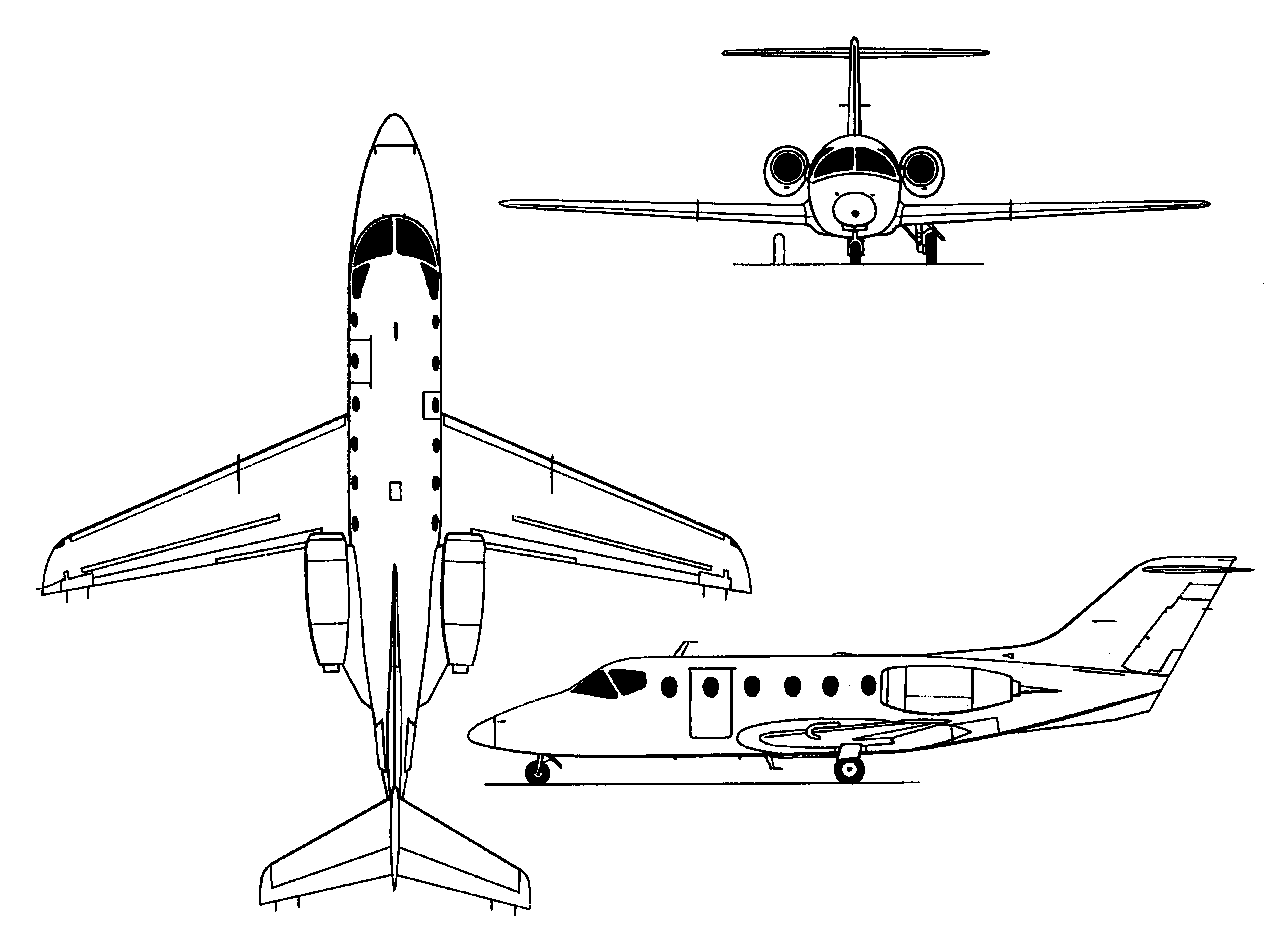
 | A three-view drawing (1280 x 940) |
| ENGINE | 2 x Pratt & Whitney Aircraft of Canada JT15D-4 turbofans, 1485kg |
| WEIGHTS |
| Take-off weight | 6636 kg | 14630 lb |
| Empty weight | 4127 kg | 9099 lb |
| DIMENSIONS |
| Wingspan | 13.26 m | 44 ft 6 in |
| Length | 14.75 m | 48 ft 5 in |
| Height | 4.19 m | 14 ft 9 in |
| Wing area | 22.43 m2 | 241.43 sq ft |
| PERFORMANCE |
| Cruise speed | 741 km/h | 460 mph |
| Ceiling | 12495 m | 41000 ft |
| Range | 2800 km | 1740 miles |
| ubaTaeCJ, e-mail, 21.02.2025 21:14 20 reply | | Alberto, e-mail, 11.05.2022 12:03 I'm looking for MU-300 static model reply | | Anonymous, 09.01.2022 20:07 كم السعر reply | | Anonymous, 09.01.2022 20:07 كم السعر reply | |
| | césar, e-mail, 27.02.2020 05:32 The mitsubishi diamond 1A mu 300 could operate at Airport la paz bolivia ,13,323 .49 ft ? reply | | Danie, e-mail, 30.10.2015 20:49 Does somebody will answer this questions? reply | | abul mendez, e-mail, 12.07.2011 15:57 Para un cliente Potencial estoy en la busqueda de un Avion Mitsubishi Diamond300. Preferiblemente en Venezuela reply | | saul, e-mail, 25.11.2010 16:11 is the diamond 300 certified for single pilot operation? reply | | Wilfredo Cartagena, e-mail, 11.03.2010 18:54 Dear Sir.
I fly an Diamond I serie 008A.And due the problem of speed that over 286kts take place i mean the fish tail.My quetion is if there is an stc to correct this. reply | | erhard, e-mail, 03.02.2010 15:11 want to know why these aircraft(300) are on the market for as low as usd $250-$300k.What is the maintenance on this type, is it maintenance intensive,costly? plse reply reply |
|
Do you have any comments?
|
| 
COMPANY
PROFILE
All the World's Rotorcraft
|