|
| An Imperial Japanese Navy specification of 1934 for a single-seat fighter with a maximum speed of 350km/h then seemed an almost unattainable target. However, Mitsubishi's Ka-14 prototype designed to this requirement, and flown for the first time on 4 February 1935, demonstrated a top speed of 450km/h in early trials. Unfortunately it had some aerodynamic shortcomings, and the inverted gull-wing of.this aircraft was replaced by a conventional low-set monoplane wing in the second prototype which, with a 436kW Nakajima Kotobuki 2-KAI-1 radial engine, was ordered into production as the Navy Type 96 Carrier Fighter Model 1 (Mitsubishi A5M1). The generally similar A5N2a which followed, powered by the 455kW Kotobuki 2-KAI-3 engine, and the A5M2b with the 477kW Kotobuki 3 engine, were regarded as the Japanese navy's most important fighter aircraft during the Sino-Japanese War. Two experimental A5M3 aircraft were flown with the Hispano-Suiza 12Xcrs engine, but the final and major production version was the A5M4, built also as the A5M4-K tandem two-seat trainer.
All versions of the A5M were allocated the Allied codename 'Claude', and
when production ended a total of 788 had been built by Mitsubishi, including prototypes; a further 303 were built by Watanabe (39) and the Omura Naval Air Arsenal (264). The Japanese army had also shown interest in the A5M, resulting in the evaluation of a Ki-18 prototype generally similar to the Ka-14, but although fast this was considered to be lacking in manoeuvrability. Mitsubishi produced two re-engined and improved Ki-33 prototypes but they, too, were considered insufficiently manoeuvrable and no army production contract resulted. At the beginning of the Pacific war the A5M4 was in first-line use, but its performance was found inadequate to confront Allied fighters and by the summer of 1942 all had been transferred to second-line duties, many surviving A5M4 and A5M4-Ks being used in kamikaze attacks in the closing months of the war.
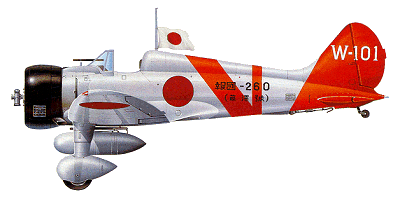
| MODEL | A5M4 |
| CREW | 1 |
| ENGINE | 1 x Nakajima "Kotobuki-41", 530kW |
| WEIGHTS |
| Take-off weight | 1671 kg | 3684 lb |
| Empty weight | 1216 kg | 2681 lb |
| DIMENSIONS |
| Wingspan | 11 m | 36 ft 1 in |
| Length | 7.57 m | 25 ft 10 in |
| Height | 3.27 m | 11 ft 9 in |
| Wing area | 17.8 m2 | 191.60 sq ft |
| PERFORMANCE |
| Max. speed | 430 km/h | 267 mph |
| Ceiling | 9800 m | 32150 ft |
| Range | 1200 km | 746 miles |
| ARMAMENT | 2 x 7.7mm machine-guns, 2 x 30-kg bombs |
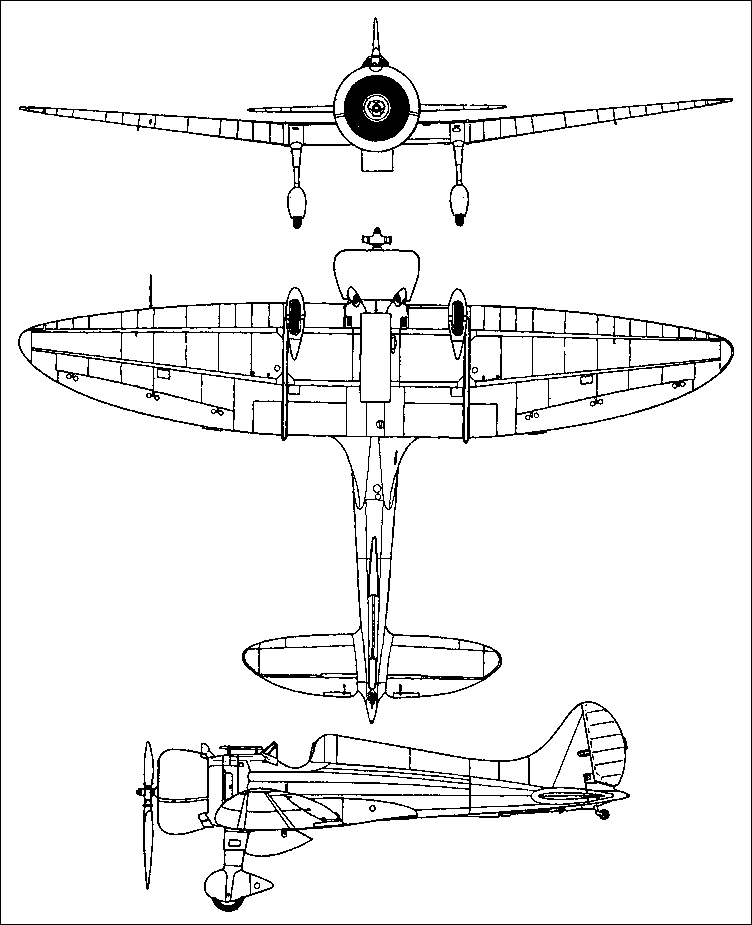
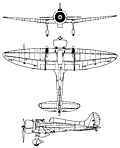 | A three-view drawing (752 x 925) |
| tyler, e-mail, 29.09.2025 20:29 p51a mustang reply | | RB, e-mail, 04.06.2020 10:22 The A5M3a was only experimental, but had a 20mm HS 404 motor-cannon on the centerline. The Nakajima Ki 12 was much the same.
To my knowledge nothing with a heavy cannon in the spinner was mass produced in WW2 by Japan. These prototypes show how easily this could've been different.
The cannons on the Zero lacked long range by comparison. The A6M2 could've gone this route and saved on weight with only one 20mm cannon. Not only was the HS 404 longer range than the Type 99-I, it was faster. Marksmanship would be more efficient on the center-line too. Just like the P-38 with much the same cannon. However the US version was faulty.
Another weakness of the Zero that this would address was the poor dive acceleration. The inline engine would cause less drag. Even level speed would be higher.
The Brass didn't like depending on the French for the A5M3a Claude, so they accepted the Bristle radial. No 20mm! But it is fun to imagine a lighter Zero with good dive and a high velocity 20mm nose-cannon. Maybe it could afford to have an armored seatback. Even if the Navy rejected it, perhaps parallel to a radial engine Zero, an inline motor-cannon version would come in handy against US bombers. They tried 30mm Type 2 cannons in the wings at Guadalcanal. Too much recoil for the wings! Not so, if it were in the nose like a Bf 109 Gustav! The Luftwaffe made 17,000 of those. The Ki 61 had virtually the same inline engine but never a hub-cannon! When they tried the Army 30mm Ho-155, it was again, too much recoil for the wings so it was likewise dropped. Why not a motor-cannon, at least for bomber interception. The B-29s called for this but Japan was not interested. But it was there from the start. reply | | Barry, 16.03.2012 14:10 In the invasion of China by the Japanese prior to and during WWII the A5M did not have it all it's own way. The Chinese Nationalists had purchased 36 Gloster Gladiators and on more than one occassion they proved more than a match, and it wasn't until the arrival of the A6M that the Japanese achieved full air superiority. reply | | Glenn, e-mail, 29.02.2012 06:09 FIRST OFF, I'M AM NOT SHOUTING, ***** THANKS TO CANCER, MY EYES ARE NOT AS GOOD. THE INFO FORGOT TO MENTION THOS WAS THE PREDICESSOR OF THE FAMED A6M REISEN AKA THE ZERO. THIS WAS STARTED BY THE IMMORTAL ADMIRAL ISOROKU YAMMAMOTO; WHO INSISTED THAT THE JAPANESE HAVE AN ADVANCED CARRIER-BASED STRIKE PLANE. reply | |
| | ****, 18.08.2011 16:17 Mr"Ally",please stop shouting. reply | | Aaron, e-mail, 24.06.2011 18:13 Sgt.KAR98,
I-16. Speed and overall maneuverability. reply | | Jackie, 08.08.2010 05:10 The A5M Claude was the predecessor of the famous A6M Zero. It was the world's first monplane shipboard fighter and was used in the Second Sino-Japanese War. Some were still in service at the start of World War II. United States intelligence sources believed the A5M was still the primary Navy fighter, but they had already been replaced by the A6M 'Zero' on first-line aircraft carriers and with the Tainan Air Group. Other Japanese carriers and air groups continued to use the A5M until production of the 'Zero' caught up with demand. The last combat actions with the A5M as a fighter took place at the Battle of the Coral Sea on 7 May 1942, when two A5Ms and four A6Ms of the Japanese carrier Shôhô fought against the US planes that sunk their carrier. Most remaining A5Ms were used for kamikaze during the end of the war. reply | | Allied Forces, 30.05.2010 11:05 Relax Mr.Chinese 'Nationalist'. I believe a few other nations fought against the Japanese Imperial Forces and did a bit more. This is a website for aircraft not your overly sensitive shortcomings. reply |
| Francis Dec, e-mail, 21.08.2010 05:03 Did Japan ever export aircraft before WW2?. This nifty plane would be useful to nations in need of aircraft. reply | | CHINESE, 14.06.2009 19:36 THE CHINESES WAGED THE BATTLES TO DESTROY THE EVIL FORCE OF THE JAPS! reply | | CHINESE, 14.06.2009 19:27 THE JAPANESE A5M ARE THE MAIN FIGHTER PLANES WHEN THE BEGINNING OF THE SINO-JAPANESE WAR! THE HEROIC CHINESE ACES CAN ALSO SHOT DOWN THIS ADVANCED FIGHTER PLANES!
¤éx¤E¤¦¡¾Ô°«¾÷¬O¤éx¦b«IµØ¾Ôª§ªì´Áªº¥D¤O¾÷ºØ,¦ý¤¤°êªÅx^¶¯¤´¯àÀ»¸¨¦¹¸¹ºÙ¤éx·s¾U¾Ô°«¾÷! reply | | Michael S., e-mail, 02.06.2009 01:15 -moves like lauren bacall- thats what usmc fighter pilots said about the claude reply | | Mugu, e-mail, 26.03.2009 16:46 Nwa nnaa i dey here ooooo reply | | Richard Rudd, e-mail, 19.02.2009 07:54 There is an A5M4-K, two seater in a military musuem, Djakarta, Indonesia. Slim, sleek and you can see its heritage with the famous A6M.. Both beautiful bits of kit!. reply | |
| | Jiro Yamamoto, e-mail, 16.02.2009 02:18 Louis,
The am6 was faster and armed with cannon... reply | | John Stanley, e-mail, 18.03.2008 05:10 Lots nicer than my 1988 Dodge Ram 50 (made by Mitsubishi) reply | | Sgt.KAR98, 26.02.2008 23:44 Which one was the best?
This,the P-26 or the I-16? reply | | weston, e-mail, 11.11.2007 07:30 the drawing sucks reply | | Curtis Block, e-mail, 26.08.2007 09:44 In 2003 I identified the remains of an A5M4 in the wreck of the Fujikawa Maru which was sunk Feb. 1944, in Truk Lagoon, Micronesia. To my knowledge it is the only example of its type known to exist. reply | | Louis Dorse, e-mail, 25.11.2006 02:37 Saburo Sakai, the great Japanese ace claimed the Claude type 96 was superior to the newer Zero when it came to maneuvering and dogfighting. The only advantage the newer Zero had was a much increased range. reply |
|
Do you have any comments?
|
| 
COMPANY
PROFILE
All the World's Rotorcraft
|


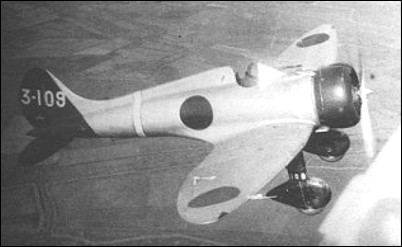
 Allied Forces

20
reply