|
| As far back as 1935, in response to
Japanese naval requirement for a landbased
twin-engine reconnaissance
aircraft, Mitsubishi flew the first Ka-15
prototype, an aircraft which possessed
a design potential that allowed development
as a long-range medium
bomber. Accordingly, following successful
flight trials, the aircraft entered
production in June 1936 as the Navy
Type 96 Attack Bomber Model 11 (Mitsubishi
G3M1). The initial version, of
which 34 were produced, was powered
by 678kW Kinsei 3
radials and possessed a maximum
speed of 360km/h at 1975m. As the improved Kinsei 41
and 42 engine became available in
1937 a new version, the G3M2, started
production and, with a total of 581 built
by mid-1941, was the principal variant.
With a top speed now increased to
374km/h, a bombload of up
to 800kg carried externally
and a defensive armament of three 7.7mm machine-guns, the
G3M2 possessed a maximum range of
4380km. A yet further improved
version, of which production
was undertaken by Nakajima during
1941-3, was the G3M3 with 970kW Kinsei 51 radiais and a top
speed of 415km/h at 6000m.
Mitsubishi G3M2s were first flown in
action by the Japanese navy's Kanoya
Kokutai in August 1937 in raids on
Hangchow and Kwangteh in China. By
1940 four kokutais in China were
equipped with a total of about 130
G3M2s, a number that grew to 204 by
the date of Pearl Harbor with the deployment
of forces against Wake Island,
the Philippines and the Marianas.
And it was a force of 60 G3M2s of the
Genzan and Minoro Kokutais (with 26
Mitsubishi G4Mls of the Kanoya Kokutai)
which, flying from bases in Indo-
China, found and sank the British
warships HMS Prince of Wales and
HMS Repulse as they steamed without
fighter protection off the Malayan coast
on 10 December 1941. The type was
known to the Allies as the 'Nell'.
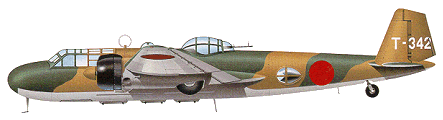
| MODEL | G3M3 |
| CREW | 5 |
| ENGINE | 2 x Mitsubishi MK8 "Kinsei-51", 975kW |
| WEIGHTS |
| Take-off weight | 8000 kg | 17637 lb |
| Empty weight | 5250 kg | 11574 lb |
| DIMENSIONS |
| Wingspan | 25.0 m | 82 ft 0 in |
| Length | 16.5 m | 54 ft 2 in |
| Height | 3.7 m | 12 ft 2 in |
| Wing area | 75.1 m2 | 808.37 sq ft |
| PERFORMANCE |
| Max. speed | 415 km/h | 258 mph |
| Cruise speed | 295 km/h | 183 mph |
| Ceiling | 10300 m | 33800 ft |
| Range w/max.fuel | 6200 km | 3853 miles |
| ARMAMENT | 1 x 20mm cannon, 4 x 7.7mm machine-guns, 800kg of bombs |
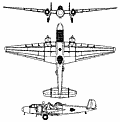 | A three-view drawing (752 x 765) |
| ubaTaeCJ, e-mail, 21.02.2025 21:19 20 reply | | Scenen3d@aol.com, 12.02.2023 21:31 Correction: the Nell unit was actually the IJN’s 24th Air Flotilla with the specific action taking place Feb. 1, 1942.
Thank you again for you input.
Rob b reply |
| Scenen3d@aol.com, 12.02.2023 21:31 Correction: the Nell unit was actually the IJN’s 24th Air Flotilla with the specific action taking place Feb. 1, 1942.
Thank you again for you input.
Rob b reply | | Scenen3d@aol.com, e-mail, 12.02.2023 20:46 Looking for some markings / profile views of G3M “Nell’s” from 24th Naval Air Fleet that took part in Marshall’s raid stationed @Roi specifically those a /c that attacked Halsey’s ships(Enterprise in particular)
Also , if know, the G3M that crashed on CV-6’s deck after being engaged by AM-3 Bruno Gaido from the rear gun of an SBD parked on her deck. Any help would be appreciated…… many thanks ! reply | |
| | Scott Ritchey, e-mail, 30.11.2021 22:00 Hello,
Working out on wake island and we have recovered part of a prop. We believe it to be Japaneese. Does anyone have the specs on the prop, or where to look to find any info on it. reply |
| Klaatu83, e-mail, 22.01.2021 18:15 These aircraft had no real counterpart in the U.S. Navy. During the 1930s the basic strategy of the Japanese Navy was based upon the notion that the U.S. Navy would attack Japan across the Pacific, during which the Japanese Navy would whittle down the American Fleet by means of torpedo attacks delivered by submarines, destroyers and long-range strike aircraft such as the GM3. By the time the weakened American battle-fleet arrived across the Pacific the Japanese battle-fleet would be able to face it on more-or-less equal terms. That was the strategic idea around which the design of the G3M and its' successor, the G4M "Betty", were created. The U.S. Navy had nothing in that category in their inventory. Perhaps the closest Allied equivalent was the RAF's Bristol Beaufort twin-engine torpedo-bomber, although the Beaufort was not capable of anywhere near the range of the G3M or G4M. reply | | Oldgysgt, e-mail, 17.01.2016 03:09 The Mitsubishi G3M Nell was an example of a "Colonial" aircraft, much like the Italian Breda Ba.65. A Colonial aircraft is one that is designed to drop high explosives and rain aerial machinegun rounds down on people with bare feet who have nothing more than dirt clods and single-shot rifle bullets to throw back in return. Because of this, range is reasonable important, but bomb load and defensive armament can be relatively light. The G3M Nell's suffered seriously from the few serviceable Marine F4Fs on Wake, but as mentioned above, one of the G3M's shinning hours was its part in the Naval Battle off Malaya; proving the folly of operating capitol ships without air cover while in range of opposing bombers. Once the "New" wore off of the Pacific war however, the Nell's limited bomb load was revealed for the serious handicap it really was. reply | | Klaatu83, e-mail, 17.11.2012 22:47 Built for maximum range (3,800 miles), which was impressive, but at the sacrifice of fuel protection. These planes caught fire easily when hit by enemy fire. reply | | Mykola, 20.10.2010 23:55 Not a bad plane. reply | | David Wesely, e-mail, 05.03.2010 05:16 SOme souce said this was the first "intercontinental" ot "trsns oceanic" strat4egic bombing mission, and everyone lese just has to repeat it. Sorry guys, the Germans were bombing London from Germany with Airplanes (as well as with Zepplins) in the First World War, at least 20 years before the 1937 mission from Japan to China. Neither of these missions is transoceanic (yeah, the South China Sea is part of the Pacific, but only in the same twisted way that the the North Sea is part of the Atlantic) or intercontinental.
If we want to really get legalistic, at least one mission was probably flown from Egypt (Africa) 100 miles over to Palestine (Asia) during WWI or from the Panama CZ to bomb the Sandinistas Nicaragua in the 30's. But the G3M missions to China just don't make it. reply | | Bowen Kerrihard, e-mail, 08.02.2010 23:57 For Henry Dittman: "Mitsubishi Green" may be a cousin of "Savoia Marchetti Green" and refer in both cases to the zinc chromate paint used on many WWII airplanes to retard salt-water corrosion. PBYs used lots of it, too. I've never found an exact color match, but zinc chromate was generally a kind of pea green, leaning toward chartreuse.
I hope this helps,
Bo Kerrihard reply | | Prof. Henry Dittman, e-mail, 17.01.2010 05:39 I am a scale model airplane builder and am currently building a "Nell". What was the cockpit /interior color in this airplane? I have read that it was "Mitsubishi Green", but that doesn't give me a very good idea of the shade. Can you be more specific than that?
Thanks,
Prof. H. Dittman reply | | Barry, 17.12.2009 16:48 3853 miles with a maximum fuel load i.e. minimal war load, hardly what one would call intercontinental if you wanted to return that is. I suppose flying across the Bering Straights could be classified as intercontinental but this plane did not do that. reply |
| Gordon Isaacson, e-mail, 11.10.2009 22:24 When did the Kanoya Kokutai get its name? Or better yet what was their Kokutai name in China? I have what I believe is the Kanoya Kokutai 1940 year book yet they do not call themselves Kanoya Kokutai. They are named after their Commanding Officer. Any ideas? reply | |
| | ss, e-mail, 05.07.2009 16:04 fyi reply | | Mick Dunn, e-mail, 23.11.2008 06:42 World's first true Intercontinental Bomber! Combined with the Zero...a world beating long range Weapons System! reply |
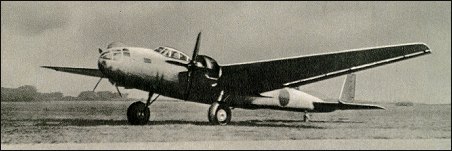
| Scott Russell, e-mail, 05.03.2008 02:06 I am preparing a public exhibit at the Saipan International Airport that will present an overview of the development and use of Aslito and Isely Fields. I would very much like to acquire a high resolution scan of the photo of the Mitsubishi G3M that appears on this page. I am prepared to cover reproduction costs.
I look forward to hearing from you.
Thank you.
Scott Russell reply |
|
Do you have any comments?
|
| 
COMPANY
PROFILE
All the World's Rotorcraft
|


 Scott Ritchey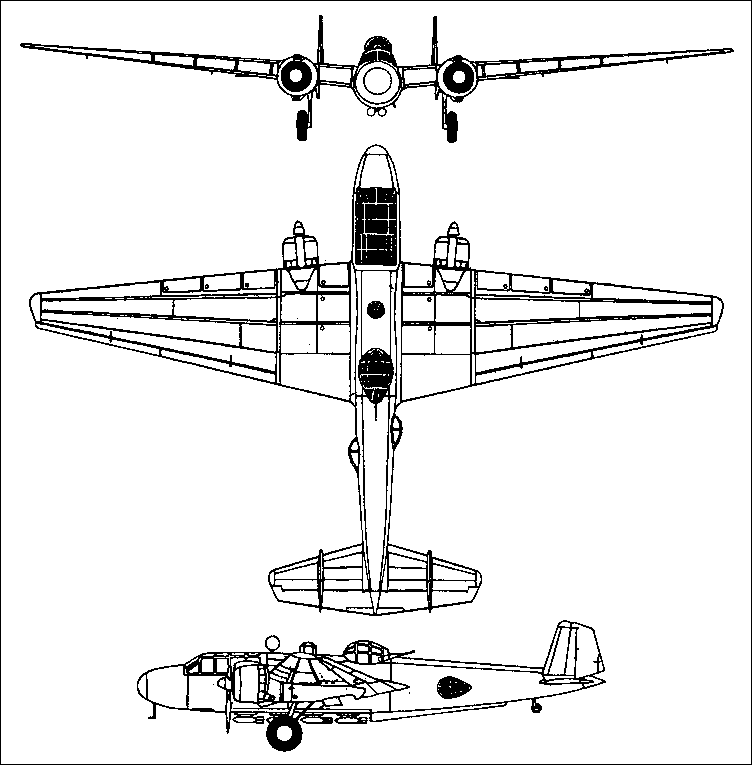


20
reply