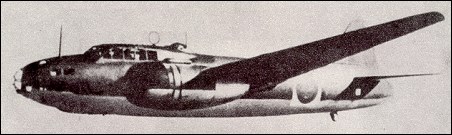
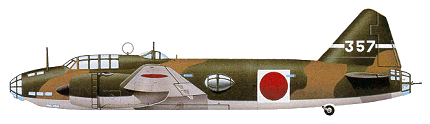
Codenamed 'Betty' by the Allies, the
Mitsubishi G4M long-range medium
bomber remained in service with the
Japanese navy from the first to the last
day of the war: it took part in the attack
that sank the British warships HMS
Prince of Wales and HMS Repulse in
December 1941, and it carried the
Japanese surrender delegation on 19
August 1945. Designed to a 1937 requirement
for a long-range bomber,
the G4M1 prototype made its first flight
on 23 October 1939, and during trials
recorded an extraordinary performance
of a 444km/h top
speed and 5,555km range,
albeit without bombload. The first production
G4M1s (Navy Type 1 Attack
Bomber Model 11) were initially deployed
against China in mid-1941 but
on the eve of the attack on Malaya the
bombers moved to Indo-China and
within a week had successfully attacked
the Prince of Wales and Repulse.
When Allied fighter opposition eventually
increased to effective proportions,
the G4M1 was seen to be very
vulnerable, possessing little armour
protection for crew and fuel tanks, and
it was in a pair of G4M1s that Admiral
Yamamoto and his staff were travelling
when shot down by P-38s over
Bougainville on 18 April 1943. Little improvement
had been secured in the
Navy Type 1 Attack Bomber Model 22
with revised powerplant. The G4M2
was therefore introduced with increased
armament, increased fuel and
1343kW Mitsubishi Kasei
radiais, and this version (Navy Type 1
Attack Bomber Model 22A and Model
22B) remained in production until the
end of the war m steadily improved
Navy Type 1 Attack Bomber Model 24
variants. A further improved version,
the G4M3, with increased crew protection,
was also produced in small
numbers as the Navy Type 1 Attack
Bomber Model 34. Production
amounted to 1,200 G4M1s, 1,154
G4M2s and 60 G4M3s.
Mitsubishi G4M "BETTY" on YOUTUBE
Specification
MODEL
G4M2
CREW
7-10
ENGINE
2 x Mitsubishi MK4P "Kasei-21", 1350kW
WEIGHTS
Take-off weight
12500 kg
27558 lb
Empty weight
8160 kg
17990 lb
DIMENSIONS
Wingspan
24.9 m
82 ft 8 in
Length
19.62 m
64 ft 4 in
Height
6 m
20 ft 8 in
Wing area
78.13 m2
840.98 sq ft
PERFORMANCE
Max. speed
430 km/h
267 mph
Cruise speed
310 km/h
193 mph
Ceiling
8950 m
29350 ft
Range
Navy Type km
0 miles
Range w/max.fuel
6000 km
3728 miles
ARMAMENT
2 x 20mm cannons, 4 x 7.7mm machine-guns, 2200kg of bombs
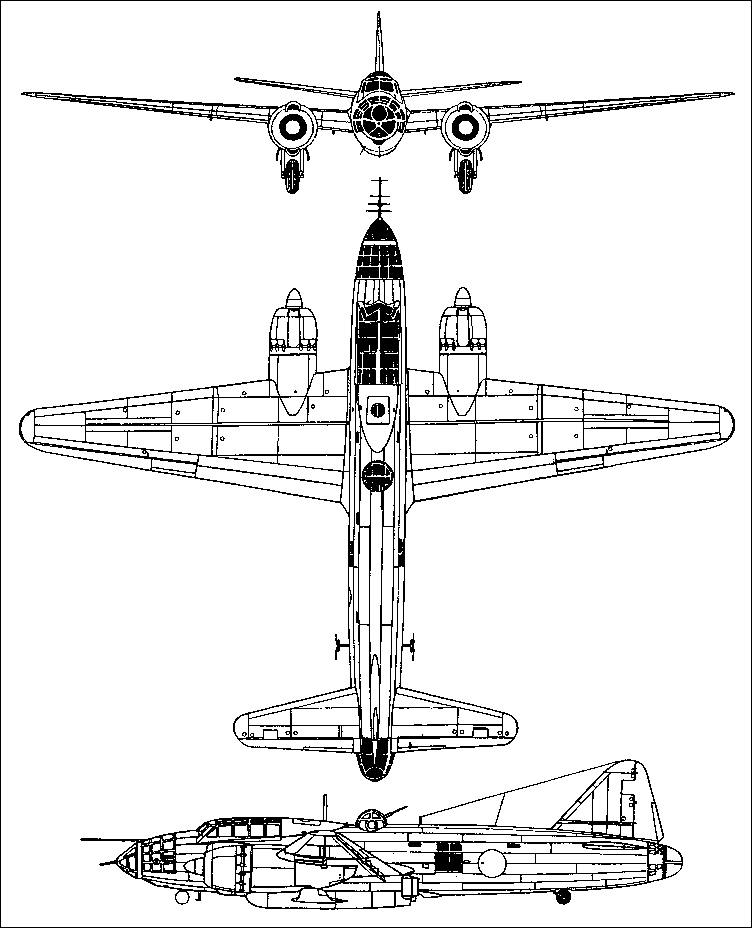
3-View
A three-view drawing (752 x 928)
Comments
Timmy Potter, e-mail, 19.03.2026 04:08
A very good plane made famous by the pilot Frank Spencer who thought up the name "ooh Betty".
Built to replace the G3M "Nell", the G4M had better performance and armament but, once again, great range was achieved at the cost of a lack of fuel system protection. Like the G3M, this plane caught fire readily when hit by enemy fire.
Το Mitsubishi G4M ήταν το βασικό βομβαρδιστικό αεροσκάφος του Αυτοκρατορικού Ιαπωνικού Ναυτικού κατά τον Δεύτερο Παγκόσμιο Πόλεμο. Οι σύμμαχοι του είχαν δώσει το παρατσούκλι «Betty» και ήταν αντίστοιχο με τα φημισμένα γερμανικά πολεμικά αεροσκάφη του Δευτέρου Παγκοσμίου Πολέμου Junkers Ju 88 και Heinkel He 111 Το Mitsubishi G4M ήταν ένα δικινητήριο υψηλής ταχύτητας και μεγάλης ακτίνας δράσης αεροσκάφος. Η Mitsubishi τα είχε προμηθεύσει με δύο 14κύλινδρους κινητήρες 1.530 ίππων ο κάθε ένας και στη μεγάλη γραμμή παραγωγής της παρήγαγε πάνω από 2.400 αεροσκάφη του τύπου αυτού, στις εκδόσεις G4M1, G4M2 και G4M3, με το πρώτο να πετάει τον Οκτώβριο του 1939. Η χρήση του περιοριζόταν σε απογειώσεις και προσγειώσεις σε αεροδρόμια και δεν χρησιμοποιήθηκε με αεροπλανοφόρα
Είχε πλήρωμα επτά ανδρών και ο οπλισμός του ήταν ένα οπλοπολυβόλο των 20mm, τέσσερα οπλοπολυβόλα των 7,7mm και μία τορπίλη 850 κιλών ή μία βόμβα 800 κιλών, ή τέσσερις βόμβες των 250 κιλών ή κάθε μία. Είχε μήκος 20 μέτρα και άνοιγμα πτερυγίων τα 25 μέτρα, κατατάσσοντάς το στα μεγάλα αεροσκάφη του πολέμου. Η μέγιστη ταχύτητά του έφτανε τα 430 km /h, ενώ η ταχύτητα ταξιδιού του τα 315 km /h Λόγω του όγκου του ήταν εύκολος στόχος για τους αντίπαλους και ειδικότερα όταν έκανε «βουτιά» για να αφήσει την τορπίλη του. Οι περισσότερες καταρρίψεις έγιναν ακριβώς εκείνη τη χρονική στιγμή. Οι πιλότοι του το έλεγαν «Hamaki» (πούρο), ακριβώς διότι κατά τις επιθέσεις με τορπίλες, εύκολα το χτύπαγαν εχθρικά πυρά με αποτέλεσμα να παίρνει φωτιά και να καταρρίπτεται.
Κατά το τέλος του πολέμου και όταν οι Ιάπωνες έβλεπαν την ήττα να έρχεται, τα αεροσκάφη αυτά έλαβαν μέρος σε επιθέσεις καμικάζι, εφοδιασμένα με την καθοδηγούμενη από πιλότο καμικάζι ρουκέτα Yokosuka MXY-7 Ohka, την οποία άφηναν σε στόχους-πλοία
Έμειναν στην ιστορία για τη βύθιση με τορπίλες δύο μεγάλων βρετανικών πλοίων, των HMS Prince of Wales και HMS Repulse, βόρεια της Σιγκαπούρης στις 10 Δεκεμβρίου 1941. Ήταν τα πρώτα και μοναδικά μεγάλα πολεμικά πλοία που βυθίστηκαν ποτέ εν πλω σε πόλεμο, με επίθεση από αέρος με τορπίλες
The plane was an excellent bomber.It's only problem was it's lack of self-sealing fuel tanks.Because of this it almost always burst into flames when hit.Allied fighter pilots called it ''one shot lighter'' or ''flying Zippo''.
I've long thought of the G4M as what might result if the USAAF had insisted that Boeing build the B-17 with a pair of R-2600s. Something would have to give. . .
It's like a japanese sister of the Ilyushin Il-4 /DB-3M. Similar concept, class and flight characteristics. They look similar and were developed around the same time (Il-4 was a deriv. of DB-3 though). I wonder if the Japs copied some of the features of DB-3 for their own navy bomber. To mention differences, Betty had more crew and guns than Il-4,but the Ilyushin was apparently much more agile and better protected.
Most underated bomber design of WWII. The design was truly excellent considering that the poor designers were forced to compromise aircraft safety in favour of range! The Betty was a formidable Level Bomber and Torpedo Bomber...by the time they were tasked to carry Ohkas, the jig was up for ALL Japanese aircraft!
I can't believe the japanese pilots carrying the Ohka, facing an overwhelming fighter attack, they would rather get shot down than releasing the ohka which was a nuisance.