 |
Nakajima Ki-49 Donryu / HELEN1939 |  |
| BOMBER | Virtual Aircraft Museum / Japan / Nakajima |
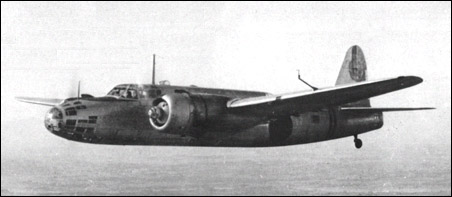 |
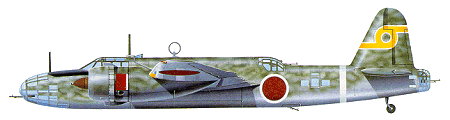
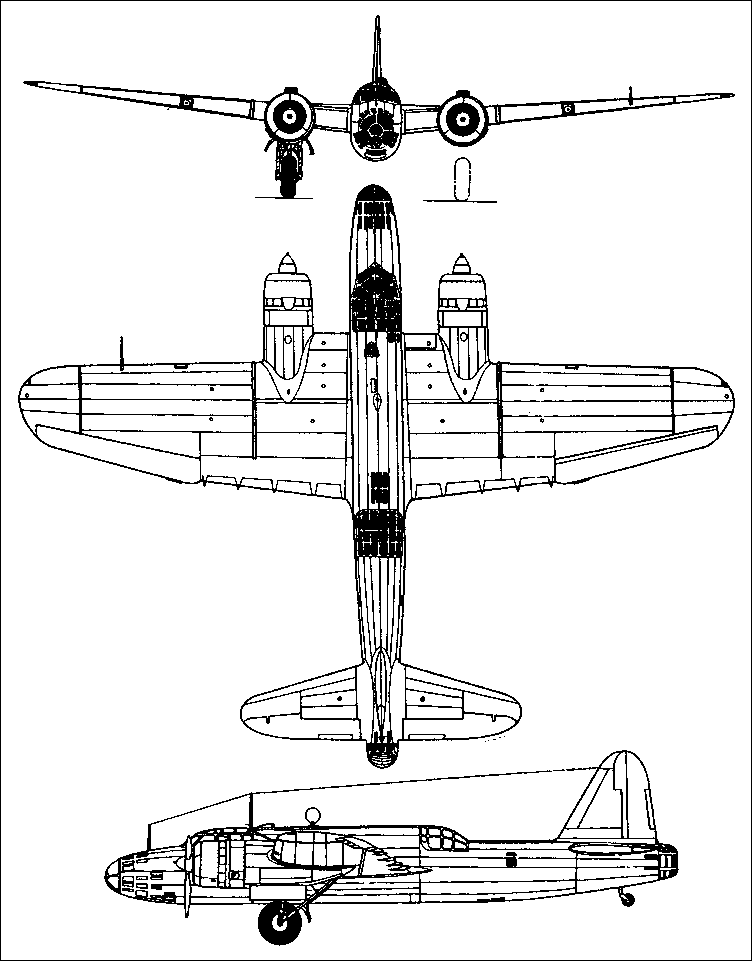
The Nakajima Ki-49 Donryu (storm dragon) was designed early in 1938 to replace the JAAF's successful Mitsubishi Ki-21 heavy bomber which, in fact, was only just entering service with sentais based in China and Manchuria, Later code-named 'Helen', the Nakajima Ki-49 was a workmanlike design but was destined to be just not good enough for the conditions prevailing over the various fronts in 1942, when the initial production Ki-49-I (Army Type 100 Heavy Bomber Model 1) started operations with the 61st Hikosentai in China. Production was preceded by the flight of the first prototype in August 1939, powered by two 708kW Nakajima Ha-5 KAI radiais: the more powerful 932kW Ha-41 radial engines were installed in pre-production versions, and in the Ki-49-I bomber. In appearance the 'Helen' was deceptive in size, for it appeared to be a comparatively large aircraft because of its proportions: actually, its dimensions were similar to those of the Lockheed Hudson. However, a crew of seven or eight was crammed into the narrow fuselage. In the spring of 1942 the usual steps were taken to increase performance, protection and defensive firepower. The Nakajima Ki-49-IIa (Army Type 100 Heavy Bomber Model 2A), the first of the new series, was powered by two Nakajima Ha-109 radial engines with increased ratings. The aircraft was fast, well protected by 5mm armour plating and rubberized fuel cells, and heavily armed. The Ki-49-IIb was upgunned with 12.7mm Ho-103 machine guns. Both the Ki-49-IIa and Ki-49-IIb were in action with the 7th and 61st Sentais based in China in the summer of 1942, and made many attacks on Chungking and air bases of General C. L. Chennault's China Air Task Force. 'Helen' bombers equipped the 12th Sentai, based at Medan and Sabang (Sumatra) under the 3rd Air Army, and these attacked objectives in Burma and eastern India, joining Ki-21s on some occasions in raids on Calcutta. In 1943 the Ki-49s of the 7th and 61st Sentais, now operating from Timor, attacked Darwin to face strong reaction by the Supermarine Spitfire Mk.Vs of No.1 Fighter Wing. Units equipped with Ki-49s suffered most in New Guinea, where 4th Air Army came under constant attack on its airfields at Wewak, But and Dagua after August 1943, when the RAAF and the US 5th Air Force went onto the offensive. Six Ki-49-III bombers, powered by very potent 1805kW engines, were built as prototypes. Other variants produced in experimental form were the Ki-58 escort fighter, and the Ki-80 escort bomber. Total production amounted to 819 aircraft. After action in the Philippines in 1944, Ki-49s were used with increasing frequency on suicide missions.
Billy R Leon, e-mail, 18.02.2022  thomas thomasI concur Thomas. The concept was shown to be wrong-headed right from the start. During the Battle of Britain German Heinkel, Junkers and Dornier bombers were sent either without escort or short term escort by Bf.109's which had short legs. As soon as the Messerschmitt's were gone these aircraft were mauled by Spitfires and Hurricanes. A lesson not learned, since two years later American and British heavy bombers even with the heavier armament were shot down in droves by the defending German fighters. thomas, e-mail, 19.06.2020 lucyJapanese designed philosophy was to maximize striking range so weight (space) was given to fuel capacity.
|  COMPANY PROFILE | ||||||||||||||||||||||||||||||||||||||||||||||||||||||||||||
|


|
No unescorted bomber stood up to interceptors, from
any nation.
reply