|
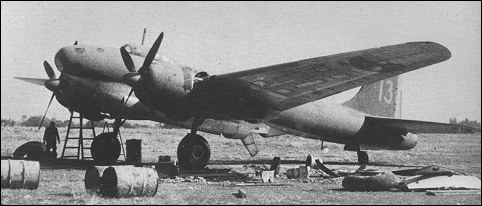
| From 1937 Tachikawa produced a number of interesting designs which did not go into series production. These included the TS-1 single-seat ultra-light low-wing cabin monoplane; the R-38 two-seat parasol-wing monoplane primary trainer; the SS-1 twin-engined low-wing monoplane developed from the Lockheed 14 and intended for high-altitude research; the Ki-70 twin-engined high-speed reconnaissance monoplane; and the A-26, later redesignated Ki-77, a long-distance record aircraft with a remarkably slim fuselage and finely tapered wide-span monoplane wings. However, it was the Tachikawa Ki-74 monoplane which attracted the greatest official support. By 1941 the project had been confirmed as a long-range high-altitude bomber reconnaissance aircraft, and the first of the prototypes, powered by 1641kW turbocharged Ha-211-Ru radials, flew in March 1944. Thirteen pre-production machines followed, powered by more reliable 1491kW Ha-104 Ru engines, giving a maximum speed of 570km/h at 8500m. They carried 1000kg of bombs and were defended by a single remotely-controlled 12.7mm machine-gun in the tail. Although not used operationally, the Ki-74 received the Allied codename 'Patsy'.
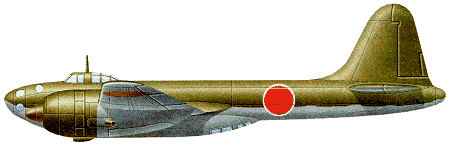
| MODEL | Ki-74 |
| CREW | 5 |
| ENGINE | 2 x Mitsubishi Ha-104-Ru, 1500kW |
| WEIGHTS |
| Take-off weight | 19400 kg | 42770 lb |
| Empty weight | 10200 kg | 22487 lb |
| DIMENSIONS |
| Wingspan | 27 m | 89 ft 7 in |
| Length | 17.65 m | 58 ft 11 in |
| Height | 5.1 m | 17 ft 9 in |
| Wing area | 80 m2 | 861.11 sq ft |
| PERFORMANCE |
| Max. speed | 570 km/h | 354 mph |
| Cruise speed | 400 km/h | 249 mph |
| Ceiling | 12000 m | 39350 ft |
| Range w/max.fuel | 8000 km | 4971 miles |
| ARMAMENT | 1 x 12.7mm machine-guns, 1000kg of bombs |
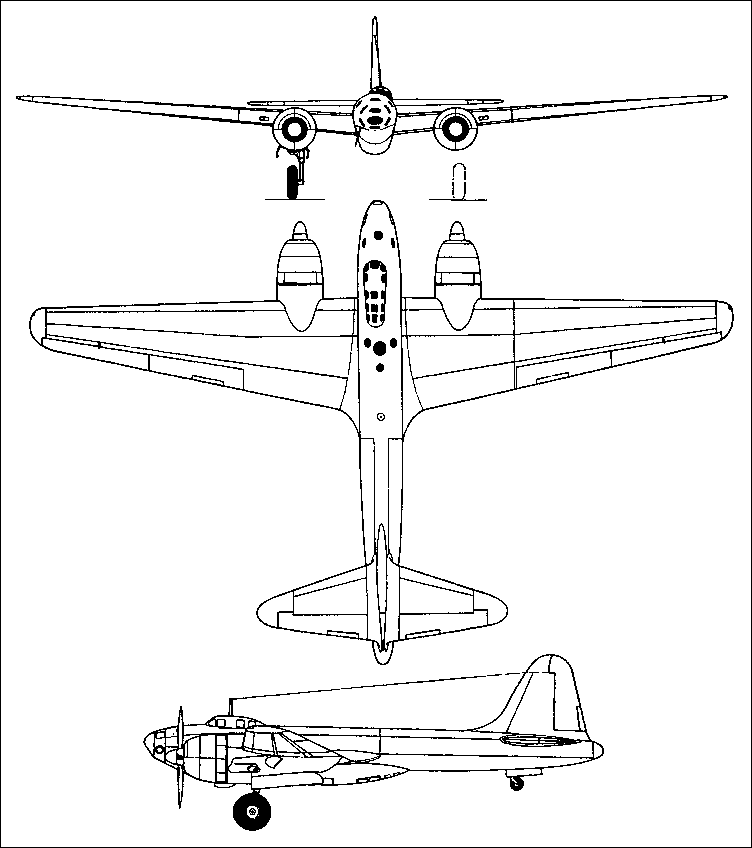
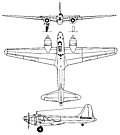 | A three-view drawing (752 x 848) |
| Hiroyuki Takeuchi, e-mail, 23.03.2012 10:24 This plane was equipped with a copy of a Norden bombsight and a search radar. The 8000km range is short compared to the Ki77 world distance record plane which flew 16,435km (and still had 800 liters in the tank upon landing), on which the design was based . reply | | choqing, 20.06.2011 07:20 I dislike asymmetric cockpits as here and on some Canberras; it hurts the eye. reply | | Sven Ortmann, e-mail, 30.07.2009 21:57 The Ju388 is comparable, but the Ki-74's 8,000 km range is unbelievable.
I dislike asymmetric cockpits as here and on some Canberras; it hurts the eye. reply | | Janusz, e-mail, 15.02.2009 19:27 Interesting design:) I don't see any similarity do B-17:) Even if we start spook about "he has a tail, so it is similarity to B-17";) reply | |
| | Janusz, e-mail, 15.02.2009 19:27 Interesting design:) I don't see any similarity do B-17:) Even if we start spook about "he has a tail, so it is similarity to B-17";) reply | | Sgt.KAR98, 03.01.2009 17:46 B-17 tail? reply |
|
Do you have any comments?
|
| 
COMPANY
PROFILE
All the World's Rotorcraft
|




20
reply