|
| It was during the summer of 1944
when, faced with overwhelming and
fast-increasing Allied strength in the
Pacific theatre, the Japanese naval staff
first seriously entertained the concept
of employing suicide tactics to defeat
enemy attacks, and it was Ensign Mitsuo
Ohta who first produced a rough
design for a piloted flying bomb, a design
which was assigned to Yokosuka
for detailed completion. The resulting
device was a small, mainly wooden
aircraft with three solid-propellant
rockets in the rear fuselage and a 1200kg explosive warhead in the
nose. Carried aloft in the bomb bay of a
modified Mitsubishi G4M bomber and
flown towards the target area, the
Yokosuka MXY7 Ohka (cherry blossom)
bomb would be released, its
rockets fired and then flown directly to
impact on a selected target; the pilot
was sealed into his cockpit before
take-off. Initial powered flights started
at Sagami in October 1944, followed by
unmanned, powered flights the next
month. Production was put in hand,
and a total of 755 Ohkas was built before
March 1945 when production ended.
The weapon was first employed
by the 721st Kokutai on 21 March 1945,
but the carrier aircraft were intercepted
and forced to release their
flying bombs too early. On 1 April the
US battleship West Virginia and three
transport vessels were hit and damaged
by Ohkas. Limited success
attended other suicide attacks by
Ohkas, but the transport aircraft
proved fatally vulnerable in the presence
of powerful American defences
and the Japanese suicide tactic was
never a serious threat to Allied operations
in the Pacific, for all its macabre
implications.
FACTS AND FIGURES © The Okha 11 was armed with a
1200kg (26451b) high-explosive
warhead in the nose. Later versions
had smaller warheads. © Cockpit instrumentation consisted
of only four instruments: a
compass, an airspeed indicator, an
altimeter and an inclinometer for
turn indication. © The Ohka was built by unskilled
workers using as much non-strategic
material as possible. The fuselage
was a standard aluminium structure,
but the wings were made of
moulded plywood covered in fabric. © The later Model 22 had a turbojet
engine with a small auxiliary
piston engine acting as a gas
generator. The only test flight of
the Model 22 ended in an
(unintentional) crash.
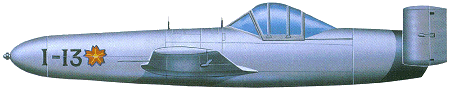
| MODEL | MXY7 Model 11 |
| CREW | 1 |
| ENGINE | 3 x Type 4 Mk.I Model 20, 800kg |
| WEIGHTS |
| Take-off weight | 2140 kg | 4718 lb |
| Empty weight | 440 kg | 970 lb |
| DIMENSIONS |
| Wingspan | 5.12 m | 17 ft 10 in |
| Length | 6.06 m | 20 ft 11 in |
| Height | 1.16 m | 4 ft 10 in |
| Wing area | 6.0 m2 | 64.58 sq ft |
| PERFORMANCE |
| Max. speed | 650 km/h | 404 mph |
| Range | 40 km | 25 miles |
| ARMAMENT | 1200kg of explosives |
| Thomas Carl Young, e-mail, 27.12.2025 16:33 To truly understand the use of the Ohka, there is a huge cultural difference between western and Japanese attitudes. The emperor was a god, country was god-given, and dying for this was a great honor. Americans love their country, but went to war with a job to do. Staying alive to get the job done was the goal. reply | | Fukoku Kyohei, e-mail, 25.12.2016 00:08 I would have used the Ohka suicide aircraft on land targets, suck as on airfields on the Marianas Islands where the B-29 bombers where pounding the homeland. reply | | Kelly Graham, e-mail, 11.08.2014 01:33 I have read up on them some and they would probably be a good RC platform, if the wings and control surfaces were scaled up a bit. Just my thoughts. reply | | Keke, e-mail, 08.04.2014 17:28 This rocket can go really fast reply | |
| | Timespanr, e-mail, 13.01.2013 20:21 The full name of this item is
MXY-7 Model 22 Ōka - Baka Kugishoa , a Kamakazi Special Attack Glide Bomb w RATO (Rocket Assist)
without to proceeding comments, the pilots of these birds
were Kamakazi Suicide Pilot who knew and under stood what they were doing would cause their death. They also under stood why they were doing the Kamakazi Suicide act, it was for COUNTRY, their country, and in a country, right or wrong, where it is a practiced tradition, it was not uncommon at all.
In spite of ALL of the American beliefs, much of which is founded on smoke and mirrors, it sometime is good to come to some understanding of hoe other societies have lived for thousands of years (Muslims 1,434, Japan over 2,000, China over 6,500 and about same for India?) reply | | Mark, e-mail, 20.09.2012 17:35 Yokosuka MXY-7 Ohka
Το Yokosuka MXY-7 Ohka ήταν μονοθέσιο Ιαπωνικό αεροσκάφος αυτοκτονίας οδηγούμενο από Ιάπωνες πιλότους καμικάζι. Έδρασε υπηρεσιακά κατά το τέλος του Δευτέρου Παγκοσμίου Πολέμου, για λογαριασμό του Αυτοκρατορικού Ιαπωνικού Ναυτικού και εναντίον Αμερικανικών πλοίων. Πετούσε αγκιστρωμένο στη κοιλιά του βομβαρδιστικού αεροσκάφους Mitsubishi G4M. Αυτά τα βομβαρδιστικά - γνωστά και με το παρατσούκλι «Betty» - ήσαν οι φορείς των Yokosuka MXY-7 Ohka, τα οποία μετέφεραν και άφηναν κοντά στα πλοία-στόχους τους.
Το Yokosuka MXY-7 Ohka έφερε τρείς ρουκέτες Type 4 Model 1 Mark 20 στο κυρίως σώμα του, οι οποίες φρόντιζαν για την ώση του. Περίπου 20 ναυτικά μίλια πριν το στόχο του, ο πιλότος του Mitsubishi G4M, άφηνε το Yokosuka MXY-7 Ohka, το οποίο αρχικά ανεμοπορούσε παίρνοντας κατεύθυνση προς το πλοίο-στόχο. Όταν ο πιλότος καμικάζι έκρινε ότι είχε «κλειδώσει» το στόχο του, πυροδοτούσε τις τρείς ρουκέτες και οδηγούσε το αεροσκάφος αυτοκτονίας πάνω στο πλοίο-στόχο.
Συνολικά 850 περίπου Yokosuka MXY-7 Ohka διαφόρων τύπων κατασκευάστηκαν, από τους οποίους το Model 11 ήταν το μοναδικό που πέταξε υπηρεσιακά και φυσικά παρήχθη σε περισσότερα αντίτυπα. Είχε μήκος περίπου 6 μέτρα και ξύλινα πτερύγια. Άδειο ζύγιζε περί τα 440 κιλά, αλλά φορτωμένο έφτανε τα 2.150 κιλά. Έφερε βόμβα 1.200 κιλών τρινιτροτολουόλης (TNT) και η ταχύτητά του λίγο πριν την πρόσκρουση ξεπερνούσε τα 800 km /h. Η ακτίνα δράσης του μετά βίας ξεπερνούσε τα 20 ναυτικά μίλια, για αυτό το λόγο τα Mitsubishi G4M έπρεπε να πλησιάσουν αρκετά τα πλοία-στόχους, ούτως ώστε να τα αφήσουν όσο μπορούσαν κοντύτερα σε αυτά. Έτσι αρκετά από αυτά καταρρίφτηκαν από Αμερικανικά καταδιωκτικά αεροσκάφη, πριν προλάβουν να απαγκιστρώσουν το Yokosuka MXY-7 Ohka. Τα Mitsubishi G4M λόγω του όγκου των ήταν εύκολοι στόχοι για τους αντιπάλους και ειδικότερα όταν ετοιμάζονταν να απαγκιστρώσουν, όπου δεν είχαν δυνατότητα ελιγμών και η ταχύτητά τους ήταν περίπου 400 km /h.
Στις 21 Μαρτίου 1945, τα πρώτα 16 Yokosuka MXY-7 Ohka αγκιστρωμένα σε ισάριθμα Mitsubishi G4M και με συνοδεία αρκετών καταδιωχτικών, εστάλησαν εναντίων των Αμερικανικών αεροπλανοφόρων USS Hornet, USS Bennington, USS Wasp και USS Belleau Wood. Η Ιαπωνική δύναμη αναχαιτίστηκε από Αμερικανικά καταδιωχτικά Grumman F6F Hellcat, με αποτέλεσμα και τα 16 Yokosuka MXY-7 Ohka να απαγκιστρωθούν βεβιασμένα από τους φορείς τους, γύρω στα 70 ναυτικά μίλια από τους στόχους τους. Κανένα δεν ολοκλήρωσε την αποστολή του και κανένας πιλότος καμικάζι δεν γύρισε πίσω.
Την 1η Απριλίου 1945, ένα Yokosuka MXY-7 Ohka χτύπησε το θωρηκτό USS West Virginia πέφτοντας πάνω σε ένα πύργο 16ιντσων κανονιών, με αποτέλεσμα να του προκαλέσει μεγάλες ζημιές.
Στις 12 Απριλίου 1945, άλλα 9 Yokosuka MXY-7 Ohka αγκιστρωμένα σε ισάριθμα Mitsubishi G4M επιτέθηκαν σε Αμερικανικό Στόλο στη Ναυμαχία της Okinawa. Το αντιτορπιλικό USS Mannert L. Abele χτυπήθηκε από ένα Yokosuka MXY-7 Ohka και βυθίστηκε, το δε αντιτορπιλικό USS Stanley δέχτηκε επίθεση από δύο Yokosuka MXY-7 Ohka, χωρίς όμως να υποστεί σοβαρές ζημιές. Τέλος, το αντιτορπιλικό USS Jeffers κατέρριψε ένα Yokosuka MXY-7 Ohka, 45 μόλις μέτρα πριν τη πρόσκρουσή του σε αυτό, με αποτέλεσμα το πλοίο να αχρηστευτεί και να αποσυρθεί από την μάχη εξ αιτίας της φοβερής έκρηξης που ακολούθησε. Δύο μέρες αργότερα άλλα 7 Yokosuka MXY-7 Ohka αγκιστρωμένα σε ισάριθμα Mitsubishi G4M επιτέθηκαν στον ίδιο Στόλο χωρίς αποτέλεσμα και χωρίς κανένα να γυρίσει πίσω.
Τον Μάιο του 1945 πολλές ακόμα παρόμοιες επιθέσεις έγιναν με αποτέλεσμα να προκληθούν μεγάλες ζημιές στη ναρκοθέτιδα USS Shea, στο ναρκαλιευτικό USS Gayety και στο αντιτορπιλικό USS Hugh W. Hadley.
Το προσωνύμιο «Ohka» σημαίνει ανθός κερασιάς. Υπήρχαν ζωγραφισμένοι ανθοί κερασιάς στα αεροσκάφη που υποδήλωναν την ταυτότητά των πιλότων τους και θύμιζαν στοίχους Ιαπωνικού ποιήματος σαν και αυτούς:
«Τα άνθη της κερασιάς δεν επιστρέφουν ποτέ στο δέντρο από όπου έπεσαν. Όπως ένας ανθός κερασιάς που πέφτει, έτσι και οι πιλότοι Ohka δεν επιστρέφουν ποτέ».
Οι πιλότοι «Ohka» τύγχαναν μεγάλου σεβασμού και τους τιμούσαν σε πολλές Ιαπωνικές πόλεις σε θρησκευτικά μνημεία και ναούς, όπως το Yasukuni Shrine, που είναι μεγάλος και ιερός τόπος λατρείας στο Τόκιο. reply | | nicholas bourgeois, e-mail, 30.08.2012 21:50 they had the poilt sealed in the aircraft because they didn`t want them bailing out. also, they had a motor so they could change course if needed. reply | | Barry, 20.06.2012 18:22 When powered by the Ne20 turbojet in place of the rocket motors this plane was hopelessly underpowered. The first turbojet used had a 4 cylinder piston engine to drive the compressor, just consider the power to weight ratio problems there. When they tried the Ne 20 alone it was not a lot better. The turbo jet powered model was developed into a trainer. Just imagine that conversation; instructor to pupil."This is where as the fuel runs out you aim at the enemy ship". Pupil to instructor "Have you ever done it?" "What are you mad?" reply | | keith, e-mail, 08.12.2010 02:44 shorten this thing up and put a set of yves rossy, jet wings on this and you would have one heck of a jet boat /plane or ground effect boat,or tunnel drive from a jet ski or it could be a good wet or dry sub reply | | GRAHAM, e-mail, 11.10.2010 23:53 This aircraft was also known as a BAKA BOMB. In 1945 at Okinawa one of them landed on Yontan Air field, apparently the teen age kid didn't feel like dying for the emporer When the American forces found him he was chained in the cockpit. This attributed to the Marines on our ship who went ashore and talked to the guys who found him. reply |
| noah h.ferguson, e-mail, 20.08.2010 04:09 these pilots have alot of guts to use the ohka.jeez kamakazie only for crazy people like me alrights fuckers reply | | Horn E., 25.01.2010 21:48 It's cool reply | | Rob H, e-mail, 18.10.2009 06:57 would be a great project to build and fly as a homebuilt with a microturbo engine, and retractable u /c reply | | Michael, 19.02.2009 03:30 en.wikipedia.org /wiki /Ohka reply | |
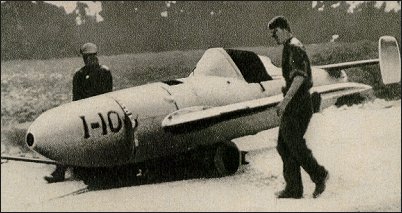
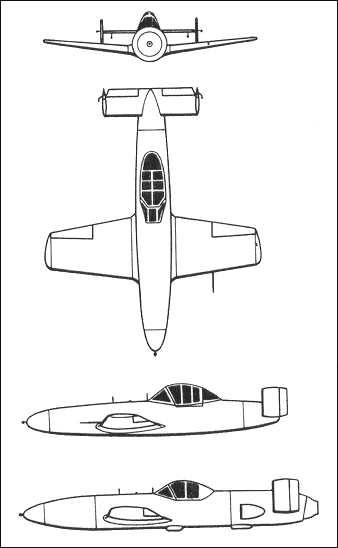
| | Sgt.KAR98, 25.07.2008 02:26 BTW,what΄s the difference of these two Ohkas? reply | | Aero-Fox, 31.03.2008 01:06 Good question. Quite simply, it didn't have the maneuverability or endurance. The motorjet engine it would have used would have been too slow to be much of a threat, though it may have increased range. Anyway, it didn't have maneuverability because the control surfaces were utterly tiny.
What I see it being used for, though, is a point-defence interceptor. Simply put some cannons in place of the warhead and give it larger tail surfaces, and send it up like an Me 163 (using RATO bottles to take off and an Ne-20 turbojet for flight). It could have ditched in the ocean to land and been a coastal-defence unit. reply | | Sgt.KAR98, 10.12.2007 01:43 That plane had an engine.Why it wasn΄t used as a jet fighter? reply | | mort_faucheur, 19.08.2007 08:30 I'll have to look up the attack by Okhas on the USS West Virginia et. al., that's a fascinating irony of history, IIRC. Wasn't the USS West Virginia severely damaged at Pearl Harbor on 7 Dec. 1941?
What a fascinating little craft is the diminutive Cherry Blossom; it's essentially a piloted suicide version of the German V-1 Fiesler 103 in airframe, but minus the German pulse-jet motor. reply | | Robert W. Horn, e-mail, 25.02.2007 17:06 Noting that warheads such as that carried by the Ohka were intended to defeat heavily armoured warships, and thus neccessitating commitment of a significant portion of warhead weight to a heavy armour-piercing casing, i have often wondered just how much of that 1,200kg was actually HE, as opposed to AP steel? Also, the fact that the W.Va, though hit was not sunk, nor even badly damaged, makes one wonder just how effective modern cruise missiles, all sporting much smaller warheads than Ohka, can actually be, as witnessed by the USS Stark, even though the smallest class of vessel in the U.S. Navy, still handily surviving being struck by an Iraqi-launched Exocet missilesome years back? Makes one think there might just be a very good use for mini-nukes (> 0.1kt) as anti-ship warheads! RWH reply |
|
Do you have any comments?
|
| 
COMPANY
PROFILE
All the World's Rotorcraft
|




your story is a load of fucking horse shit. you retarded american fuck for brains.
reply