|
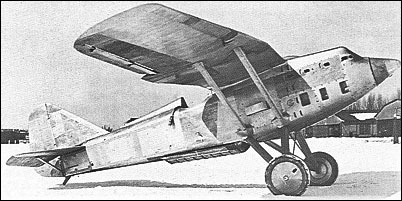
| The P.8 represented an attempt on the part of Zygmunt
Pulawski and his assistant, Wsiewolod Jakimiuk, to
establish new standards in aerodynamic cleanliness
and fighter performance. It combined a wing that was
fundamentally similar to that of the P.6 and P.7 with a
liquid-cooled engine and a new fuselage of improved
fineness ratio covered by smooth duralumin skinning. Armament comprised the standard twin 7.92mm
machine guns. The first prototype was destroyed in an
accident in July 1932 at Innsbruck, and the P.8/II was
displayed some months afterwards at the 1932 Paris
Salon, but development had already been discontinued
in favour of the radial-engined P.11.
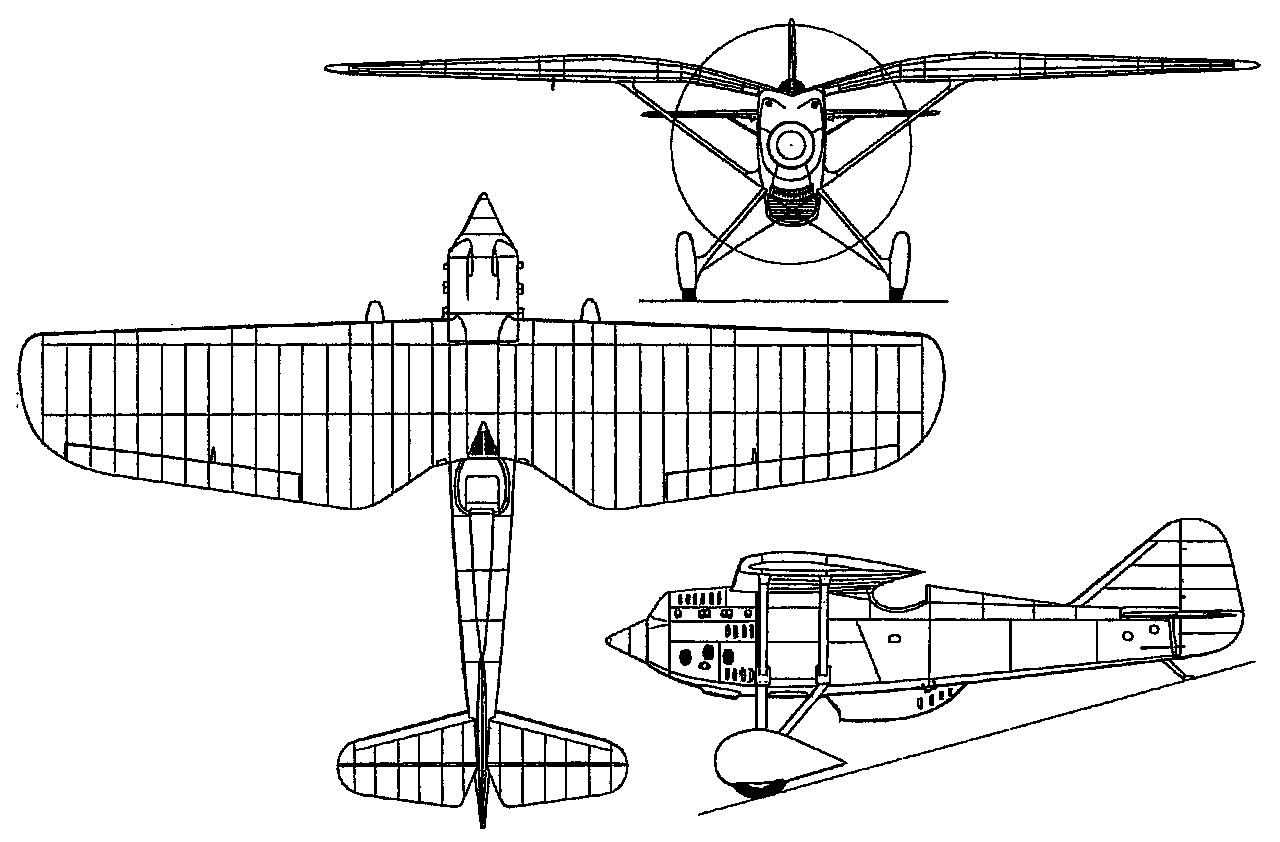
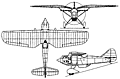 | A three-view drawing of P.8/I (1280 x 842) |
| MODEL | PZL P.8/II |
| WEIGHTS |
| Empty weight | 1102 kg | 2430 lb |
| DIMENSIONS |
| Wingspan | 10.50 m | 34 ft 5 in |
| Length | 7.56 m | 25 ft 10 in |
| Height | 2.75 m | 9 ft 0 in |
| Wing area | 18.00 m2 | 193.75 sq ft |
| PERFORMANCE |
| Max. speed | 350 km/h | 217 mph |
| Range | 500 km | 311 miles |
| Slawomir Bialkowski, e-mail, 02.11.2025 12:31 PZL P-8 (P-9 / P-10), 1931
Fighter aircraft. Poland.
The PZL P-8 aircraft was designed at the State Aviation Works by engineer Zygmunt Puławski as a continuation of the PZL P-1 inline-engined aircraft concept. The design was developed at the turn of 1930 /1931. Two prototypes were built in 1931. They were a development of the PZL P-7 and a strutless version of the PZL P-2. The first prototype, the PZL P-8 /I, powered by a Hispano-Suiza 12 Mc engine, first flew in August 1931.
In January (according to [4] â€" March) 1932, the second prototype, the PZL P-8 /II, powered by a Lorraine 12H "Petrel" engine, first flew. The PZL P-8 /I participated in the International Air Meeting in Warsaw (June 18-19, 1932). On July 20, 1932, Captain B. Orliński, flying to the International Air Meeting in Zurich (a fighter aircraft competition), damaged a PZL P-8 /II near Końskie. He flew a PZL P-8 /I to the meeting, which he crashed in Innsbruck. The PZL P-8 /I was written off, and the PZL P-8 /II, after being renovated, was exhibited at the 13th Paris Air Show (November 18-December 4, 1932). Fragments of the PZL P-8 /I's tail are on display at the Museum of Independence Traditions in Łódź. The production version of the PZL P-8 /II was to be designated PZL P-9, while the planned variant with the Rolls-Royce "Kestrel" engine was designated PZL P-10. Because in-line engines were no longer produced in Poland, and the designer who defended his concept was already deceased, work on the PZL P-8 and its development variants was abandoned in 1932. The PZL P-8 /II prototype was stored for many years at the PZL factory in Okęcie-Paluch. In the first half of 1934, the Lorraine engine factory proposed that Yugoslavia be interested in a PZL fighter with an in-line engine, which led to the intention to refurbish the PZL P-8 /II and the development of the preliminary design of the PZL P-28, a development of the PZL P-8. The design office then focused on the development of the PZL P-11 and PZL P-24 aircraft.
Design. Single-seat, high-wing, braced monoplane of metal construction.
The wing is trapezoidal, tapered at the fuselage, of duralumin construction, with two spars, covered with smooth sheet metal, and supported by two pairs of struts. Lattice ribs. The wing profile is a Bartel 37 /IIa, with a thickness of 6.75 to 14.25%. Slotted ailerons are covered with sheet metal.
The fuselage is rectangular, rounded from top to bottom, of truss construction, covered with duralumin sheet metal. Part of the skin is removable. The cockpit is open, protected at the front by a windshield and with a fairing behind the pilot's head.
The duralumin tailplane is covered with smooth sheet metal. The stabilizers are twin-spar. The horizontal stabilizer is adjustable, supported by struts.
The landing gear is conventional, fixed. The main landing gear is two-wheeled, with two legs, crossed by rods. PZL. 138 oil-air shock absorbers are concealed in the fuselage. Palmer 750x125 wheels with fairings. Tail skid with oil-air suspension.
Armament (expected) - Two fixed 7.7 mm Vickers pilot machine guns.
Equipment - A set of flight, navigation, and engine control instruments.
Engine:
- PZL P-8 /I - V-shaped, water-cooled, 12-cylinder Hispano-Suiza 12Mc engine with a rated power of 368 kW (500 hp) and a maximum power of 442-471 kW (600-640 hp).
Engine cowling made of duralumin sheet. Engine mount riveted from duralumin sheet. Water cooler under the fuselage. Oil cooler under the front fuselage. Two-blade, metal, fixed propeller. Fuel tank in the fuselage, emergency ejection,
- PZL P-8 /II (P-9) - inline V-engine, water-cooled, 12-cylinder Lorraine-Dietrich 12H "Petrel" engine with a nominal power of 404 kW (550 hp) (according to [4] - 368 kW /500 hp) and a maximum power of 497 kW (675 hp).
Water cooler under the fuselage, extendable or retractable in flight, later radiators on the fuselage sides. Oil cooler at the front of the fuselage, under the engine. Two-blade, metal, fixed propeller. 350-liter fuel tank in the fuselage, emergency jettisonable.
- In the designed PZL P-10 version, a V-shaped, water-cooled, 12-cylinder Rolls-Royce "Kestrel" engine with a nominal power of 405 kW (550 hp) and a maximum power of 552 kW (750 hp).
Technical data of the PZL P-8 /I (according to [1]):
Wingspan - 10.4 m, length - 7.3 (according to [3] and [4] - 7.03) m, height - 2.75 m, wing area - 17.6 m².
Empty weight - 971 kg, payload - 449 kg, gross weight - 1,420 kg. Maximum speed: 330 (according to [3] and [4]: 318) km /h, cruise speed: (according to [3] and [4]: 280) km /h, minimum speed: 101 km /h, rate of climb: 7.4 (according to [4]: 15) m /s, service ceiling: 9,000 m, range: (according to [3] and [4]: 500) km.
Technical data of the PZL P-8 /II (according to [1]):
Span: 10.5 m, length: 7.56 m, height: 2.75 m, payload: 18.0 m².
Empty weight: 1,102 kg, payload: 471 kg, gross weight: 1,573 kg. Maximum speed - 350 km /h, cruising speed - (accord ... reply | | Slawomir Bialkowski, e-mail, 02.11.2025 12:31 PZL P-8 (P-9 / P-10), 1931
Fighter aircraft. Poland.
The PZL P-8 aircraft was designed at the State Aviation Works by engineer Zygmunt Puławski as a continuation of the PZL P-1 inline-engined aircraft concept. The design was developed at the turn of 1930 /1931. Two prototypes were built in 1931. They were a development of the PZL P-7 and a strutless version of the PZL P-2. The first prototype, the PZL P-8 /I, powered by a Hispano-Suiza 12 Mc engine, first flew in August 1931.
In January (according to [4] â€" March) 1932, the second prototype, the PZL P-8 /II, powered by a Lorraine 12H "Petrel" engine, first flew. The PZL P-8 /I participated in the International Air Meeting in Warsaw (June 18-19, 1932). On July 20, 1932, Captain B. Orliński, flying to the International Air Meeting in Zurich (a fighter aircraft competition), damaged a PZL P-8 /II near Końskie. He flew a PZL P-8 /I to the meeting, which he crashed in Innsbruck. The PZL P-8 /I was written off, and the PZL P-8 /II, after being renovated, was exhibited at the 13th Paris Air Show (November 18-December 4, 1932). Fragments of the PZL P-8 /I's tail are on display at the Museum of Independence Traditions in Łódź. The production version of the PZL P-8 /II was to be designated PZL P-9, while the planned variant with the Rolls-Royce "Kestrel" engine was designated PZL P-10. Because in-line engines were no longer produced in Poland, and the designer who defended his concept was already deceased, work on the PZL P-8 and its development variants was abandoned in 1932. The PZL P-8 /II prototype was stored for many years at the PZL factory in Okęcie-Paluch. In the first half of 1934, the Lorraine engine factory proposed that Yugoslavia be interested in a PZL fighter with an in-line engine, which led to the intention to refurbish the PZL P-8 /II and the development of the preliminary design of the PZL P-28, a development of the PZL P-8. The design office then focused on the development of the PZL P-11 and PZL P-24 aircraft.
Design. Single-seat, high-wing, braced monoplane of metal construction.
The wing is trapezoidal, tapered at the fuselage, of duralumin construction, with two spars, covered with smooth sheet metal, and supported by two pairs of struts. Lattice ribs. The wing profile is a Bartel 37 /IIa, with a thickness of 6.75 to 14.25%. Slotted ailerons are covered with sheet metal.
The fuselage is rectangular, rounded from top to bottom, of truss construction, covered with duralumin sheet metal. Part of the skin is removable. The cockpit is open, protected at the front by a windshield and with a fairing behind the pilot's head.
The duralumin tailplane is covered with smooth sheet metal. The stabilizers are twin-spar. The horizontal stabilizer is adjustable, supported by struts.
The landing gear is conventional, fixed. The main landing gear is two-wheeled, with two legs, crossed by rods. PZL. 138 oil-air shock absorbers are concealed in the fuselage. Palmer 750x125 wheels with fairings. Tail skid with oil-air suspension.
Armament (expected) - Two fixed 7.7 mm Vickers pilot machine guns.
Equipment - A set of flight, navigation, and engine control instruments.
Engine:
- PZL P-8 /I - V-shaped, water-cooled, 12-cylinder Hispano-Suiza 12Mc engine with a rated power of 368 kW (500 hp) and a maximum power of 442-471 kW (600-640 hp).
Engine cowling made of duralumin sheet. Engine mount riveted from duralumin sheet. Water cooler under the fuselage. Oil cooler under the front fuselage. Two-blade, metal, fixed propeller. Fuel tank in the fuselage, emergency ejection,
- PZL P-8 /II (P-9) - inline V-engine, water-cooled, 12-cylinder Lorraine-Dietrich 12H "Petrel" engine with a nominal power of 404 kW (550 hp) (according to [4] - 368 kW /500 hp) and a maximum power of 497 kW (675 hp).
Water cooler under the fuselage, extendable or retractable in flight, later radiators on the fuselage sides. Oil cooler at the front of the fuselage, under the engine. Two-blade, metal, fixed propeller. 350-liter fuel tank in the fuselage, emergency jettisonable.
- In the designed PZL P-10 version, a V-shaped, water-cooled, 12-cylinder Rolls-Royce "Kestrel" engine with a nominal power of 405 kW (550 hp) and a maximum power of 552 kW (750 hp).
Technical data of the PZL P-8 /I (according to [1]):
Wingspan - 10.4 m, length - 7.3 (according to [3] and [4] - 7.03) m, height - 2.75 m, wing area - 17.6 m².
Empty weight - 971 kg, payload - 449 kg, gross weight - 1,420 kg. Maximum speed: 330 (according to [3] and [4]: 318) km /h, cruise speed: (according to [3] and [4]: 280) km /h, minimum speed: 101 km /h, rate of climb: 7.4 (according to [4]: 15) m /s, service ceiling: 9,000 m, range: (according to [3] and [4]: 500) km.
Technical data of the PZL P-8 /II (according to [1]):
Span: 10.5 m, length: 7.56 m, height: 2.75 m, payload: 18.0 m².
Empty weight: 1,102 kg, payload: 471 kg, gross weight: 1,573 kg. Maximum speed - 350 km /h, cruising speed - (accord ... reply | | David Mettetal, e-mail, 28.12.2010 17:21 Does anyone sell a kit of this plane ? reply |
|
Do you have any comments?
|
| 
COMPANY
PROFILE
All the World's Rotorcraft
|


 David Mettetal

There is an rc kit being sold in Poland.
reply