|
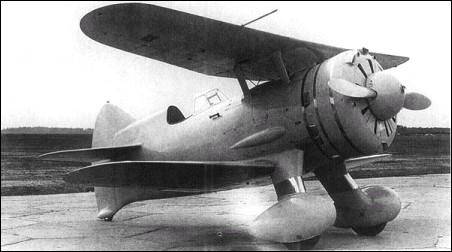
| In 1937, Aleksei A Borovkov and Ilya F Florov established
an experimental design bureau as OKB-7 with
the object of creating the smallest possible practical
single-seat fighter. The first prototype was completed
before the end of 1937, and was of heavily-staggered
cantilever biplane configuration with duraluminskinned
light alloy wings, a fuselage of mixed construction
(the forward portion being a duraluminskinned
welded steel-tube structure and the aft portion,
which included the cockpit, being a wooden
monocoque with plywood skinning) and wooden tail
surfaces. Power was provided by an 850hp Mikulin
M-85 14-cylinder radial. Favourable test results led to
two further refined prototypes being built as I-207s, these having Shvetsov M-62 and M-63 engines respectively
and each carrying an armament of four 7,62-mm
ShKAS machine guns. A pre-production series of four
I-207s was ordered in 1938, one being powered by the
1,100hp M-63 nine-cylinder radial, two having the
1,000hp M-62 nine-cylinder radial and the fourth
having a geared M-63R engine and a side-hingeing
cockpit canopy, all having retractable main undercarriages.
The I-207/M-63 attained a speed of 298 mph
(480 km/h) at 14,765 ft (4 500 m) during State Trials in
the summer of 1939, but the appearance of more
advanced fighters resulted in the 1-207 being discarded,
although both I-207/M62s were allegedly
employed operationally against the Finns during
1939-40.
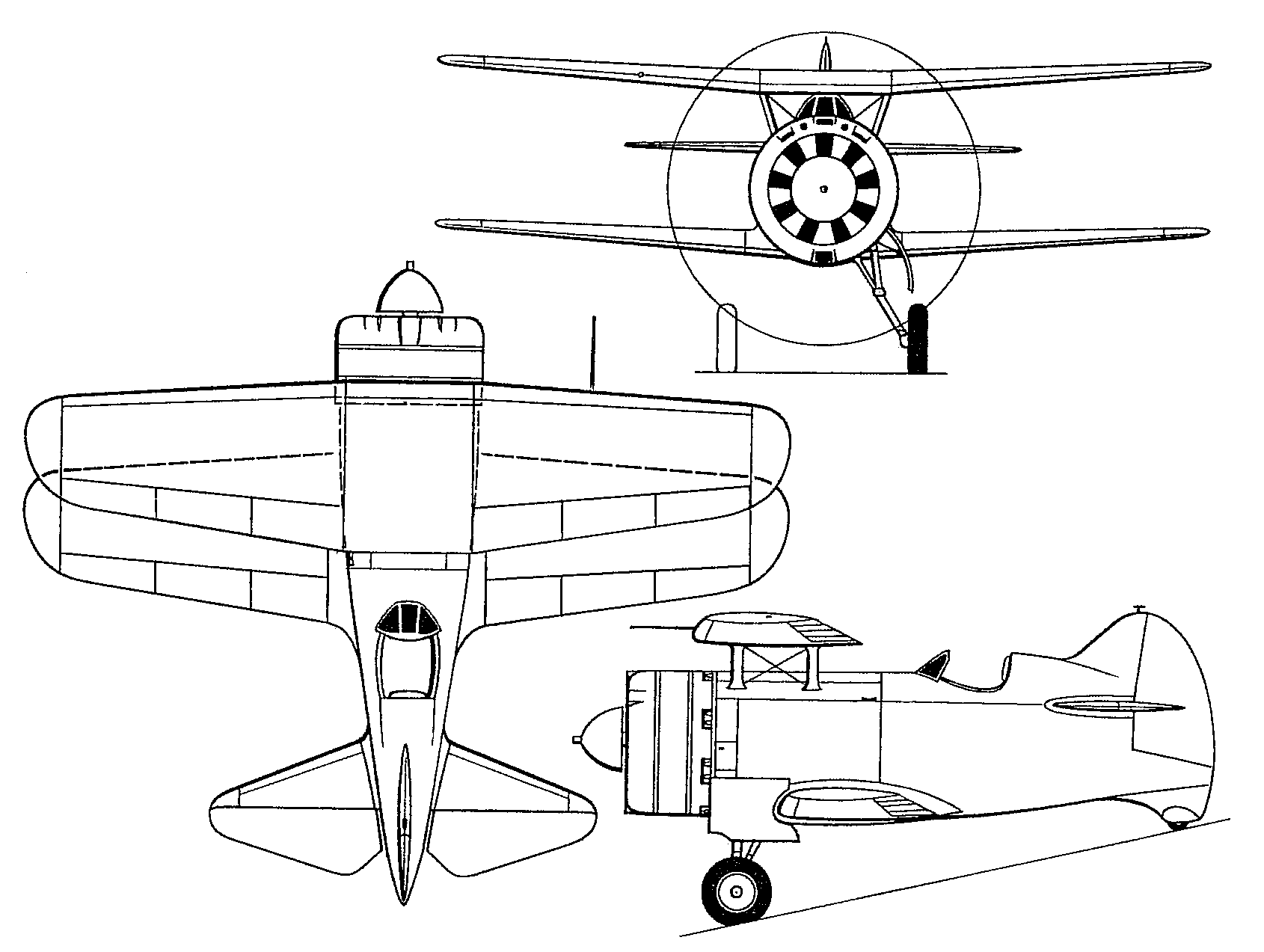
 | A three-view drawing (1690 x 1273) |
| MODEL | È-207/3 |
| CREW | 1 |
| ENGINE | 1 x 1000hp Ì-63 |
| WEIGHTS |
| Take-off weight | 1879 kg | 4143 lb |
| Empty weight | 1521 kg | 3353 lb |
| DIMENSIONS |
| Wingspan | 6.98 m | 23 ft 11 in |
| Length | 6.34 m | 21 ft 10 in |
| Height | 3.46 m | 11 ft 4 in |
| Wing area | 18.00 m2 | 193.75 sq ft |
| PERFORMANCE |
| Cruise speed | 405 km/h | 252 mph |
| Ceiling | 10200 m | 33450 ft |
| Rate of climb | 1087 m/min | 3550 ft/min |
| Range | 640 km | 398 miles |
| ARMAMENT | 4 x 7.62mm |
|
Do you have any comments?
|
| 
All the World's Rotorcraft |