|
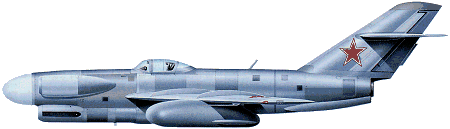
| The issue in November 1951 of a specification for an all-weather
fighter capable of mounting standing patrols
led the Lavochkin bureau to undertake some redesign
of the La-200. The side-by-side seating for the two crew
members was retained, and the centre and aft fuselage
were comparatively unchanged, but the forward fuselage
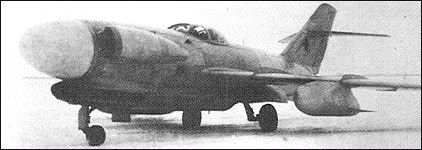
was entirely redesigned. The extreme nose was
formed by a large dielectric radome of more than 1.0m diameter. The early single-antenna Torii-A
radar was replaced by a large RP-6 Sokol (Falcon) radar
with three different scan modes, and twin ventral
strakes supplanted the single strake of the second
La-200. The additional fuel required to achieve the
specified endurance was provided by increasing the
capacity of each underwing tank from 1120 l to 2650 l. Two 3100kg Klimov VK-1 turbojets were installed, the forward engine's air being supplied through a chin intake
and that for the aft engine being provided by "elephant
ear" type intakes on the sides of the extended
nose. Armament remained three 37mm cannon and
the first flight test was made on 3 July 1952, a mock-up
of the Sokol radar initially being fitted, tests with the
radar installed commencing on 10 September. An extensive
test programme was conducted, but, in the
event, the competitive Yak-120 was selected to fulfil the
requirement.
| WEIGHTS |
| Take-off weight | 12700 kg | 27999 lb |
| Empty weight | 8810 kg | 19423 lb |
| DIMENSIONS |
| Wingspan | 12.96 m | 43 ft 6 in |
| Length | 17.32 m | 57 ft 10 in |
| Wing area | 40.00 m2 | 430.56 sq ft |
| PERFORMANCE |
| Max. speed | 1030 km/h | 640 mph |
| Range | 2800 km | 1740 miles |
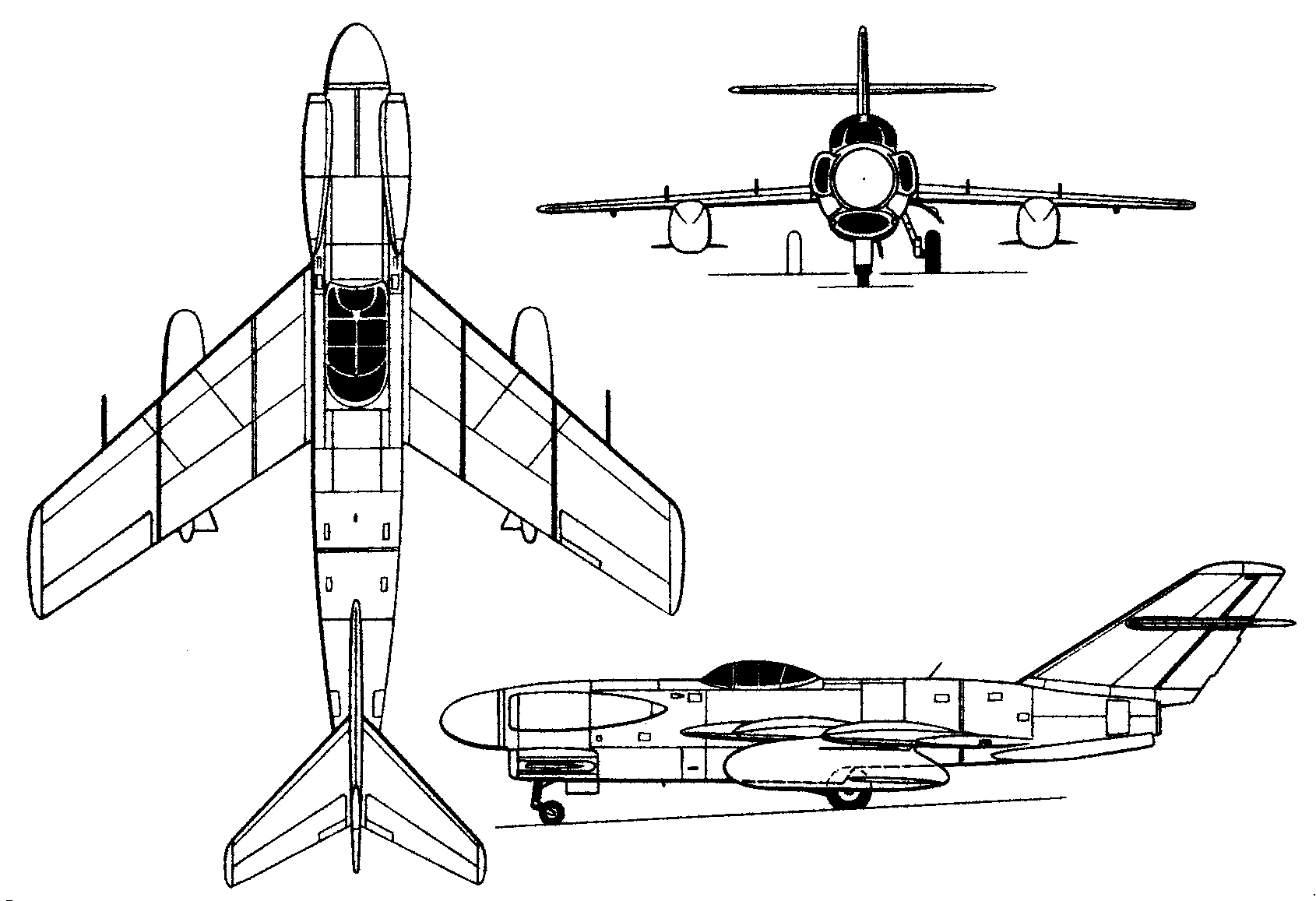
 | A three-view drawing (1690 x 1157) |
| Anonymous, 12.02.2021 07:35 Did those three engine ducts have a negative impact on performance? reply | | changmarin, e-mail, 03.04.2012 18:42 Strike compelling, I meant awesome. reply | | changmarin, e-mail, 02.04.2012 17:11 Compelling comment 3VI. WWII german aircrafts captivated me when I was kid until now and have been trying to discribe that perception since then. reply |
| bombardier, e-mail, 23.05.2011 14:33 The La-200B was the ugly duckling which never had a chance to become a swift reply | |
| | 3VI, e-mail, 20.08.2007 20:42 Embarassing but so fascinating uglyness... reply |
|
Do you have any comments?
|
| 
COMPANY
PROFILE
All the World's Rotorcraft
|




20
reply