 |
Polikarpov Po-21928 |  |
| MULTI-PURPOSE | Virtual Aircraft Museum / USSR / Russia / Polikarpov |
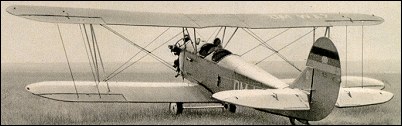 |
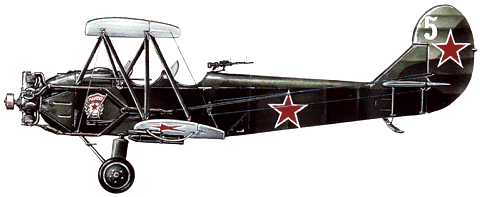
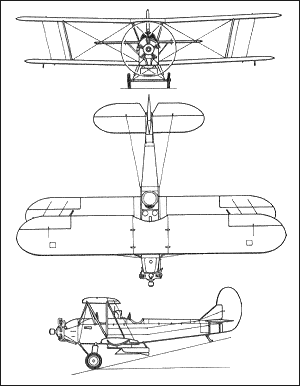
Occupying a unique position in Soviet aviation history, the Polikarpov U-2 primary trainer biplane had an inauspicious start. The U-2TPK prototype, which appeared in early 1927, had been built to achieve economy in repair and maintenance, the wings comprising four identical thick-section interchangeable rectangular panels with square tips. Similarly, a common control surface was used for ailerons, elevators and rudder. The result was a biplane with very poor flight characteristics. It had thus to be redesigned, appearing as a neat, manoeuvrable biplane having staggered single-bay wing with rounded tips, conventional cross-axle landing gear, and tandem open cockpits for instructor and pupil. Powered by a 75kW radial engine, the new prototype made its first flight on 7 January 1928. An immediate success, it was placed in quantity production, deliveries starting in 1928, and by the time of the German invasion of the Soviet Union in mid-1941 over 13,000 had been completed. Though its principle role was primary training, the U-2 was soon modified as a light passenger transport, air ambulance and agricultural aircraft. Production continued on a massive scale during World War II, and the U-2 took on an even wider range of duties, including liaison, light attack, night nuisance raider and propaganda aircraft complete with microphone and loudspeaker. After Polikarpov's death, on 30 July 1944, the U-2 was redesignated Po-2 in his honour, and post-war it continued in production in the USSR for several years. Trainer and ambulance variants were built on a large scale in Poland from 1948 to 1953, Po-2s served with many Soviet allies and a small number still remain in flying condition in the USSR and several other countries. The total built is credibly reported to be in excess of 40,000.
|  COMPANY PROFILE | ||||||||||||||||||||||||||||||||||||||||||||||||||||||
|


|