 |
Yakovlev Ya-7 (AIR-7)1932 |  |
| SPORT, TRAINING, COURIER | Virtual Aircraft Museum / USSR / Russia / Yakovlev |
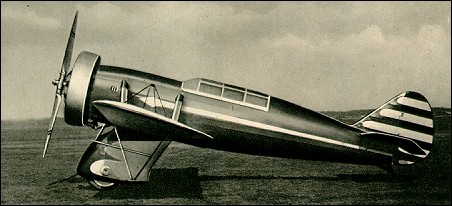 |
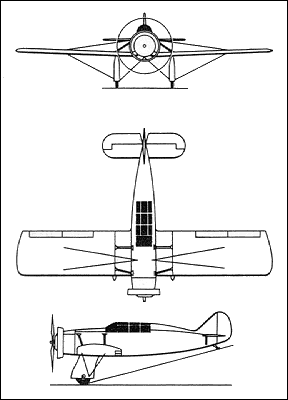
Two seat low-wing monoplane built for record speed. Both cockpits covered by long and low transparent canopy. Engine covered by Taunend ring. Aircraft had mixed design: steel tubes and fabric for fuselage, mostly wood and fabric in thin (8%) wing, duralumin and fabric for ailerons and tail surfaces. Fixed landing gear was enclosed into 'pants' fairings. Despite speed was a primary goal, wing was supported by struts and anti-lift steel tapes. Construction started in April 1932. Aircraft was ready at the end of a Summer 1932. Same year (November 19) speed 325km/h was demonstrated, and on Spring 1933 - 332km/h. Flights continued until 1934, when aileron broke off in flight due to flatter (then almost unknown and not understood). Test-pilot Yu.I.Piontkovskij managed to land on unprepared terrain. Since AIR-7 fulfilled its goal (to demonstrate high speed), it was not restored.
|  COMPANY PROFILE | ||||||||||||||||||||||||||||||||||||||||||
|


|