 |
Yakovlev Yak-381971 |  |
| VSTOL FIGHTER-BOMBER | Virtual Aircraft Museum / USSR / Russia / Yakovlev |
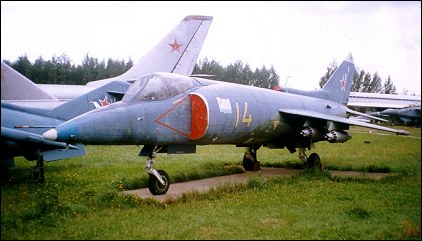 |
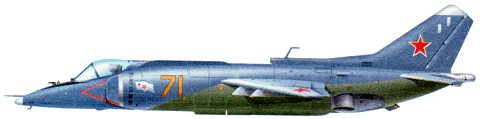
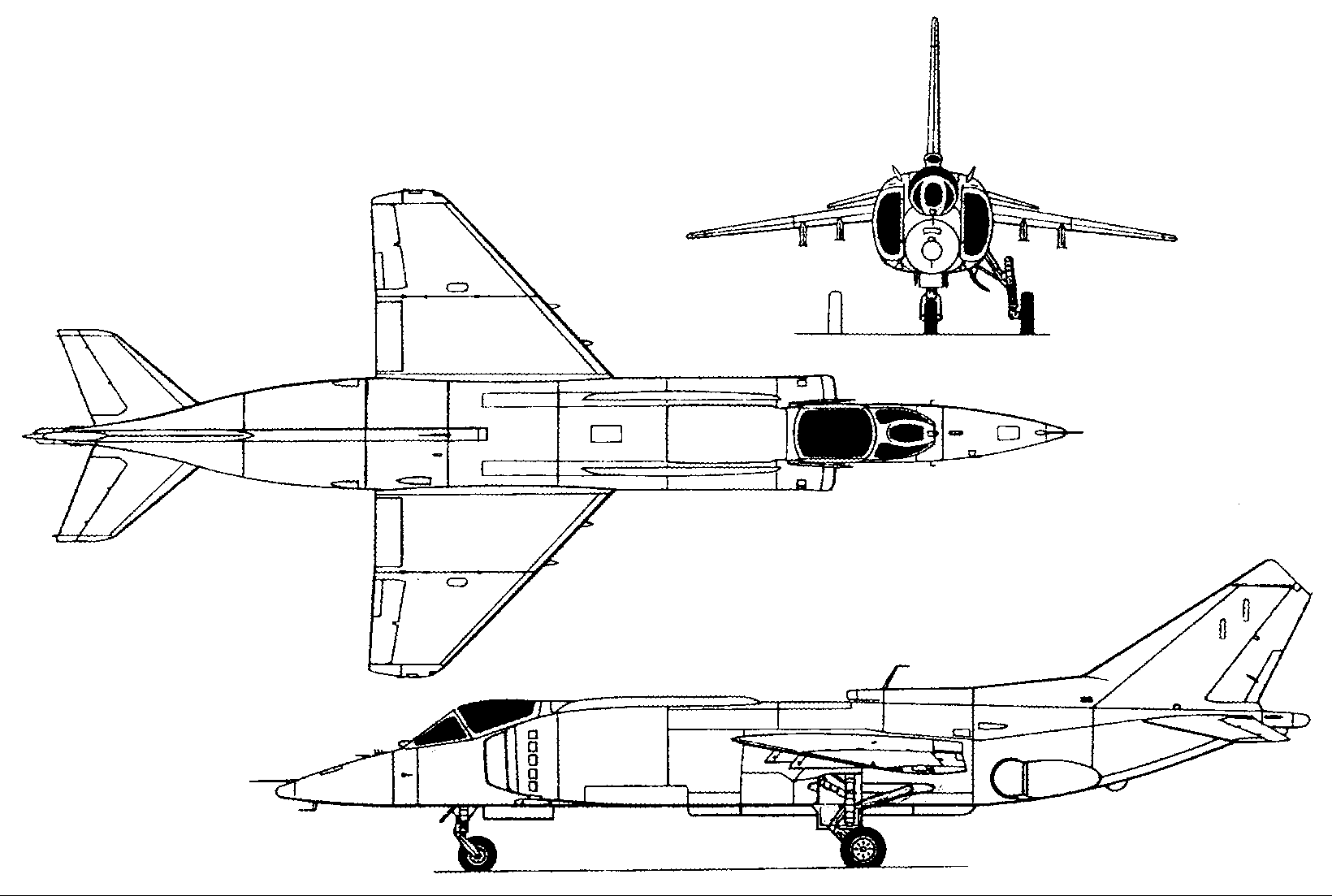
The first combat aircraft of Soviet design conceived specifically for shipboard operation to achieve series production, the Yak-38 single-seat carrier-borne air defence and strike fighter was evolved from the Yak-36M. Flown in prototype form in 1971, the Yak-36M was developed under the design leadership of S Mordovin for the primary tasks of fleet air defence against shadowing maritime surveillance aircraft, reconnaissance and anti-ship strike. Power plant combined a Yu Gusev-developed Tumansky R-27V thrust-vectoring turbojet with two Rybinsk (Koliesov) RD-36-35 vertical-lift turbojets designed by a team led by A Dynkin. Hydraulic drives synchronised by a transverse shaft rotated the thrust-vectoring nozzles aft of the wing, their output in vertical take-off and landing operations being balanced during hover and transition by the paired lift engines mounted in tandem immediately aft of the cockpit and inclined forward 13° from the vertical. Shipboard trials with the Yak-36M began aboard the Moskva half-deck anti-submarine cruiser in 1972, and, in the following year, the decision was taken to build a pre-series of Yak-36M fighters for service evaluation, the first two of these landing aboard the carrier-cruiser Kiev in 1975. An evaluation squadron comprising 12 single-seat Yak-36Ms and two two-seat Yak-36Us embarked aboard the Kiev in the summer of 1976, the aircraft being confined to vertical take-off with conversion following at 5-6m above the deck. During 1976, production was initiated of a much improved version of the basic design as the Yak-38. Externally similar to the Yak-36M, apart from substantial strakes either side of the intake for the lift engines, the Yak-38 possessed a full weapons system and an automatic control system permitting a short roll leading into vertical take-off as distinct from an orthodox short take-off benefiting from wing-induced lift. The Yak-38 entered service with the Soviet Navy in 1978, and, during 1980, was evaluated under operational conditions in Afghanistan. Progressive development resulted in the Yak-38M, which, with 1000kg more engine thrust, a steerable nosewheel and provision for paired 600-litre underwing auxiliary tanks, entered production in succession to the Yak-38. The Yak-38M had a 6940kg R-27V-300 thrust-vectoring turbojet and two vertical-lift RD-38 turbojets each rated at 3250kg. Two wing stations immediately inboard of vertically-folding panels provided for two gun pods each containing a twin-barrel 23mm GSh-23 cannon, rocket packs or bombs weighing up to 500kg each, two R-60 IR-homing AAMs or short-range ASMs. The tuitional version, the Yak-38UM, had vertically-staggered tandem seats, a plug being inserted in the aft fuselage to compensate for a lengthened nose. Each of the four Soviet Navy Kiev-class carrier cruisers received a 14-aircraft squadron of Yak-38s or -38Ms (each including two two-seaters), and production was completed by 1987 with a total of 231 Yak-38s (all versions) built. FACTS AND FIGURES © The 'Forger' had a system to automaticaliy eject the pilot if the engine stopped while the thrust was angled below the horizontal. On one occasion this occurred in full view of a British carrier, who rescued the pilot. © A hinged door opened behind the cockpit to feed air to the lift jets, which exhausted out of a hatch at the bottom. © The 'Forger' was very basically equipped, with only a simple weapons sight and no radar or radar warning systems. © Although intended only for vertical take-offs and landings, the 'Forger' had double-slotted flaps and a braking parachute.
|  COMPANY PROFILE | ||||||||||||||||||||||||||||||||||||||||||
|


|
The price of a yak38 in 1998 was 18.8 million dollars
reply