|
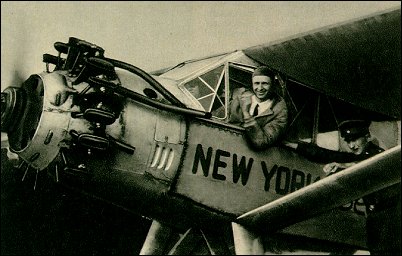
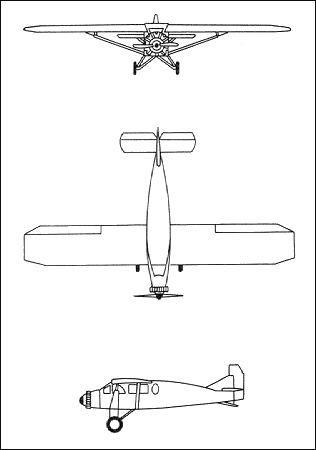
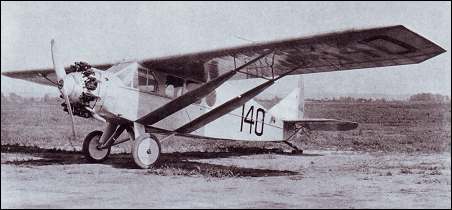
| Following earlier aviation exploits, Giuseppe Bellanca joined forces with the Wright Aero Corporation in 1924 as a consultant. Wright required an airframe to best demonstrate its new J-2 Whirlwind engine, and the WB-2, which went on to win many events in the 1926 air race calendar, was the result. Despite the aircraft's success, Wright decided to concentrate on engine manufacture and sold the airframe business to Charles Levine, whom Bellanca went into partnership with under the name of Columbia Aircraft Company. Consequently, the WB-2 was renamed Columbia. Charles Lindbergh approached the company to use the Columbia for his planned Atlantic crossing, but was refused by Levine, who was preparing to use the Columbia in his own bid for the title in 1927 (Levine was to be a passenger). Levine became involved in a legal wrangle with his team of aviators and Lindbergh's Ryan-designed machine succeeded in crossing the
Atlantic first. Weeks later the Columbia made the transatlantic journey to Berlin in a record time, and the Columbia was hailed as a great design, not least in having a passenger seat and windshield.
Consequently Bellanca, who parted with Levine, went on to achieve great commercial success, first with the CH-300 derived from the high-wing monoplane WB-1 and WB-2.
| CREW | 2 |
| ENGINE | 1 x Wright "Whirlwind" J5C, 165kW |
| DIMENSIONS |
| Wingspan | 14.0 m | 46 ft 11 in |
| Wing area | 25.3 m2 | 272.33 sq ft |
| PERFORMANCE |
| Cruise speed | 180 km/h | 112 mph |
| Range | 8050 km | 5002 miles |
| lxbfYeaa, e-mail, 14.03.2024 06:55 20 reply | | a.machia, e-mail, 27.08.2013 11:09 High wing aspect ratio, very advanced design! Bellanca produced some of the best sport planes up until very recently too. reply | | Bill Hunt, e-mail, 14.09.2012 02:57 Hi...I am building a 1 /4 scale Bellanca "Columbia" at this time and I am in need of documentation like you have on this web site. Unfortunately, It is not allowing me to print this info. out. Can you please help me? Thank you.
Bill Hunt reply | | scottb60, e-mail, 14.10.2011 06:26 Starting in 1928 with the CH-200 through the Cruisemaster and into the 60's with the tricycle gear 260C and the later 17-30 Vikings.
Wooden wings and fabric covered fuselages as well as plush cockpits made it a comfortable airplane. With later models wheel well doors and 300hp Continental and Lycoming engines made it one of the fastest of the era. As far as I can find the last one was built in 2005 in Minnesota.
Quite a few are available on the used market, including some of the early tailwheel models. reply | |
| | SHAUN STIRLING, e-mail, 11.10.2011 15:45 I have got an ashtray made from the fuel tank of this aircraft, i would like to know more about it, it's rarity etc. It has the same image as the one that was shown at the Smithsonian Instititute and has the inscription on the back as well as the plane and cointinents on the front. reply | | Bill Way, e-mail, 01.08.2011 06:21 I lived in Alexandria, Minnesota until 1972. There was a Bellanca assembly plant there until at least 1974. Is this a different company or was it owned by a parent company? reply | | Leo Pisculli, e-mail, 02.06.2011 02:44 Was this the model that Pangborn & Herndon flew around the world in 1931? reply | | R Quartermain, e-mail, 25.11.2010 20:54 Dear Sirs ,my friend has bought a memorial plaque marking trans Atlantic flights from America to Gatwick in 1927 and 1930 the plaque made from the aluminium fuel tanks from Mr Levine's Bellanca aircraft Miss Columbia.Could you give me any more information on this plaque, regarding collectors value and how common the plaque is, what happened to the plane yours sincerely R Quartermain reply | | B Sanders, e-mail, 08.04.2010 00:57 what color was these planes? reply | | Jack Roberts, e-mail, 28.01.2010 06:52 Where is the picture of the Bellanca CH 300, "Miss Veedol", flown by Clyde Pangborn. It was the first airplane to fly across the Pacific Ocean non-stop in 1931 in 41 hours and 13 minutes. A replica "Spirit of Wenatchee" of the same plane is in Wenatchee Washington. reply | | Allen Smith, e-mail, 05.02.2009 03:27 I do believe I have a photo of this model aircraft. It was owned by a Mr.Fred Desjardines who was a friend of my fathers for years. Fred owned the Westboro, Mass. airport in the late 20's and 30's. Several of us have been trying to identify the aircraft and now think it was a WB 1 or 2. I shall attempt to send up a download of the photograph if I can locate your address.
Thanks reply |
|
Do you have any comments?
|
| 
COMPANY
PROFILE
All the World's Rotorcraft
|