 |
Boeing XF7B-1 / Model 2731933 |  |
| FIGHTER | Virtual Aircraft Museum / USA / Boeing |
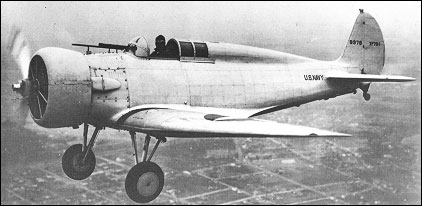 |
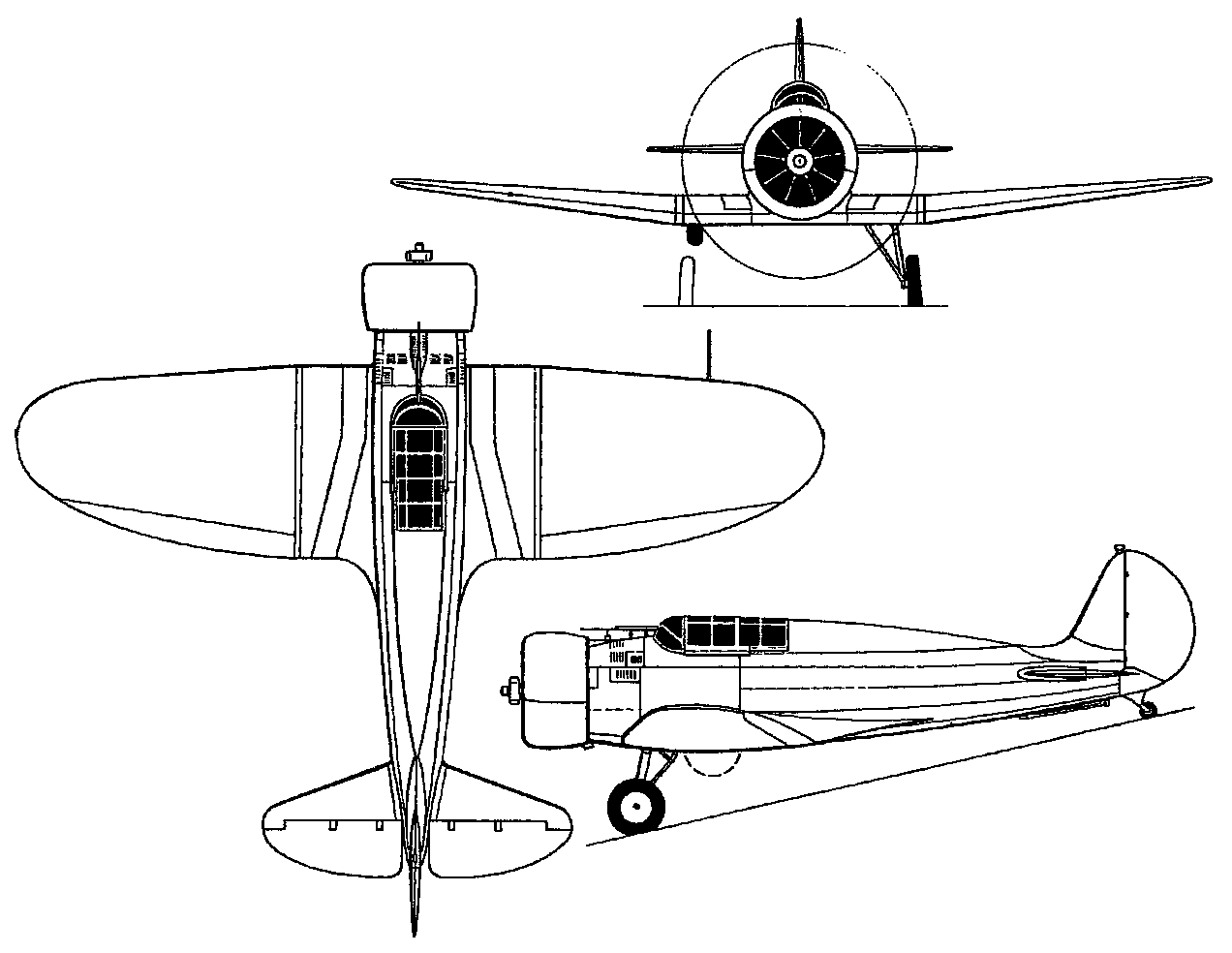
Designed to meet the requirements of a US Navy specification issued on 6 December 1932, the XF7B-1 (Model 273) was the first all-metal cantilever low-wing monoplane single-seat fighter with a retractable undercarriage to be evaluated by that service. Powered by a Pratt & Whitney SR-1340-30 engine rated at 550hp at 3050m, the XF7B-1 featured a fully-enclosed cockpit and was flown for the first time on 14 September 1933. Armament comprised two 7.62mm machine guns. After initial evaluation, the XF7B-1 was returned to its manufacturer to have split flaps and a longer-chord engine cowling fitted. Subsequently the enclosed cockpit gave place to an open cockpit. The US Navy considered that the XF7B-1 offered inadequate view and too high a landing speed for shipboard operation, and the sole prototype was scrapped after, in March 1935, the fighter was inadvertently stressed to 12.1g (although the designed load factor was only 9.0) when the pilot pulled out of a 668km/h dive too abruptly following collapse of the windscreen. FACTS AND FIGURES © Changes made after initial testing included a longer-chord engine cowl and a split flap arrangement to reduce rhe landing speed and rollout. © The original, shallow and heavily framed cabin enclosure gave a poor view. It was replaced by an open cockpit with a taller windscreen - that failed during a dive, precipitating the F7B's end. © The undercarriage is described as 'semi-retractable', although it is often depicted down in in-flight photographs.
|  COMPANY PROFILE | ||||||||||||||||||||||||||||||||||||||||||

|


|