 |
Bonney Gull1928 |  |
| EXPERIMENTAL AIRCRAFT | Virtual Aircraft Museum / USA / Bonney |
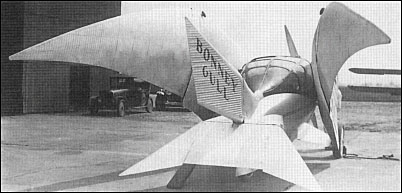 |
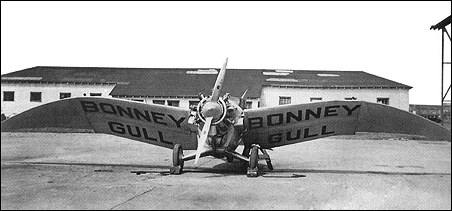
Despite 25 years of evidence to the contrary, American pilot and inventor Leonard Warden Bonney believed the secret to manned flight was to emulate the birds as closely as possible. To this end he kept and studied seagulls and devised an aircraft on avian principles. The Bonney Gull emerged in late 1927 and was unlike anything before or since. The wings, which really can be described as gull-like, did everything except actually flap, incorporating variable incidence, variable dihedral, and variable sweep of the outer sections. After four years' work and considerable testing in wind tunnels and on the ground, and despite the protest of friends and observers, Bonney took off in the Gull on 4 May 1928. The Gull wobbled, fishtailed and plunged into the ground, killing Bonney and ending his dream of flying like the birds. Jim Winchester "The World's Worst Aircraft", 2005 FACTS AND FIGURES © The wings of the Gull could fold backwards for road transport or storage. © The all-metal Gull had side-byside seating, dual controls and upholstered seats. © The tail consisted of a small fixed surface and a large rudder, emulating a bird's tail feathers. © The angle of incidence of the wing couid be varied, as could its dihedral and the sweep of the rips. All of this was handled by a 'minimum amount of central controls'.
|  All the World's Rotorcraft | ||||||||||||||||||||||||||||||
|


|