 |
Consolidated P-30 / PB-21934 |  |
| FIGHTER | Virtual Aircraft Museum / USA / Consolidated |
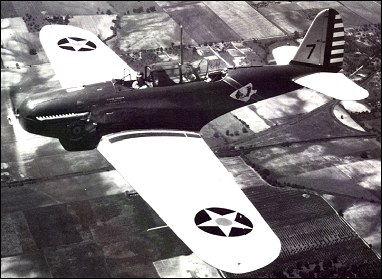 |
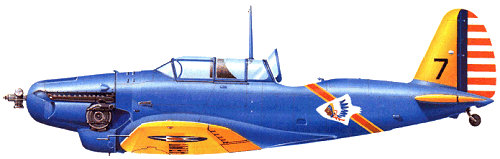
The P-30 appellation was another signpost on the route toward operational service for the two-seat fighter concept which had begun with the Lockheed YP-24 and continued with the Consolidated Y1P-25. By 1933, the YP-24's builder was out of the fighter business, the Y1P-25 and Y1A-11 had crashed, and the Y1P-27 and Y1P-28 were soon to be cancelled. Still, the Army had confidence in the cantilever low-wing monoplane design with all-metal construction (except for control surfaces), controllable-pitch propellers, retractable landing gear, enclosed heated cockpit (for pilot) and exhaust-driven supercharger. Turning to the 503kW supercharged Curtiss V-1710-57 Conqueror inline engine, the USAAC ordered four Consolidated airframes under the designation P-30. By 1934, flight tests of the P-30 were under way, the aeroplane carrying an officer/pilot and enlisted man/gunner. Pilots bred on the romance and appeal of the single-seat pursuit ship were not readily won-over by a two-seat machine. Gunners found their semi-open perch aboard the P-30 distinctly uncomfortable and, at high altitude, very cold. Reports that rear gunners sometimes 'blacked out' during high-g manoeuvres appear erroneous, but the heavy clothing, required to keep the gunner from freezing, seriously impaired his effectiveness. For this and other reasons, the P-30 was never effective at high altitude, the very regime where USAAC doctrine called for it to fly and fight. Development of the parallel A-11 attack aircraft was suspended after delivery of four airframes and some airmen argued that the P-30, too, had reached the limit of its usefulness. But on 6 December 1934, the Army placed a firm contract for a production batch of 50 P-30As and made plans for the 1st Pursuit Group at Selfridge Field, Michigan, to operate the type. The operational machines received the 522kW Curtiss V-1570-61 powerplant. They became a familiar sight in war games at USAAC aerodromes during the 1930s. A single P-30A was built as a single-seater and competed without success in the 1936 fighter competition which produced the Curtiss P-36 Mohawk. Shortly after the P-30A entered service, the 'pursuit bi-place' category was closed, surviving P-30 airframes becoming PB-2s and the single-seat P-30A becoming the PB-2A. This heavy and heavily-armed fighter was to take in one further designation in an unbuilt variant, XP-33, before passing into history. A few PB-2As (former P-30As) are thought to have remained in service as late as the eve of Pearl Harbor.
|  COMPANY PROFILE | ||||||||||||||||||||||||||||||||||||||||||||||||||||||

|


|
Browning .30 cal air-cooled
reply