 |
Curtiss-Wright CW-211938 |  |
| FIGHTER | Virtual Aircraft Museum / USA / Curtiss |
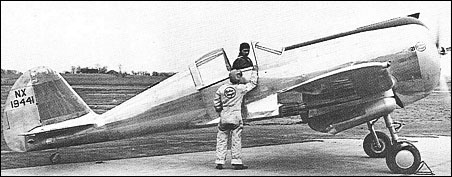 |
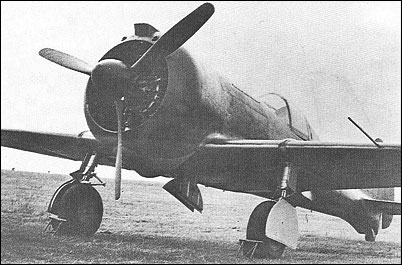
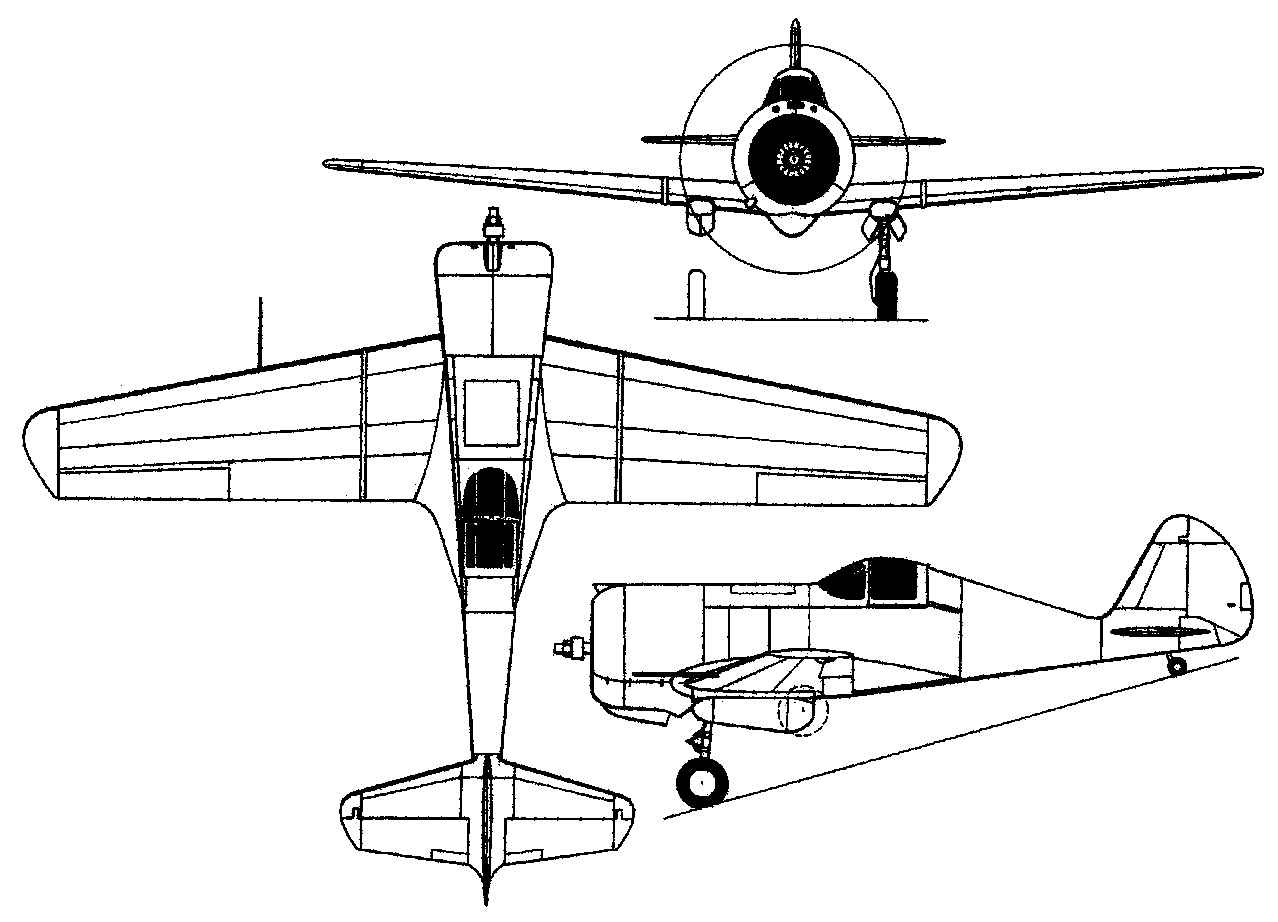
In 1938, chief engineer Willis Wells of the St Louis Airplane Division of the Curtiss-Wright Corporation began the development of a single-seat fighter based on the A-19R tandem two-seat military basic trainer. Designated CW-21, the fighter had a Wright R-1820-G5 Cyclone nine-cylinder radial engine rated at 1,000hp for take-off and 850hp at 1830m, and an allmetal stressed-skin structure with a semi-monocoque fuselage. Mainwheels retracted into clamshell-type underwing fairings and armament consisted of two synchronised 12.7mm machine guns. The prototype CW-21 was flown on 22 September 1938, and subsequently shipped to China for demonstration. The prototype was purchased by the Chinese government and a contract placed for three production aircraft and 27 sets of components for assembly by CAMCO. The first production CW-21 was flown on 20 March 1940, and provision was made to supplement the armament with a pair of 7.62mm weapons. All three CW-21s built by the parent company were lost as a result of engine failures (undoubtedly dirty fuel) after taking-off from Lashio while being ferried to Kunming. Assembly of CW-21s by CAMCO at Loi-wing had reached an advanced stage when it was decided to evacuate and, on 1 May 1942, burn the factory to avoid its capture by Japanese forces, the partly-assembled Curtiss-Wright fighters also being destroyed.
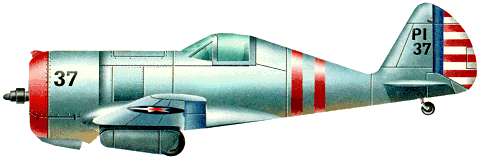 In April 1939, Curtiss-Wright's St Louis Airplane Division flew the prototype of the CW-23 basic combat trainer which was essentially a tandem two-seat, lower-powered derivative of the CW-21 single-seat fighter. It introduced inward-retracting, fully-enclosed main undercarriage members and hydraulically-actuated rather than manually-operated flaps, and these features were adopted for a new version of the single-seat fighter, the CW-21B. On 17 April 1940, the Dutch government signed a contract for 24 CW-21B fighters (of which there was no prototype) and the first of these was flown the following mid-September. The CW-21B retained the R-1820-G5 Cyclone of the earlier CW-21 and armament comprised two 7.62mm Colt machine guns mounted in the forward fuselage. The CW-21B fighters were shipped to Java during October-December 1940, entering service with the MLKNIL, but their light structure and lack of fuel tank protection was to render them particularly vulnerable when committed to operations against Japanese forces in the early months of 1942, the last combat mission being flown by a CW-21B on 5 March.
|  COMPANY PROFILE | |||||||||||||||||||||||||||||||||||||||||||||||||
|


|
War Thunder has CW-21 in the CHINESE planes line-up. It's a free game on PC. I was just looking up info while playing and hoping to see if any versions exist for viewing in 2022. War Thunder has Simulator mode, which is difficult, and an Arcade mode (easy) as well as Realistic mode (medium difficulty, closer to reality, not as hard to play as Simulator mode). I'm a middle aged person and I love the WW1, WW2 planes in game. Check out the game OR videos on YouTube if you want to know more about the Curtiss Wright.
good day!
reply