|
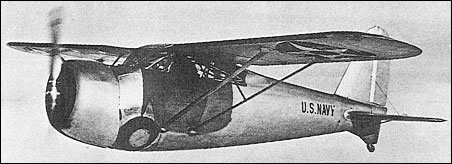
| Perhaps the most unusual single-seat fighter developed
by Curtiss was the Model 70, which was designed
from the outset to be flown either as a monoplane or as
a biplane with the minimum of structural change. A
metal semi-monocoque aircraft with fabric-covered
wings, it was ordered on 23 November 1932 as the
XF13C powered by a Wright SGR-1510-2 two-row radial
rated at 600hp at 3050m. The designation
XF13C-1 was assigned to it for test in monoplane form
and XF13C-2 in biplane (or more strictly, sesquiplane)
form. It was initially flown in December 1933 as a
biplane, flying in monoplane form on 7 January 1934,
and being delivered to the US Navy as the XF13C-1 on the following 10 February. Featuring a manually-operated
retractable undercarriage, an enclosed cockpit, retractable
upper wing leading-edge slats and trailingedge
flaps, the XF13C-1 did not revert to biplane
standard, but, in February 1935, was returned to Curtiss
for various modifications, including installation of
an XR-1510-12 engine affording 700hp at 2135m. With these changes it was redesignated
XF13C-3. In biplane configuration, the XF13C was
30km/h slower than as a monoplane, but possessed
a shorter take-off run and better low-speed
characteristics. Trials were terminated in October 1935,
primarily owing to lack of engine spares.
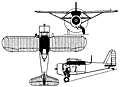 | A three-view drawing (1280 x 924) |
| MODEL | XF13C-3 |
| WEIGHTS |
| Take-off weight | 2142 kg | 4722 lb |
| DIMENSIONS |
| Wingspan | 10.67 m | 35 ft 0 in |
| Length | 7.86 m | 26 ft 9 in |
| Height | 3.88 m | 13 ft 9 in |
| Wing area | 19.04 m2 | 204.94 sq ft |
| PERFORMANCE |
| Max. speed | 373 km/h | 232 mph |
| Alan, e-mail, 16.11.2010 02:06 Do happen to have any information on how this aircraft impacted of, conversely, was impacted BY the Curtiss O-52 Owl and the O-40 sesquiplane designs? reply | | fede, e-mail, 31.08.2009 00:08 It's look like a Grumman /General Motors Wildcat but it have got the wing on the pilot reply |
|
Do you have any comments?
|
| 
COMPANY
PROFILE
All the World's Rotorcraft
|