 |
Curtiss SBC Helldiver1934 |  |
| CARRIER-BASED SCOUT-BOMBER | Virtual Aircraft Museum / USA / Curtiss |
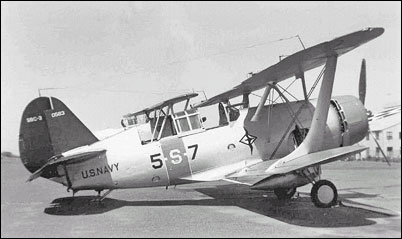 |
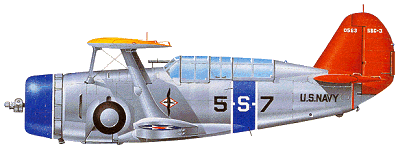
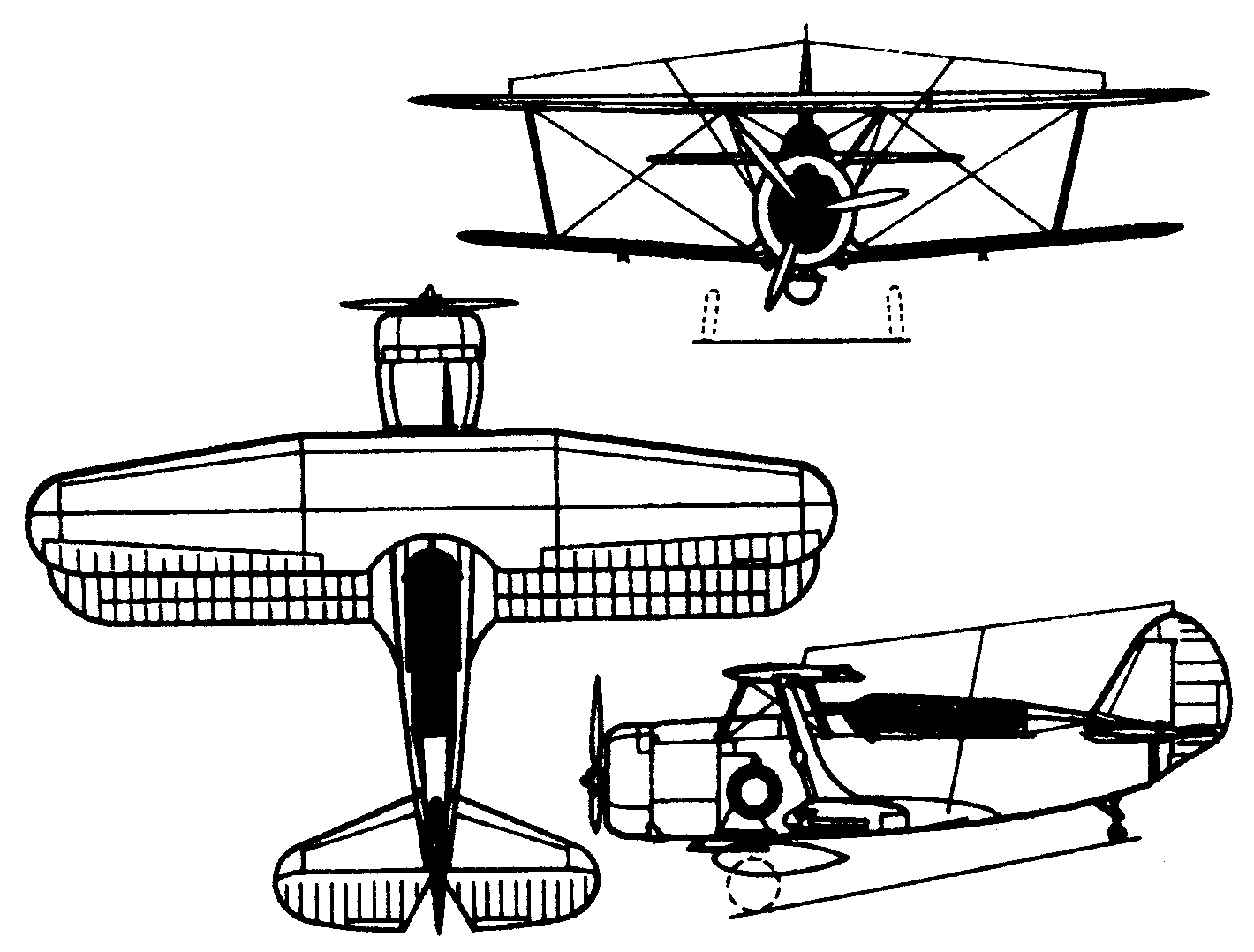
Requiring a new two-seat fighter, the US Navy ordered a prototype from Curtiss in 1932 under the designation XF12C-1. This Curtiss Model 73 flew for the first time during 1933, in the form of a two-seat parasol-wing monoplane with retractable landing gear powered by a 466kW Wright R-1510-92 Whirlwind 14 engine. When, at the end of the year, it was decided to use this aircraft in a scout capacity, its designation was changed to XS4C-1. Following yet another change of heart, its role became that of a scout-bomber in January 1934 and a Wright R-1820 Cyclone engine was installed. Extensive trials followed, and during a dive test in September 1934 there was structural failure of the wing and the XSBC-1, as it had been designated, was damaged extensively. The parasol wing was clearly unsuitable for the dive-bombing requirement, and a new prototype was ordered as the XSBC-2 (Model 77), this having biplane wings and a 522kW Wright R-1510-12 Whirlwind 14 engine. When, in March 1936, this engine was replaced by a 522kW Pratt & Whitney R-1535-82 Twin Wasp Junior engine, and the designation changed yet again to XSBC-3. The production SBC-3 (Model 77A), of which the US Navy ordered 83 on 29 August 1936, was generally similar and the first deliveries, to Navy Squadron VS-5, were made on 17 July 1937. A late production SBC-3 was used as the prototype of an improved XSBC-4 (Model 77B) with a more powerful Wright R-1820-22 engine. Following an initial contract of 5 January 1938, the first of 174 production examples of the SBC-4 for the US Navy was delivered in March 1939. Because of the desperate situation in Europe in early 1940, the US Navy diverted 50 of its SBC-4s to France but these were received too late to be used in combat. Five were recovered for use by the RAF, and these were issued to RAF Little Rissington for allocation as ground trainers under the designation Cleveland. The US Navy's deficiency of 50 aircraft was made good by delivery of 50 out of the 90 aircraft which had been in production for France. Retaining the SBC-4 designation, these differed from standard in having self-sealing fuel tanks. By the time the USA became involved in World War II, the SBC-3s had become obsolescent, but SBC-4s were then in service with US Navy Squadrons VB-8 and VS-8 on board the USS Hornet and with US Marine Squadron VMO-151.
|  COMPANY PROFILE | ||||||||||||||||||||||||||||||||||||||||||||||||||||||||||||
|


|