|
| US Navy interest in the mixed-power concept for shipboard
fighters - aircraft employing a piston engine for
cruise and an auxiliary turbojet to provide supplementary power for take-off, climb and maximum speed -
which had resulted in orders for three prototypes of the
Ryan XFR-1 and 100 production FR-1s, was taken a
stage further on 7 April 1944 with the placing with Curtiss
of a contract for three prototypes of the appreciably
more powerful XF15C-1. This was to be powered by a
2,100hp Pratt & Whitney R-2800-34W 18-cylinder tworow
radial and a 1226kgp Allis-Chalmers
J36 (Halford H-1B) turbojet. Armament was to comprise
four wing-mounted 20mm cannon. The first XF15C-1
was flown on 27 February 1945, without the turbojet installed,
this being fitted by April, but the aircraft was
lost on 8 May when it crashed during a landing
approach. The second XF15C-1 flew on 9 July 1945, and
was joined soon after by the third, both subsequently
having their low-set horizontal tail surfaces replaced by
a T-tail arrangement. The flight test programme continued
until October 1946, by which time the US Navy
had lost interest in the mixed power arrangement and
cancelled further development.
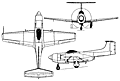 | A three-view drawing (1687 x 1143) |
| WEIGHTS |
| Take-off weight | 7543 kg | 16630 lb |
| Empty weight | 5737 kg | 12648 lb |
| DIMENSIONS |
| Wingspan | 14.63 m | 48 ft 0 in |
| Length | 13.41 m | 44 ft 0 in |
| Height | 4.65 m | 15 ft 3 in |
| Wing area | 37.16 m2 | 399.99 sq ft |
| PERFORMANCE |
| Max. speed | 695 km/h | 432 mph |
| Range | 2228 km | 1384 miles |
| Brad Pollock, e-mail, 31.03.2026 11:43 My special appreciation and gratitude to the team of Morphohack Cyber Professionals who was able to help me fully recover my 1.1BTC and ETH tokens after I was a victim of a forex trader scam.
I’m very pleased for their efforts in helping me recover my assets, and I am here to recommend their services, not because they want me to but to enlighten other people about crypto trading scam and how to recover their funds if they ever need to. Morphohack Cyber Professionals are very dedicated in their services, providing support. I was able to claim back my funds completely , and I contacted them through their email address Morphohack@cyberservices.com
Do not hesitate to reach out to them. reply | | Joffrey Martinez, e-mail, 24.11.2023 20:54 Jerrylink Credit Group has made a huge impact in my life. When I was in college, I unfortunately had to rely on my credit cards to help me with my expenses. By the time I finished college, I was unable to pay back a lot of those debts. As a result of that I ended up with a very low credit score and quite a few collections, so I sought out Jerrylink Credit Group. They were able to make a huge impact on my credit score. It went from the 500’s to the 700’s in a couple weeks. I couldn’t believe it. With that help, I was able to do so much more, lower the interest rate on financing my car, and to get approved for a great travel credit card which has really helped us while planning our wedding now. It’s been absolutely wonderful and I’m appreciative because I didn’t believe this process. Recommending as promised, you can reach out to them via: JERRYLINKGROUP@GMAIL.COM or text 626 514 0620. reply | | walt downs, e-mail, 13.01.2016 23:08 i'd like to get a 3 view drawing.. that I can model it in paper, as a card model. This is one rare aircraft![modeler for 60 years] reply | | Klaatu83, e-mail, 19.12.2012 19:30 This was Curtiss' proposal to meet the Navy's request for a mixed-power, carrier-based fighter. Unfortunately for Curtiss, Ryan's FR-1 "Fireball" was flying in June 1944, eight months earlier than the XF15C. As a result, the FR-1 was ordered into production and was just entering squadron service at the time WW-II ended, at which time the XF15C was still under test. reply | |
| | paidui, 21.06.2011 06:28 Wright Hanger, in Buffalo, and helped me up into the cockpit. At that age the cockpit appeared to be pretty roomy. reply | | Claude P Laflamme, e-mail, 11.11.2010 04:16 XF15C-1 #3 is currently at the Quonset Air Museum in Rhode Island. Brad, I'm currently restoring this aircraft. I'm a big guy and the cockpit has plenty of room for me. I will email you at the above address. My email listed above is wrong. Please email me @ Claude@Firehousemail.com and I will send you photos of the cockpit and any other request you have. reply |
| Brad Linscott, e-mail, 17.10.2010 19:29 My father, Austin B. Linscott, led a team to design the landing gear for this airplane. When I was 9 years old he took me into the Curtiss Wright Hanger, in Buffalo, and helped me up into the cockpit. At that age the cockpit appeared to be pretty roomy. reply | | Claude P. Laflamme, e-mail, 18.06.2010 01:14 I am currently restoring XF15C-1 #3 The plane is in very good condition. reply |
|
Do you have any comments?
|
| 
COMPANY
PROFILE
All the World's Rotorcraft
|


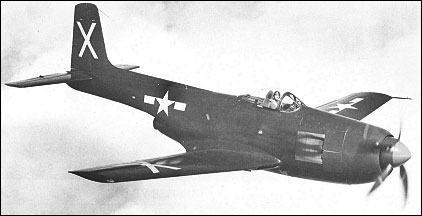



The XF15C-1 #3 is now at the Hickory Aviation Museum in Hickory NC. Once our new museum is completed, it will have a home inside. The plan is to repaint her.
Thanks for your initial restoration.
She can be seen at:
www.hickoryaviationmuseum.org
reply