|
| A US Navy requirement for a turbojet-powered carrier-based night fighter resulted in Douglas receiving a contract for three prototype aircraft in this category under the designation Douglas XF3D-1.
The type emerged as a cantilever mid-wing monoplane of all-metal construction, the wings incorporating hydraulic folding for carrier stowage. The circular-section fuselage mounted hydraulically actuated speed-brakes, provided side-by-side pressurised accommodation for the pilot and radar operator, and carried at the rear a tail unit very similar to that of the D-558-1 Skystreak. An unusual feature was a crew escape tunnel, extending from the rear of the cabin to the underside of the fuselage. Landing gear was of retractable tricycle-type, and the powerplant of the prototypes comprised
two 1361kg thrust Westinghouse J34-WE-24 turbojets, mounted on the lower edges of the forward fuselage, beneath the wing roots.
The first prototype made its maiden flight on 23 March 1948, but while company testing was still in progress an initial contract for the construction of 28 F3D-1 Skyknight production aircraft was received. The first of these was flown on 13 February 1950 and the type began to enter service in early 1951. The F3D-1 differed from the prototypes by having improved avionics and equipment and, as delivered initially, had 1361kg thrust J34-WE-32 turbojets. These engines were uprated subsequently to 1474kg thrust, becoming redesignated J34-WE-34.
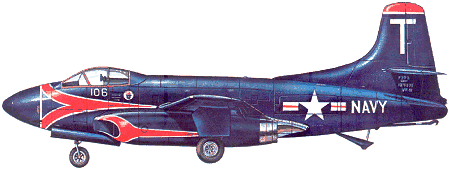
Before delivery of the first F3D-1,
Douglas had received a contract for production of an improved F3D-2, which was to be the major and ultimate production version, with a total of 237 built. It was intended that the F3D-2 should be powered by 2087kg thrust J46-WE-3 turbojets, but development of this engine was abandoned and, instead, they were all powered by J34-WE-36s. Improvements included the provision of an autopilot and updated systems and equipment. The first of these F3D-2s was flown on 14 February 1951 and all had been delivered just over a year later. The Skynight saw extensive use in Korea, this all-weather fighter accounting for the majority of all victories scored by the US Navy and US Marine Corps.
F3D-1s and F3D-2s were redesignated F-10A and F-1OB respectively with introduction of the new US tri-service designation system in September 1962. Some Skyknights had been retired by 1965, but many ECM versions were operating in Vietnam until 1969.
| MODEL | F3D-2 |
| ENGINE | 2 x Westinghouse J34-WE-36/36A turbojets, 1542kg |
| WEIGHTS |
| Take-off weight | 12179 kg | 26850 lb |
| Empty weight | 8237 kg | 18160 lb |
| DIMENSIONS |
| Wingspan | 15.24 m | 50 ft 0 in |
| Length | 13.97 m | 46 ft 10 in |
| Height | 4.88 m | 16 ft 0 in |
| Wing area | 37.16 m2 | 399.99 sq ft |
| PERFORMANCE |
| Max. speed | 909 km/h | 565 mph |
| Cruise speed | 628 km/h | 390 mph |
| Ceiling | 11645 m | 38200 ft |
| Range | 1931 km | 1200 miles |
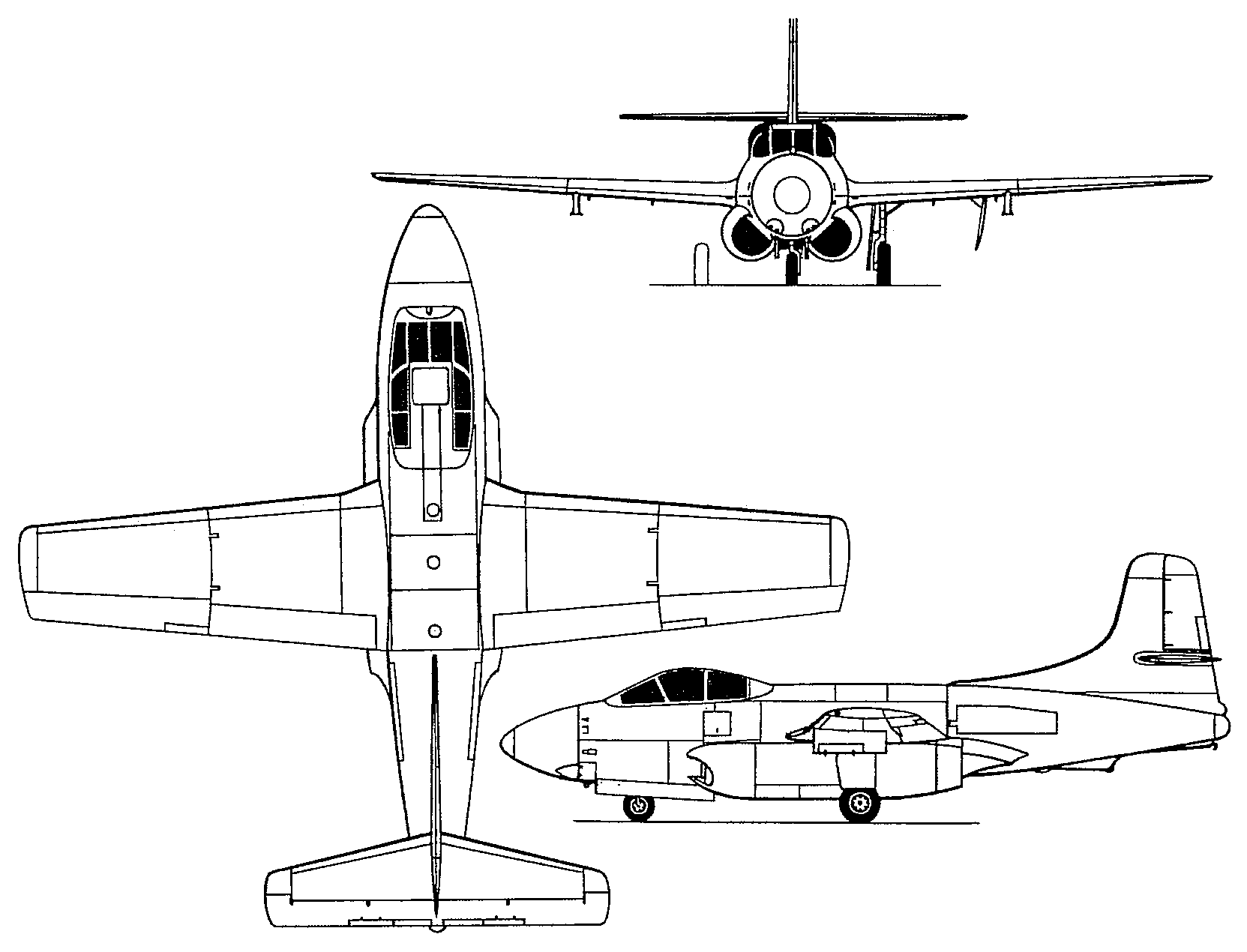
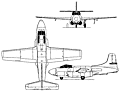 | A three-view drawing (1663 x 1270) |
| Marvin Ensworth, e-mail, 30.10.2025 22:29 Flew as Radar Operator out of Cecil Field (Jacksonville, FL) in 1954-55. The escape hatch on the F3D was OK in level flight but otherwise it was a death trap! reply | | Herb, e-mail, 29.04.2023 22:29 Chery Point 1952-1953. Last of F7F leaving. Sgt. said LT21 (F3D2) is yours. No training. No safety gear. Had to stand behind and observe if the engine (J34) lit up fully. Had to maintain an aircraft in many ways without training. Many hours of air time. That was fun. Discharged Dec. 1953. God bless all USMC In air and ground. Getting ready to ship out at 92 ...... reply | | Art Bowen, e-mail, 24.01.2016 02:15 We received mothballed F3D's at NAS GlynncobRUNSWICK GA and utilized them as RIO training planes before the F-4 arrived. My pilot got in trouble by flying max speed about 75 feet above the beach for 20 miles, It was fun. Also lost cabin pressure at 30,000 and came hgome with some beatiful shiners. reply | | Mick Deschamps, 22.10.2015 21:30 Avionic Tech.Marines,work on them,El toro.Ca.,Iwakunia,Japan and Dang,Veinam. reply | |
| | Marvin Ensworth, e-mail, 15.05.2015 13:03 I was in VF-14 at Cecil Field, Jacksonville, FL In 1954 went aboard Carrier Intrepid with 6 F3D's . Our C.O. was first live shot with steam catapult. Lost a plane on third day of operations, all ops cancelled headed back to Norfolk and was overtaken by Hurricane Hazel reply | | Wayne King, e-mail, 26.06.2014 08:14 I was stationed at N.A.S. Miramar VF-121 1959, and flew with Lt. D.E. Wayham. I was a plane Capt. for the F3D, TV,F3H, F9F and F11. Sure miss the Navy.
Retired Physical Science teacher... reply | | Ken, e-mail, 13.04.2014 01:56 I was at K-6 when VMF(N)513 was in Pyeongtaek, Korea when the squadron when to Atsugi, Japan. I would sure like to hear from anyone who was in my squadron and those that remember the F3D-2 and the Flying Nightmare. reply |
| Rex Portner, e-mail, 18.01.2014 18:35 I was with VMF(AW)542 stationed at El Toro in 1957-1959.I have many fond memories of ole willy. I was a mechanic. reply | | Steve Turkington, e-mail, 28.03.2013 02:39 My brother,Lt.Commander Milton J. Turkington ( Turk )was a night fighter pilot who flew this plane in Korea after flying carrier based Hellcats and Corsairs in the Pacific 43-45.Anybody out there remember the name? reply | | Aero99, 29.04.2012 20:34 Based on my knowledge, this aircraft achieved the first night kill of the Korean war. The airplane successfully, with the help of ground radar, shot down a Yak-15 over Shinui-ju. reply | | Jerry L, e-mail, 11.02.2012 23:32 Hello evefyone from VMF(AW) 513 57' 58. Capt, Andre, great pilot> We flew out of Atsugi, but also out of k6 and came back to Atsugi when Mag-11 moved to Atsugi under Therin. He was a great guy who died to young. Had a short tour TAD with MACS-1, always talking to our guys in 513 on the way out. Semper Fi all. reply | | bombardier, e-mail, 02.09.2011 11:35 That big ugly whale was a really hard foe for the MiGs in Korea. reply | | Paul Tausch, e-mail, 26.03.2011 20:40 Good to see so many Marines that were with the VMCJ-2 and VMCJ-3 squadrons that combined for the first time to go to Da Nang and form VMCJ-1. VMCJ-2 brought the new EA-6 and VMCJ-3 brought the new RF-4. These two aircraft along with our old EF-10 and RF-8 formed a squadron of four different A /C that supported the war effort in 1966. I was with VMCJ-3 in El Toro and went over with the advance party to build the van complex to support the IMA maintenance support when it arrived. I carry a lot of great memories of that deployment. Formed a life time relationships with some great Marines whom I will never forget. reply | | Clark Bonear, e-mail, 26.03.2011 04:20 I worked on the line crew at NAS Key West in 1954-56. Our squadron was FAWTULANT , a great experience woking with some great shipmates. reply | |
| | Charlie Boncore, e-mail, 08.03.2011 21:54 I was in VMCJ-2 in 65-66 and was a plane captain on EA6,RF-8,RF-4 and the EF-10 but i think the EF-10 was nicknamed the Willy Whale.we were always deployed somewhere.like MCAS Yuma and Rosey Rhodes and gitmo.I remember the Owl cub in Winterhave Ca.Oh those were the days.Semper Fi reply | | Mike bray, e-mail, 28.02.2011 00:40 My dad was killed in January of 1957 while taking off from el toro I was only 10at that time not sure if anyone remembers. Please reply reply | | Terry Harrison, e-mail, 20.01.2011 08:28 I was with FAWTUPAC, later VF(AW)-3 in San Diego in 1957 /58. Was plane captain and trained as RO. We were the only Navy squadron on the West Coast assigned to NORAD and won the Air Force trophy for being the best intercept squadron using F3D's and F4D SkyRays in those years. Made the Air Force mad when they presented the trophy to our Navy Skipper. reply | | Leroy McVay, e-mail, 12.01.2011 05:25 1953 I was an AN (E-3) working line crew at North Island Naval Air Station, San Diego. The F3D escape was a tunel between the engines. One of our not too bright line people moved the wrong lever and blew the lower door off the aircraft. Had to tow it to a FASRON for repair. reply | | Ron Kodimer, e-mail, 18.12.2010 18:55 Hi all,
I was an RO at El Toro '55 and '56. I was the youngest and lowest ranked RO at the time. I remember the names Brewster, Simpson, Long, and Dixon. I recall the two Brits who seemed to always get into trouble with the FAA. I also remember losing a number of A /C in the two years I was there. Two over Mojave at one time. Jim, was it you who went out the bottom at El Toro after take off??
A great single purpose airplane. Did what it was designed to do. reply | | Ron H, e-mail, 12.12.2010 02:46 I flew as an AIO radar operator in the F3D out of K-6 during the Korean War. The missions were escorting the G-29's and NCAP's. A beautiful plane to fly in after flying in the F7F. reply |
|
Do you have any comments?
|
| 
COMPANY
PROFILE
All the World's Rotorcraft
|


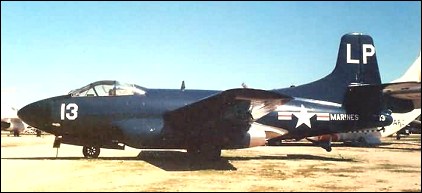
 William Allen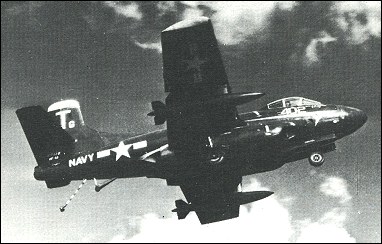


Ken,
My father was at K-6 and was a F3D-2 pilot assigned to Composite Squadron 4 (VC-4) Det 44. The left the USS Lake Champlain off the coast of Korea and joined up with VMF(N)513 at K-6 in late June 1953.
Email me if you would like to discuss.
reply