 |
Douglas T2D1927 |  |
| TORPEDO-BOMBER | Virtual Aircraft Museum / USA / Douglas |
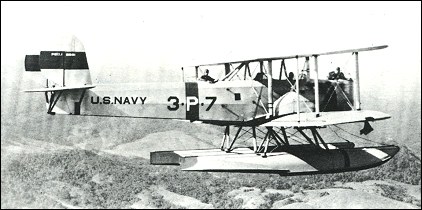 |
In July 1925 the US Navy Bureau of Aeronautics ordered three Douglas XT2D-1 twin-engined torpedo-bomber/ general-purpose biplanes. They were required to be suitable for use with wheel or float landing gear, and for operation from aircraft-carriers. Two months earlier a single XTN-1 aircraft, with similar general characteristics, had been ordered from the US Naval Aircraft Factory. The first XT2D-1 prototype flew on 27 January 1927 as a landplane. Soon afterwards its 373kW Wright P-2 radial engines were replaced by Wright R-1750s and the other two prototypes were similarly re-engined. The three aircraft participated successfully in trials with US Navy Torpedo Squadron VT-2 in spring 1927 and, in consequence, nine examples of the production T2D-1 were purchased. The basic configuration of the XT2D-1 prototypes was retained, the aircraft being characterised by their bluff noses with angled bomb- or torpedo-aiming panel, large single fin and rudder, wide-track divided landing gear capable of easy conversion to take twin floats, and . two-bay equal-span wings with rounded tips. The fuselage of the T2D-1 was, however, 0.90m shorter than that of the XT2D-1 and the engine nacelles were repositioned. A crew of four was carried, the pilot and co-pilot in tandem open cockpits, with gunner/ bomb-aimer in the nose and radio-operator/gunner in the fourth cockpit amidships. The T2D-1 performed satisfactorily in service, operating from aircraft-carriers (being the first twin-engined aircraft to do so) during the 1928 US Navy fleet exercises. However, its size precluded embarkation of the carrier's full aircraft complement and, as a result, the type was re-allocated to patrol squadrons. T2D-1s flew subsequently with VP-1 and VP-2 from Pearl Harbor, Hawaii, operating on wheels or twin floats as required until scrapped in 1933. Variant P2D-1: in June 1930 the Douglas company received an order for 18 aircraft based on the T2D-1, but intended specifically for over-sea patrol duties; these new P2D-1 aircraft had twin fins and rudders to ensure better flight characteristics, particularly with one engine inoperative, and were powered by 429kW Wright R-1820-E radial engines; deliveries were completed by the end of 1931 and the P2D-1s, almost always in twin-float configuration, flew with VP-3 of the US Navy stationed in the Panama Canal Zone, until withdrawn from first-line service in 1937.
|  COMPANY PROFILE | |||||||||||||||||||||||||||||||||||||||||||||||||||
|


|