 |
Douglas XP3D / YOA-5 / YB-111936 |  |
| FLYING BOAT | Virtual Aircraft Museum / USA / Douglas |
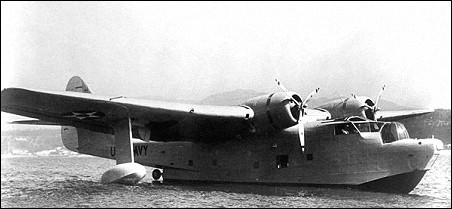 |
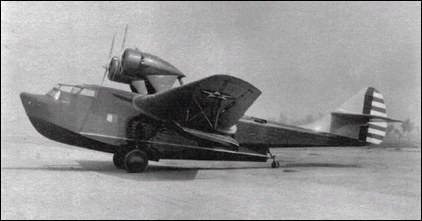
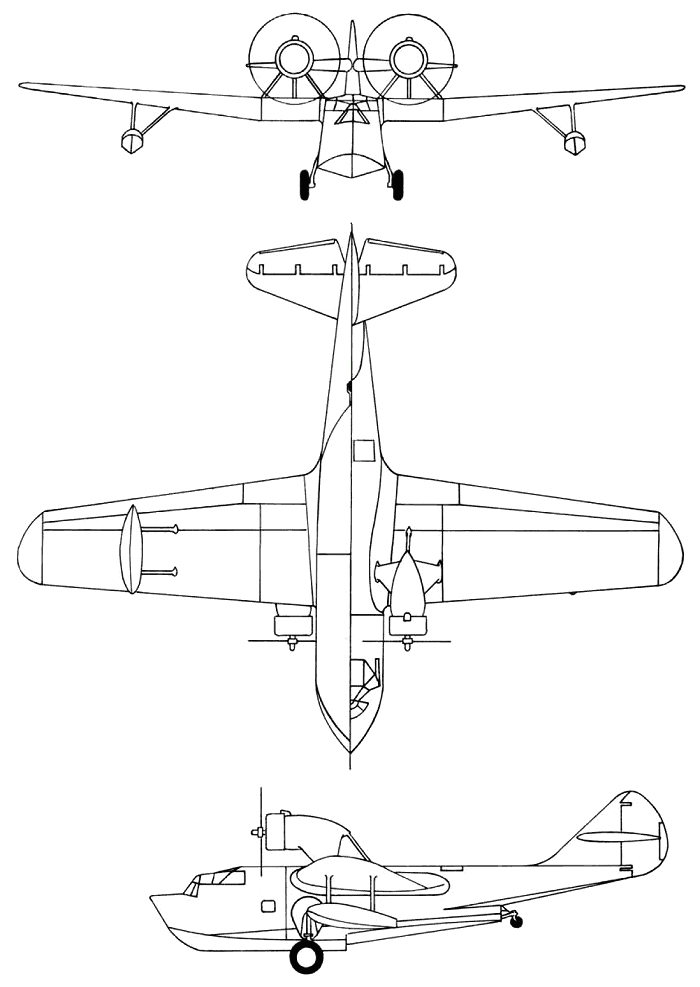
The YB-11 was the only bomber designed for the Air Corps for the dual role of land and sea operation. Shortly after Douglas had developed the XP3D-1, a large twin engine seaplane, for the U. S. Navy as a patrol bomber, the Army ordered a scaled down version to be built as an amphibian. Powered by two Wright R-1820-45 Cyclones rated at 930hp, the YB-11 was to have a crew of five and carry three 7.62mm machine guns. One gun was located in the plexiglas nose turret, and one each in waist positions which were covered by sliding hatches when not in use. The forward part of the wing was of corrugated aluminum with fabric covering from the rear spar back. The fuselage was all metal and the landing gear retracted into depressed wells on the sides. Before completion, the design was reclassified as an observation type and given the designation YO-44. However, the finished product was delivered with the Air Corps serial number 33-17 as the YOA-5 amphibian. It bore this identification throughout its life as one of the fore-runners of the Air Rescue planes of today.
|  COMPANY PROFILE | ||||||||||||||||||||||||||||||||||||||||
|


|