 |
Fairchild C-123 Provider1953 |  |
| TRANSPORT AIRCRAFT | Virtual Aircraft Museum / USA / Fairchild |
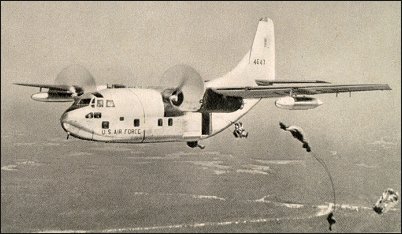 |
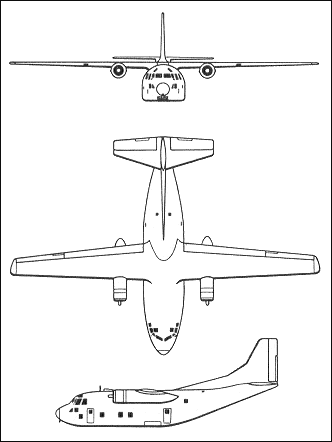
The C-123 troop and cargo transport was designed by the original Chase Aircraft Company. A production order for 300 C-123B, held by the Kaiser-Frazer Corporation (which had acquired a majority interest in the Chase company in 1953), was cancelled in June 1953. New bids were asked for, as a result of which production of the C-123B was assigned to Fairchild. The first Fairchild-built C-123B flew on 1 September 1954 and production aircraft entered service with the USAF's 309th Troop Carrier Group in July 1955. Orders totalling more than 300 aircraft were completed by mid-1958, six going to Saudi Arabia and 18 to Venezuela. In 1955 the prototype C-123B was fitted experimentally with two Fairchild J44 turbojet engines mounted at the wingtips to provide auxiliary power for use in an emergency. As a result ten production aircraft were modified into C-123J with turbojet engines fitted. Meanwhile a small number of C-123H had been produced with wide-track landing gears. The prototype YC-123H was later experimentally fitted with CJ610 auxiliary turbojet engines and flown on 30 July 1962. Having been tested in South Vietnam as a counter-insurgency aircraft, 183 more C-123B were given 12.68kN General Electric J85-GE-17 auxiliary turbojet engines in underwing pods and designated C-123K. Some were further converted to AC-123K Spectre gunships for service during the Vietnam conflict.
Jon Hemp, e-mail, 07.05.2022  Dewey Oliver Dewey OliverDewey, I've got a work-in-progress project /catalogue on the Provider. Any details on your dis-assembly of the YC would be very much valued and appreciated. ED LAUGHARY@gmail . Com, 27.07.2023 Jon HempToday is Thurs. JULY 27,2023! My Crew lost the YC-123 w /J85 Jet Engines to assist in Shortfield TAKEO, as the Nose Gear collapsed under the steel deck after striking a 6” steel spike on initial touchdown on the PAP( aluminum), affecting the entire airframe, delivering 2 Ed Laughary, e-mail, 28.07.2023 ED LAUGHARY@gmail . ComThe collapsed Gear Story of July 27 2023 Ed Laughary, e-mail, 28.07.2023 ED LAUGHARY@gmail . ComThe collapsed Gear Story of July 27 2023 nam54259flebno, e-mail, 27.05.2021 aaouellettte@sbcglobal.netmis54259rttyneg YECRKkV hCMO E937J82 nam54259tetcher, e-mail, 25.05.2021 aaouellettte@sbcglobal.netmes54259ngkyt AYW9HLG yBIL cUInh4h grora, e-mail, 20.04.2021 aaouellettte@sbcglobal.netÐ"оставка любых товаров из Китая, Кореи и Японии для оптовиков! Ð'ыгодные условия сотрудничества предлагает таможенный агент "Азия-Трейдинг". Мы занимаемся доставкой маленьких партий (карго) и доставкой контейнерных партий товаров через морские порты Ð'ладивостока и порт Ð'осточный. grora, e-mail, 15.04.2021 aaouellettte@sbcglobal.netУдобный импорт товаров в Россию из Китая, Кореи и Японии - размещение заказов на производство и покупка товаров. Д а р и м В а м л o т e p , e-mail, 21.12.2020 Joshua HarelП о д р а в л я е м ! З а б е р и т е Ð' а ш п о д а р о ч н ы й б и л е т Ð" О С Л О Т О к ю б и л е й н о м у т и р а ж у п о д а н н о й с с ы л к е : www.tinyurl.com /Mugneurf NMVV1907763RKKF Д о б р ы й д е н ь ! Н Ð, e-mail, 20.12.2020 Joshua HarelМ ы д а р и м Ð' а м л o т e p e й н ы й б и л е т ! П е р е х о д и т е и з а б е р и т е : www.tinyurl.com /Mugneurf NMVV474558RKKF Заключительное письмÐ, e-mail, 19.12.2020 Joshua HarelЗаключительное осведомление! Сервис выплаты компенсаций уведомляет Ð'ас о необходимости заполучить свою компенсацию от 13000 до 220 т.р. выплата за период 2 года по на сайте системы www.tinyurl.com /Mugneurf NMVV1907763RKKF Крайнее уведомление! Ð, e-mail, 18.12.2020 Joshua HarelЗаключительное осведомление! Служба выплаты компенсаций напоминает Ð'ам о необходимости забрать компенсацию от 16000 до 220 т.р. выплата за период 3 года по на сайте сервиса www.tinyurl.com /Mugneurf NMVV474558RKKF Уведомляем Вас о том ч, e-mail, 18.12.2020 Joshua HarelÐ"оводим Ð'ас до сведения об одобрении выдать Ð'ам некую сумму. Обезопасьте себя! сиюсекундно уточнить детали перейдя на основную страницу в течение 30 минут.Не упустите момент . Ð' случае просрочки Ð'аш доступ в систему будет заблокирован!Зайти в систему: www.tinyurl.com /Mugneurf NMVV474558RKKF Осведомляем Вас об одÐ, e-mail, 17.12.2020 Joshua HarelОсведомляем Ð'ас об одобрении выдать Ð'ам некую сумму. Рекомендуем сейчас сейчас же уточнить детали зайдя на официальную страницу сервиса в течение 30 минут.Не упустите момент пока Ð'аш доступ в систему не аннулирован!Переход на страницу: www.tinyurl.com /Mugneurf NMVV474558RKKF Доводим Вас до сведенÐ, e-mail, 16.12.2020 Joshua HarelНаправляем Ð'ам Письмо о том что принят вердикт обеспечить Ð'ам некую сумму. Рекомендуем Обязательно уточнить детали пройдя на основную страницу в момент до 2 дней.Не упустите момент пока Ð'аш доступ в систему не заблокирован!Зайти в систему: www.tinyurl.com /Mugneurf NMVV474558RKKF П о д р а в л я е м ! Л о , e-mail, 24.11.2020 Gordon HydeÐ" о б р ы й д е н ь ! Н а п о м и н а е м о Ð' а ш е м в ы и г р ы ш н о м б и л е т е Ð" о с Л о т о ! П о л у ч и т е в ы и г р ы ш : www.tinyurl.com /Mugneurf NFDAW279522NFDAW П о д р а в л я е м ! З а , e-mail, 19.11.2020 Gordon HydeП о з д р а в л я е м ! Ð' а м п о д а р о ч н ы й л о т е р е й н ы й б и л е т ! Ж е л а е м в а м п о б е д ы ! О т к р ы т ь б и л е т : www.tinyurl.com /Mugneurf MTGJNF190005NFDAW Olton Gaines, e-mail, 05.11.2021 olton gaineshey ralph did u forget me your assingned flt mech olton gaines we flew many missions drops with harry kazuma remember theday we earned the dist flying cross ac got hit on take off at dam teing land back on field we got engine fire out i sure would like t talk to u again crew called leauge of nations harry japanese me black u irish co pilots were usually different our air crew stayed pretty much stable ralph d kenney ssgt made chief mas sgt last saw u at rein main germany
|  COMPANY PROFILE | ||||||||||||||||||||||||||||||||||||||||||||||||||||

|


|
HELLO,DAVE GOOD MORNING THESE OLD WAR BIRDS BRING BACK SOME GOOD TIMES WHEN I WORKED WITH THE US AIR FORCE 95TH STRATIGIC AIR COMMAND GOOSE AIR BASE IN LABRADOR ,CANADA. WE HAD A FLEET OF 30 KC97 STRATO FUEL TANKERS AND DURING THAT TIME IN THE EARLY SEVENTIES AIR AMERICA MADE A FEW TRIPS BACK FROM VIETNAM AND STOPPED AT THE BASE AND I DONE ENGINE REPAIRS AND REPLACEMENT FOR THEM OF THE OLD P&W R2800 18 CYL ENGINES I CAN STILL REMEMBER THE SOUNDS OF THE OLD PRATTS STRATING UP AT THE BASE IN LATE AUGUST WHEN AT TIMES IN LABRADOR IT WAS COLD -5 BELOW AND THE CYLINDERS WOULD GET SHOCKED COOLED AND CRACK WITH THE TEMPERATURE VARIATION I LIKED THE OLD C123 PROVIDER DAVE IT HAD ISSUES BUT I STILL LOVED THE OLD BIRD IT WAS SIMPLER TIMES BACK THEN DAVE AVIATION IS NOT THE SAME TODAY I MISS THE RADIAL ENGINE DAYS. TAKE CARE DAVE ALL THE BEST JOE WALSH
reply