 |
Fokker XB-81930 |  |
| BOMBER | Virtual Aircraft Museum / USA / Douglas |
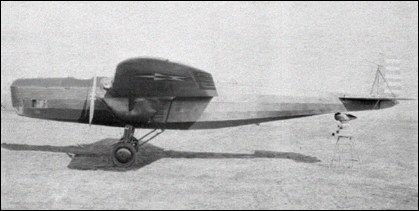 |
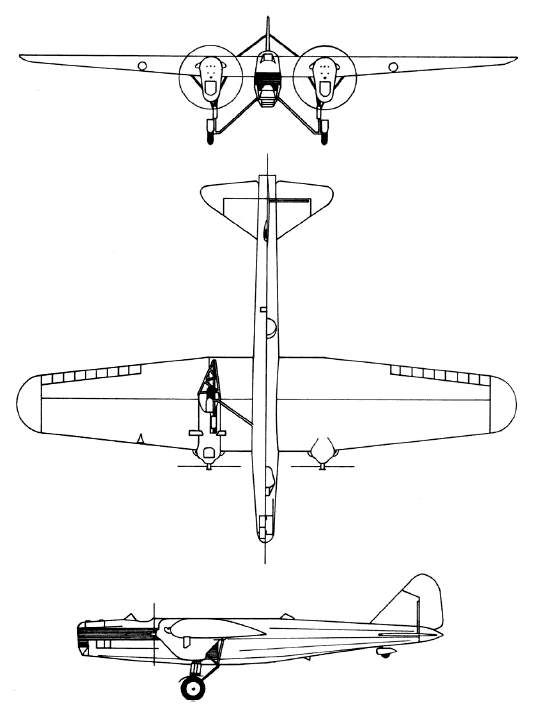
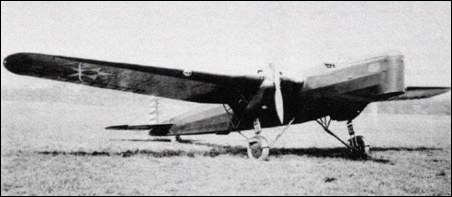
With the appearance of the Fokker XB-8, the last vestiges of the biplane age were gone from bomber design. An airplane of such clean lines had never before worn the colors of a U. S. Army bomber. A true cantilever design, there were no drag-producing struts or wailing rigging to reduce the efficiency of the XB-8. Like the Douglas B-7, this plane also was modified from an observation design; in this case, the Fokker O-27. Ordered in February, 1929, with the XB-7, the sole example of the Fokker XB-8 was ready for testing in 1930. The plywood wing was shoulder mounted on the fabric covered, metal tube fuselage. The traditional nose gunner position was equipped with a sliding streamlined cover, and the fuselage side, forward of the wing, was strengthened by a corrugated panel extending to the nose. Mounted almost entirely within the wing were two Curtiss Conqueror V-1520- engines yielding a speed of 260km/h. The retractable landing gear was pulled into large wells located in the rear portion of the engine fairings. But in spite of its sleek appearance, the performance of the XB-8 did not merit a production order and it was ultimately restored to the O-27 configuration. Shortly after the appearance of the XB-8, the Fokker Company was reorganized as the General Aviation Manufacturing Corp. and this aircraft is sometimes referred to as the General XB-8.
|  COMPANY PROFILE | ||||||||||||||||||||||||||||||||||||||||||||||

|


|